

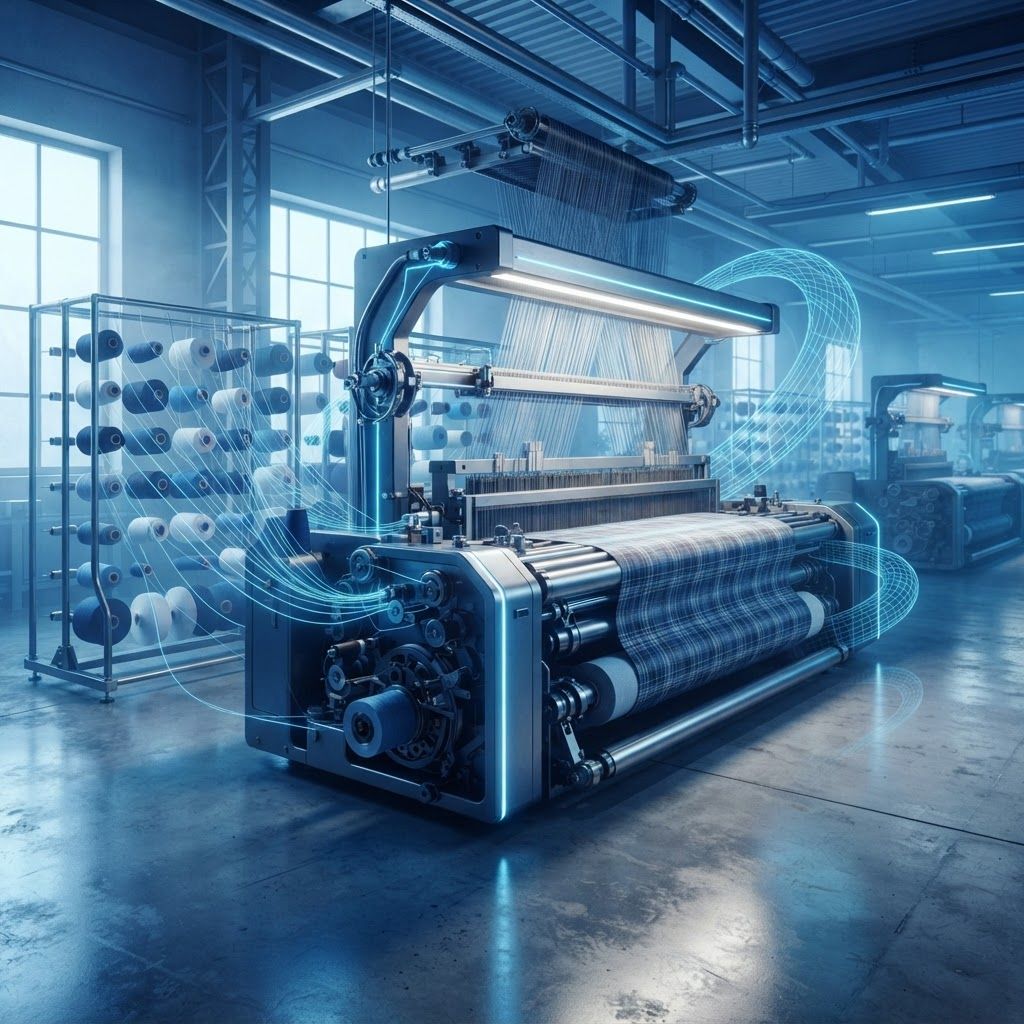
Textiles in a Scottish Industrial County
Scotland's textile industry is globally recognised for tweed, cashmere, tartan and technical fabrics. While the Borders and the Highlands hold the most famous names, West Lothian has developed a complementary strength: industrial and technical textiles. Its position between Edinburgh and Glasgow, combined with substantial modern industrial floorspace in Livingston and Bathgate, has attracted manufacturers producing workwear, filtration media, geotextiles, upholstery fabrics and contract furnishings.
This orientation toward technical and contract markets has proved commercially resilient. Rather than competing on volume with overseas mills, West Lothian textile firms compete on specification, certification, short lead times and the ability to handle complex, low-volume orders that global suppliers find uneconomic.
What Modern Textile Manufacturing Involves
Contemporary textile production is far removed from popular imagination. Computer-controlled looms and knitting machines, digital printing, laser cutting, automated spreading tables and computer-aided pattern grading are now standard. Quality control involves colourfastness, tensile strength, abrasion resistance and flammability testing. Certification — from flame retardancy standards for contract furnishings to protective clothing standards for workwear — often determines who can bid for a contract at all.
The Top 10 Textile Manufacturers in West Lothian
1. Lothian Technical Textiles
Producing engineered fabrics for filtration, industrial and protective applications, Lothian Technical Textiles operates from a Livingston facility with in-house laboratory testing. Its ability to develop bespoke coated and laminated fabrics for specific performance requirements makes it a preferred partner for industrial clients.
2. Bathgate Workwear Manufacturing
Specialists in durable workwear and protective clothing, this manufacturer produces garments for construction, utilities, hospitality and healthcare. Services include garment design, certified flame-retardant and high-visibility production, embroidery, heat-sealed branding and managed stock replenishment.
3. Almond Valley Weaving
A traditional weaving operation modernised with computerised looms, Almond Valley Weaving produces upholstery, curtain and accessory fabrics in wool and wool-blend constructions. The company undertakes bespoke tartan and estate check commissions alongside its standard collections.
4. Broxburn Contract Furnishings Fabrics
Serving hotels, offices, cruise operators and healthcare providers, this manufacturer supplies contract-grade fabrics that meet demanding flammability and abrasion standards. Made-to-measure curtains, blinds and upholstery panels are produced in-house.
5. Livingston Knitwear Studio
Combining industrial knitting machinery with hand finishing, Livingston Knitwear Studio produces knitted garments and accessories for Scottish retail brands and export markets. Short-run capability and rapid sampling are central to its offer.
6. West Lothian Textile Finishing
Finishing determines how a fabric ultimately performs. This company provides dyeing, washing, milling, coating and specialist treatments including water repellence and antimicrobial finishes, serving other manufacturers across central Scotland.
7. Whitburn Industrial Sewing
A contract manufacturer handling heavy-duty sewn products such as covers, bags, straps, lifting slings and protective enclosures. Its industrial machinery handles technical fabrics that domestic-scale operations cannot process.
8. Linlithgow Heritage Textiles
Focused on heritage and gift markets, Linlithgow Heritage Textiles produces woven throws, scarves and interior accessories with Scottish design themes, supplying visitor attractions, independent retailers and corporate gifting clients.
9. Deans Geotextile Products
Supplying the construction and civil engineering sector, Deans Geotextile Products manufactures separation, drainage and reinforcement textiles used in road building, landscaping and drainage schemes across Scotland.
10. Armadale Digital Fabric Printing
Digital printing has transformed low-volume textile production. Armadale Digital Fabric Printing produces printed fabrics for interiors, exhibition graphics, soft signage and small fashion labels, with no minimum order constraints and fast turnaround.
Sustainability and Circularity
Textile manufacturing faces intense scrutiny over water use, chemistry and waste. Leading West Lothian firms have responded by adopting recycled polyester and wool blends, reducing water in finishing processes, recovering offcuts and offering repair and re-covering services that extend product life. Local production itself reduces transport emissions and shortens supply chains, an argument that has gained weight with buyers since recent global disruption.
Why Buy Locally
Working with a West Lothian manufacturer offers practical advantages: factory visits, faster sampling, easier quality resolution, smaller minimum orders and reduced exposure to shipping delays and currency movement. For businesses that need certified, traceable products, proximity also simplifies audit and compliance evidence.
Choosing a Textile Partner
Define your performance requirements before approaching suppliers — weight, composition, durability rating and any mandatory standards. Request physical samples and test reports. Discuss minimum order quantities and repeat lead times honestly, and clarify who owns design and pattern intellectual property. The best manufacturers welcome these conversations early.
Skills, Machinery and Investment
Textile manufacturing depends on a narrow pool of specialist skills — loom tuning, pattern cutting, industrial machining of technical fabrics and colour matching among them. West Lothian firms have responded to an ageing workforce by training internally, pairing experienced operators with apprentices and documenting processes that were previously held only in memory. Several have also invested in machinery that reduces reliance on scarce manual skills, including automated cutting tables and computerised knitting.
Capital investment decisions in this sector are finely balanced. Digital printing equipment can pay back quickly through short-run flexibility, while a new weaving loom is a decade-long commitment requiring confident order visibility. The most successful local manufacturers have grown by adding capability adjacent to their existing strengths rather than attempting wholesale reinvention — a finishing line beside a weaving shed, or laser cutting beside industrial sewing. This incremental approach has kept the county's textile base commercially stable through a period that saw many larger operations elsewhere close entirely.
Conclusion
West Lothian's textile manufacturers demonstrate how a traditional industry survives and thrives through specialisation. From geotextiles to certified workwear and bespoke woven interiors, the county offers a surprisingly broad and technically capable textile supply base.
Want your brand featured in front of decision-makers? Publish a guest post or get a link insertion in our guides through AAMAX's guest post and link insertion service.
Helpful Links
 SponsoredAAMAX — Full-Service Digital Agency
Write for Us
Share your expertise with our readers. We welcome guest contributions from industry specialists.
Pitch your idea

