

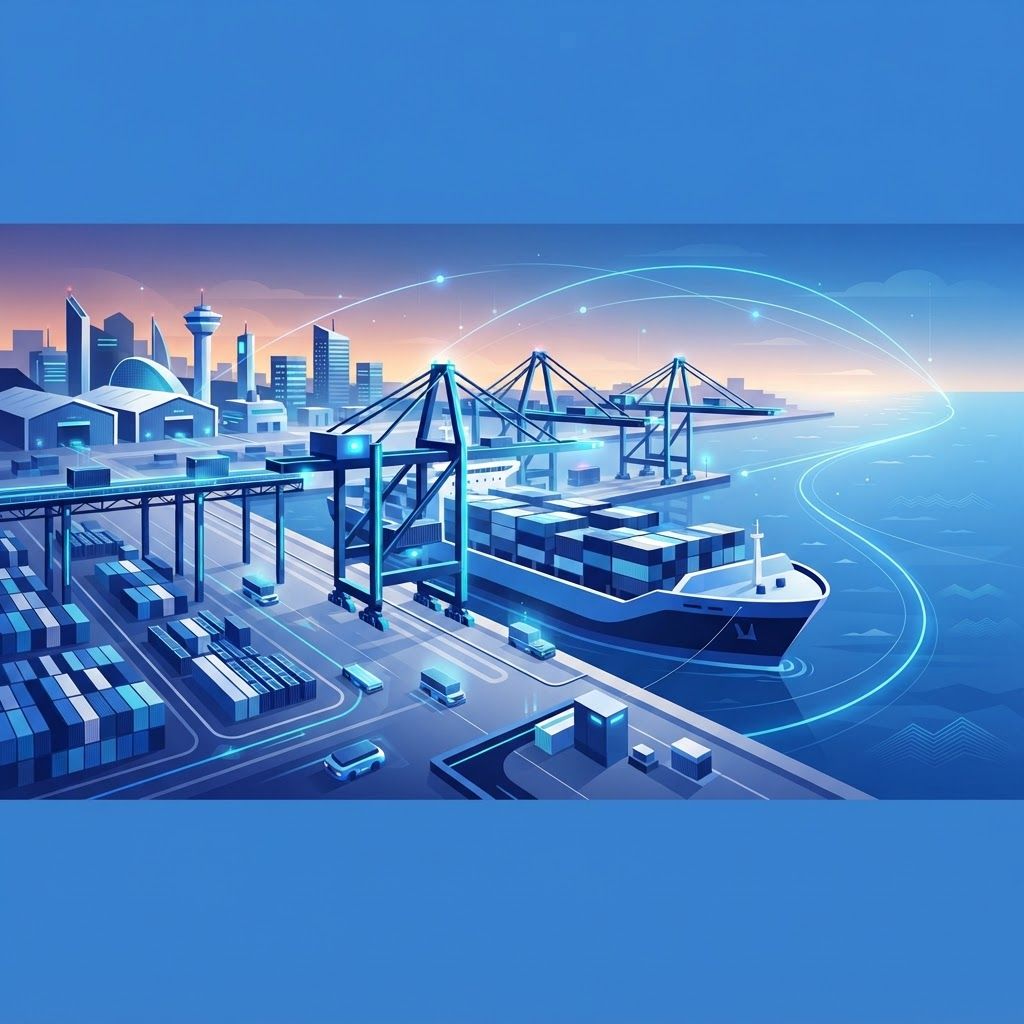
Ipswich and the Sea
Ipswich has been a port since Anglo-Saxon times, and maritime trade remains woven into its economy. The Port of Ipswich, situated where the Orwell meets the town, handles agricultural bulks, aggregates, fertiliser and project cargo, and is one of the leading grain export ports in the country. A short distance downstream, the Port of Felixstowe handles the largest container volumes in the United Kingdom, while Harwich International lies just across the Stour.
This concentration means that shipping lines, agents, forwarders and marine service providers form a substantial local sector. The following ten cover the range of maritime businesses relevant to Ipswich shippers and importers.
1. Maersk
Maersk is among the largest container shipping companies in the world and a major presence at Felixstowe. Beyond ocean transport, the company has expanded into integrated logistics, offering inland transport, warehousing and customs services alongside sea freight. For importers wanting a single contract covering the journey from an Asian factory to a Suffolk warehouse, this integration is the principal attraction.
2. Mediterranean Shipping Company
MSC operates one of the largest container fleets globally with extensive services calling at the region's ports. Its network breadth means coverage of trade lanes that smaller carriers do not serve, and its scale provides capacity during peak periods when space is scarce. Importers with diverse sourcing geographies frequently rely on carriers of this size for schedule flexibility.
3. CMA CGM
CMA CGM is a major global carrier with strong services to and from northern European ports. The group has invested significantly in alternative fuel vessels, which matters increasingly to shippers reporting supply chain emissions. Its logistics division offers door-to-door services complementing the ocean product.
4. Hapag-Lloyd
Hapag-Lloyd serves the main trade lanes connecting the United Kingdom with Asia, the Americas and the rest of Europe. The carrier has a reputation for schedule reliability and clear documentation processes, which experienced shippers value highly because delays and paperwork errors generate costs far beyond the freight rate itself.
5. Port of Ipswich Operators
The port itself is operated as part of a wider group managing several East Anglian facilities. Its role in agricultural exports is significant, with grain moving from Suffolk and the surrounding counties to European and wider markets. The port also handles aggregates, fertiliser and occasional project cargo, and its location within the town means road connections are immediate.
6. Ship Agents and Port Agencies
Ship agents represent vessel owners and operators at port, arranging berths, pilots, tugs, customs formalities, crew matters, bunkers and stores. It is a demanding coordination role carried out under tight time pressure, since delay costs vessel operators substantial sums per day. Agencies serving Ipswich, Felixstowe and Harwich hold deep knowledge of local procedures that cannot be acquired quickly.
7. Freight Forwarders With Ocean Expertise
Ocean freight forwarders book space with carriers, consolidate less-than-container-load cargo, prepare documentation and arrange inland transport. For small and medium businesses in Suffolk shipping internationally, a forwarder provides access to competitive rates and, more importantly, expertise in incoterms, letters of credit and documentation that would otherwise require in-house specialists.
8. Marine Surveyors and Cargo Inspection Firms
Surveyors inspect vessels, cargoes and containers, verifying condition, quantity and compliance. Their reports support insurance claims, contractual disputes and regulatory requirements. In the agricultural bulk trade through Ipswich, independent quality and quantity surveys at loading are standard practice and often contractually mandated.
9. Marine Insurance Brokers
Specialist brokers arrange cargo insurance, hull and machinery cover, and liability protection. Cargo insurance is frequently misunderstood: carrier liability is strictly limited and rarely approaches the value of goods carried, so separate cargo insurance is essential rather than optional. Brokers in the region understand the specific exposures of the commodities passing through local ports.
10. Ship Repair, Chandlery and Marine Services
Supporting the working port are businesses providing repair, maintenance, provisioning, bunkering and waste reception. The Orwell also hosts a substantial leisure marine sector, with marinas, boatyards and yacht services at Ipswich, Woolverstone and Levington. Together these businesses sustain a skilled marine workforce that serves both commercial and leisure vessels.
Understanding Shipping Costs
Ocean freight rates fluctuate considerably with supply and demand, and headline rates are only part of the cost. Terminal handling charges, documentation fees, bunker adjustment factors, customs clearance, port storage and inland haulage all contribute. Demurrage and detention, charged when containers are held beyond free time, are a frequent and avoidable expense for businesses that do not plan collection carefully.
Documentation and Compliance
International shipping depends on accurate paperwork: bills of lading, commercial invoices, packing lists, certificates of origin and, for controlled goods, licences. Errors cause delays at the port and can result in penalties. Advance manifest requirements mean data must be submitted before vessels depart, so late information causes problems that are difficult to correct afterwards.
Environmental Change in Shipping
The maritime sector is under sustained pressure to decarbonise. Carriers are investing in dual-fuel vessels, alternative fuels including methanol and liquefied natural gas, slow steaming to reduce consumption, and improved hull efficiency. Ports are electrifying equipment and exploring shore power for berthed vessels. Shippers increasingly request emissions data per consignment, and carriers able to provide verified figures hold an advantage in competitive tenders.
The Outlook for Maritime Suffolk
The region's maritime position is structurally secure. Container volumes through Felixstowe, agricultural exports through Ipswich and the growing offshore energy sector in the southern North Sea all support continued activity. For businesses in and around the town, the practical benefit is access to genuine maritime expertise close at hand, which remains a real advantage when shipping internationally.
Want your brand featured in front of decision-makers? Publish a guest post or get a link insertion in our guides through AAMAX's guest post and link insertion service.
Helpful Links
 SponsoredAAMAX — Full-Service Digital Agency
Write for Us
Share your expertise with our readers. We welcome guest contributions from industry specialists.
Pitch your idea

