

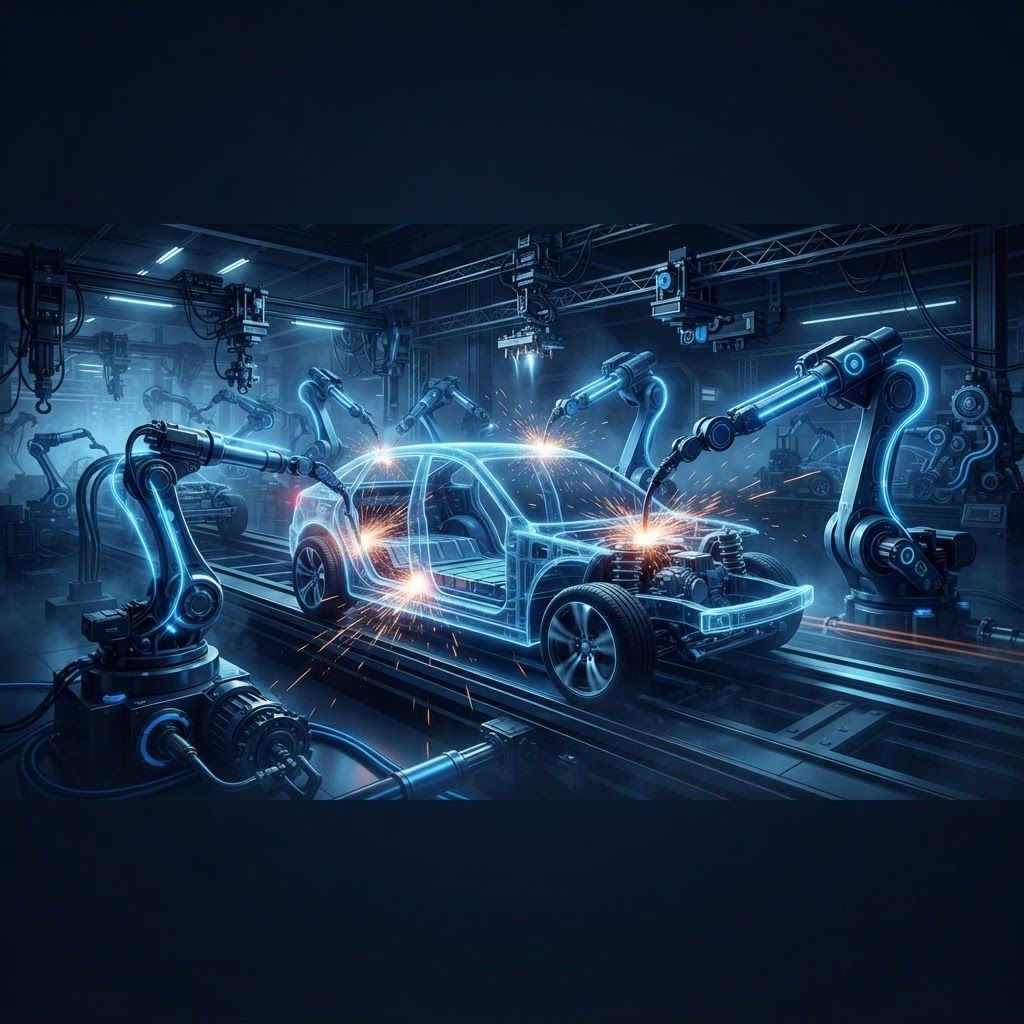
Automotive Engineering in East Lindsey
East Lindsey does not host a volume car assembly plant, but automotive manufacturing is nonetheless a genuine part of the district's industrial base. The activity here is specialist rather than mass market: bespoke vehicle body building, agricultural machinery and implement manufacture, trailer and towing equipment production, component machining, and increasingly electric vehicle conversion and charging infrastructure.
This pattern reflects local demand. Agriculture requires trailers, sprayers, loaders and implements built to withstand heavy use. The tourism sector needs conversions and specialist vehicles. Trades and utilities require van fit-outs, tipper bodies and welfare units. Coastal and rescue services need adapted vehicles for difficult terrain.
Segments of Local Automotive Manufacture
Commercial vehicle body building takes a chassis cab and constructs a purpose-built body, whether a tipper, dropside, box, welfare unit or specialist platform. This requires steel and aluminium fabrication, hydraulics, electrical integration and compliance with construction and use regulations.
Agricultural machinery manufacture produces trailers, sprayers, cultivation equipment and handling systems, often in small batches or as one-off builds tailored to a specific farm's requirements.
Component manufacture involves precision machining, fabrication and finishing of parts supplied into larger automotive and machinery supply chains. Vehicle conversion covers wheelchair accessible adaptations, mobile catering units, welfare vehicles and camper conversions.
Electric vehicle work is the newest segment, encompassing conversion of existing vehicles, battery system integration and the manufacture and installation of charging infrastructure.
Ten Automotive Businesses Serving East Lindsey
1. Wolds Commercial Bodybuilders constructs tipper, dropside and box bodies on commercial chassis, with hydraulic systems, lighting and certification handled in-house.
2. Fenland Agricultural Engineering manufactures trailers, bale handlers and cultivation implements built for heavy Lincolnshire soils, offering bespoke specification and repair services.
3. Lindsey Precision Components provides computer numerical control machining, turning and fabrication of components supplied into automotive and machinery manufacturers.
4. Coastal Vehicle Conversions specialises in campervan and motorhome conversion, mobile catering units and adapted vehicles for the visitor economy along the coast.
5. Marshside Trailer Manufacturing builds and repairs plant, livestock and general purpose trailers, including braking systems, chassis fabrication and statutory testing preparation.
6. Louth Electric Vehicle Systems undertakes electric conversion of commercial and classic vehicles, battery pack integration and charging point installation for fleets.
7. Horncastle Fabrication and Welding supplies structural and vehicle-related fabrication in steel, stainless and aluminium, serving both manufacturers and end users.
8. Trinity Automotive Electronics handles vehicle wiring looms, telematics installation, beacon and camera systems and diagnostic support for commercial fleets.
9. Sandhill Vehicle Refinishing provides industrial paint finishing, powder coating and corrosion protection for vehicle bodies and machinery components.
10. Alford Machinery Restoration restores and rebuilds classic tractors, commercial vehicles and agricultural equipment, combining traditional engineering skills with modern components.
Regulation and Standards
Vehicle manufacture and modification are tightly regulated. New vehicles and bodies must comply with type approval requirements, with individual vehicle approval available for one-off and low volume builds. Bodybuilders must observe chassis manufacturer guidelines on mounting, weight distribution and electrical interfacing to preserve warranty and safety.
Weight and dimension limits, lighting and marking requirements, and load securing standards all apply. Trailers require appropriate braking systems and, above certain weights, annual testing. Operators running goods vehicles above defined thresholds need an operator licence with associated maintenance obligations.
For electric conversions, additional considerations include high voltage safety, battery certification, thermal management and technician competence, and this is an area where standards continue to develop rapidly.
The Transition to Electrification
Electrification presents both challenge and opportunity for the local sector. Agricultural machinery is beginning to adopt electric and hybrid drivetrains, particularly for yard equipment and lighter implements, while heavier field operations remain dependent on diesel for now.
Commercial fleets across the district are gradually electrifying, driven by operating cost and emissions considerations. This creates demand for charging infrastructure installation, fleet transition planning and depot electrical upgrades, work that local engineering firms are well placed to deliver.
Technician skills are the principal constraint. High voltage systems require specific training and equipment, and businesses that invest early in accredited capability position themselves ahead of competitors as fleet renewal accelerates.
Advantages of Local Manufacture
Buying a specialist vehicle or machine locally offers advantages that volume suppliers cannot match. Specifications can be tailored precisely to the intended use, and modifications can be made during the build rather than requiring compromise.
Aftercare is more responsive. When a trailer or body fails during harvest or peak season, a local manufacturer can often repair within hours rather than days. Parts availability for bespoke builds is also better, since the manufacturer holds the drawings and understands the construction.
Commissioning a Build
Define the operational requirement thoroughly before approaching manufacturers: payload, dimensions, duty cycle, terrain, loading method and any regulatory constraints. Discuss materials, corrosion protection and expected service life, as coastal and agricultural environments are particularly aggressive.
Agree a specification document, a delivery timescale and a payment schedule, and clarify warranty terms including what is covered and for how long. For East Lindsey operators, the combination of tailored engineering and accessible aftercare frequently justifies choosing a local builder over a catalogue product.
Want your brand featured in front of decision-makers? Publish a guest post or get a link insertion in our guides through AAMAX's guest post and link insertion service.
Helpful Links
 SponsoredAAMAX — Full-Service Digital Agency
Write for Us
Share your expertise with our readers. We welcome guest contributions from industry specialists.
Pitch your idea

