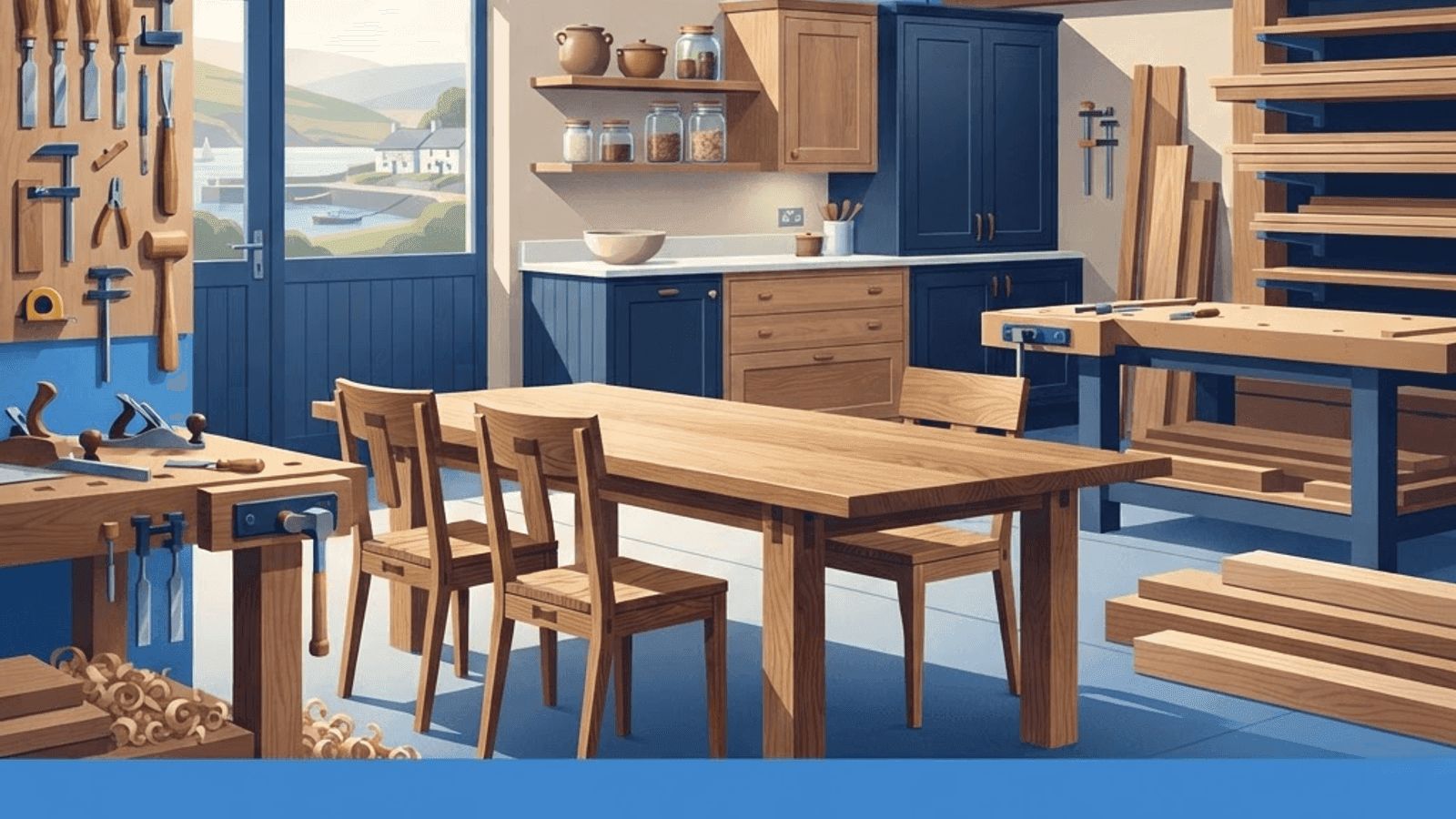
A County of Makers
Pembrokeshire has an unusually strong concentration of independent furniture makers for a rural county. Several factors explain this. Property values and workshop costs are lower than in urban centres, allowing small businesses to maintain the space that woodworking requires. The county attracts skilled craftspeople drawn by the landscape and lifestyle. Tourism supports retail demand for distinctive handmade pieces. A large stock of older cottages, farmhouses and converted barns creates constant demand for fitted furniture built to irregular dimensions that standard products cannot accommodate. Finally, the substantial holiday letting sector needs durable, attractive furnishings that withstand heavy year round use.
The result is a sector spanning individual bespoke makers, small production workshops, fitted kitchen and bedroom specialists, upholsterers and contract furniture suppliers serving hospitality clients.
The Different Kinds of Furniture Business
Bespoke furniture makers design and build individual commissioned pieces, often in solid hardwood, working directly with the client from sketch to installation. Fitted furniture specialists produce kitchens, bedrooms, studies and storage designed around a specific room, which matters enormously in period properties where nothing is square. Small batch producers make repeatable designs in limited runs for retail and online sale. Upholsterers manufacture and restore seating, combining frame making with foam, springing and fabric work. Contract furniture suppliers serve hotels, holiday parks, restaurants and offices with durable specification grade products. Restoration workshops repair and conserve antique and period furniture.
Ten Furniture Manufacturers and Workshops in Pembrokeshire
1. Cleddau Bespoke Furniture
A commission based workshop producing dining tables, sideboards and storage pieces in solid oak, ash and walnut, working closely with clients on proportion, timber selection and finish.
2. Preseli Kitchen Company
A fitted kitchen manufacturer building hand painted and timber kitchens in house, specialising in period cottages and barn conversions where standard cabinetry simply does not fit.
3. Coast and Cabin Contract Furniture
A supplier of durable furniture packages for holiday lets, glamping sites and guest accommodation, focused on pieces that survive intensive use and frequent changeovers.
4. Haven Upholstery Works
An upholstery workshop producing bespoke sofas and armchairs and restoring period seating, including traditional sprung construction and contemporary foam based builds.
5. Narberth Joinery and Interiors
A joinery business combining architectural woodwork with furniture making, producing staircases, panelling, built in storage and matching freestanding pieces for whole house projects.
6. St Davids Timber Studio
A design led maker creating sculptural and live edge pieces from locally sourced hardwood, with a strong emphasis on showcasing the natural character of individual boards.
7. Milford Commercial Furniture Fabrication
A producer of bar and restaurant fit out furniture, reception counters, banquette seating and heavy duty commercial tables built to withstand hospitality environments.
8. Pembroke Bedroom and Storage Makers
A fitted bedroom and storage specialist designing wardrobes, dressing areas and under eaves solutions tailored to the awkward roof lines common in older Welsh properties.
9. West Wales Furniture Restoration
A restoration and conservation workshop repairing antique furniture, including veneer work, French polishing, structural repair and sympathetic replacement of missing elements.
10. Tenby Outdoor and Garden Furniture
A maker of weather resistant outdoor furniture, benches and garden structures using durable timbers and marine grade fixings suited to an exposed coastal climate.
Timber Sourcing and Sustainability
Timber choice defines both the appearance and the environmental credentials of a piece. Responsible makers use certified timber from managed forests, and many in Pembrokeshire source Welsh and British hardwoods where possible, including oak, ash, sycamore and elm recovered from local woodland management. Reclaimed timber is popular for its character and low embodied carbon. Finishes have also changed, with water based lacquers and natural oils increasingly replacing high solvent products. Because solid timber furniture can last generations and be repaired rather than replaced, well made furniture is inherently one of the more sustainable purchases a household can make.
Commissioning Bespoke Furniture Successfully
Commissioning is a collaborative process and benefits from preparation. Begin with accurate dimensions and photographs of the space, along with images of styles you like and dislike. Be clear about budget at the outset, since timber species, joinery complexity and finish have a substantial cost impact and a good maker can steer the design accordingly. Expect a design stage with drawings and timber samples before construction begins. Ask about lead times honestly, as respected workshops are frequently booked several months ahead. Confirm delivery and installation arrangements, particularly for large pieces entering older properties with narrow staircases.
Trends in Furniture Making
Several trends are visible locally. Demand for natural materials and visible craftsmanship continues to grow as a reaction against disposable flat pack products. Multifunctional furniture is increasingly requested as homes accommodate remote working. Holiday let operators are specifying higher quality furnishings to differentiate their properties in a competitive market. Digital tools have entered the workshop, with computer numerical control routing and three dimensional visualisation used alongside hand skills rather than replacing them. Repair and reupholstery are enjoying a revival as owners choose to renew rather than discard well made older pieces.
Choosing a Furniture Maker
Visit the workshop if possible and look at work in progress, which reveals construction quality that a finished photograph conceals. Ask about joinery methods, since traditional jointing indicates durability. Request references from previous clients, particularly for large fitted projects. Clarify what is included, such as templating, delivery, installation and finishing on site. Agree a payment schedule with a deposit and staged payments rather than full payment upfront. Finally, discuss aftercare, including finish maintenance and the availability of repair should the piece be damaged.
Final Thoughts
Furniture making in Pembrokeshire is a living craft industry supported by real demand from homeowners, holiday operators and hospitality businesses. The county's makers offer something increasingly rare: furniture designed for a specific space, built by an identifiable person, using timber whose origin can be explained. For anyone furnishing a period property or a letting business, that combination of durability, character and local accountability is difficult to match through mass retail.
Want your brand featured in front of decision-makers? Publish a guest post or get a link insertion in our guides through AAMAX's guest post and link insertion service.
Helpful Links
 SponsoredAAMAX — Full-Service Digital Agency
Write for Us
Share your expertise with our readers. We welcome guest contributions from industry specialists.
Pitch your idea