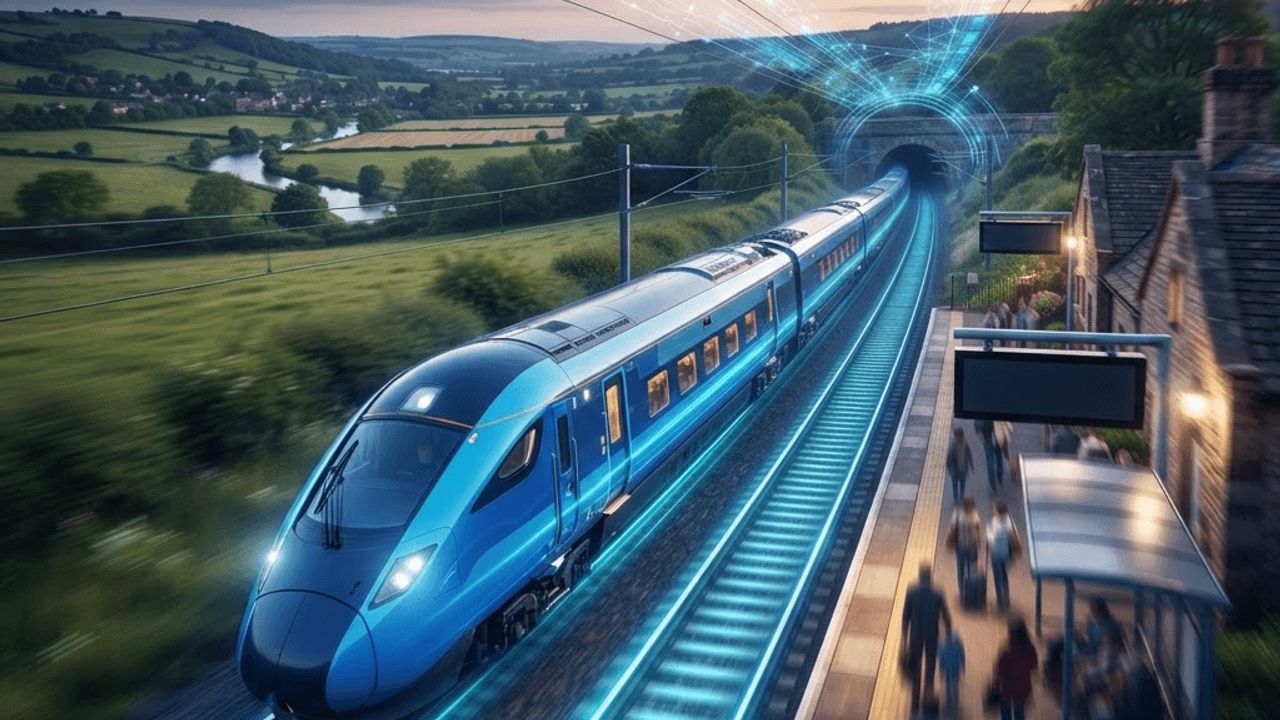
Rail in South Derbyshire: A Historic Corridor
Railways shaped this part of Derbyshire profoundly. Derby became one of the great railway towns of Britain, home to locomotive works and, later, to rail engineering and rolling stock manufacture that continues today. Burton upon Trent developed an extraordinary internal rail network to serve its breweries, with lines crossing streets throughout the town. That heritage still matters, because the corridors laid down in the nineteenth century remain the backbone of the district's rail connectivity.
Today South Derbyshire is served principally by the Birmingham to Derby line, which runs through Burton upon Trent, Willington and Tutbury and Hatton before reaching Derby. Willington station in particular provides a genuinely useful local service for villages in the centre of the district. Freight traffic on these routes is heavy, carrying aggregates, containers, automotive components and industrial materials.
Passenger Operators Serving the District
CrossCountry runs the long-distance services that give the district its widest reach. Trains through Burton upon Trent connect Birmingham and the South West with Derby, Sheffield, Leeds, York and Scotland, as well as eastward towards Nottingham and beyond. For anyone making a long journey, this is usually the operator of choice.
East Midlands Railway provides the regional and intercity backbone of the area, operating services from Derby towards London St Pancras, Nottingham, Sheffield, Leicester and Birmingham. Its local and regional services calling at Willington and Tutbury and Hatton are the ones most South Derbyshire residents use for commuting.
West Midlands Trains extends its network northward to Burton upon Trent from Birmingham, adding frequency on the corridor and offering competitive fares for travel into the West Midlands conurbation.
Avanti West Coast becomes relevant for journeys to the North West and Scotland via connections at Birmingham or Tamworth, providing high-speed options that local services feed into.
Northern and other northern operators connect at Sheffield and Derby for onward travel across Yorkshire and the North, making multi-operator journeys straightforward under through ticketing.
Freight Operators on Local Lines
DB Cargo UK is the largest rail freight operator in the country and has a major presence in the East Midlands, moving aggregates, steel, automotive traffic and intermodal containers. Its Toton and Derby area operations are central to Midlands freight.
Freightliner specialises in intermodal container traffic between ports and inland terminals, alongside a substantial heavy haul bulk business serving quarries and construction markets. Aggregate trains from Derbyshire quarries are a familiar sight on local lines.
GB Railfreight has grown rapidly and operates diverse traffic including intermodal, construction materials, infrastructure trains and biomass. Its flexibility and customer focus have won it significant Midlands business.
Direct Rail Services handles specialist movements including nuclear traffic and infrastructure support, and increasingly operates intermodal services for retail supply chains.
Colas Rail combines freight haulage with rail infrastructure engineering, operating track renewal and inspection trains across the network including the lines through South Derbyshire.
Heritage Railways Worth Knowing
The district and its surroundings host several heritage operations that matter both culturally and economically. The Ecclesbourne Valley Railway at Wirksworth runs restored diesel and steam services through the Derbyshire countryside. The Midland Railway Butterley preserves the heritage of the company that made Derby a railway town, with an extensive collection and demonstration line. The Great Central Railway at Loughborough, a short distance away, is Britain's only double-track main line heritage railway and runs impressive steam operations.
These lines are significant visitor attractions, employ skilled engineers, train volunteers in heritage trades and contribute meaningfully to the regional tourism economy.
Using the Railway Effectively
Ticketing offers substantial savings for those who plan. Advance tickets on long-distance services can cost a fraction of walk-up fares, though they tie you to a specific train. Off-peak and super off-peak returns provide flexibility at moderate cost. Split ticketing, where a journey is booked as two or more separate tickets on the same train, frequently reduces fares on routes through Derby and Birmingham.
Railcards deliver reliable value. The options for young people, older travellers, families, two people travelling together and disabled passengers all typically pay for themselves within a few journeys. Season tickets and flexible season products suit commuters, with the flexible options better matched to hybrid working patterns.
For station access, Willington and Tutbury and Hatton have limited parking, so arriving by bicycle or being dropped off is often easier. Burton upon Trent and Derby stations offer fuller facilities, more frequent services and better onward connections, and driving the short distance to one of them is frequently the faster overall journey.
Trends and Future Developments
Electrification of the Midland Main Line has progressed in stages, improving journey times and reducing emissions on Derby to London services, with bi-mode trains bridging electrified and non-electrified sections in the interim.
Rolling stock renewal has brought newer, more accessible trains onto regional services, with improved passenger information, power sockets and connectivity. Accessibility upgrades at smaller stations continue, though step-free access at rural stations remains an area needing investment.
Rail freight growth is a strategic priority nationally, driven by decarbonisation targets. Each freight train removes a substantial number of lorry movements from the road network, and strategic rail freight interchanges in the East Midlands are expanding capacity for this modal shift.
Industry restructuring continues to reshape how services are specified and operated, with implications for fares, timetabling and long-term investment that will play out over the coming years.
Final Thoughts
Rail in South Derbyshire delivers strong connectivity for a rural district, with local stations feeding into a network that reaches Birmingham, London, Manchester and Scotland. Freight operations on the same lines quietly support the regional economy, and nearby heritage railways preserve an engineering tradition that defined this area. Plan ahead, use railcards, and the railway remains one of the best ways to travel from and through the district.
Want your brand featured in front of decision-makers? Publish a guest post or get a link insertion in our guides through AAMAX's guest post and link insertion service.
Helpful Links
 SponsoredAAMAX — Full-Service Digital Agency
Write for Us
Share your expertise with our readers. We welcome guest contributions from industry specialists.
Pitch your idea