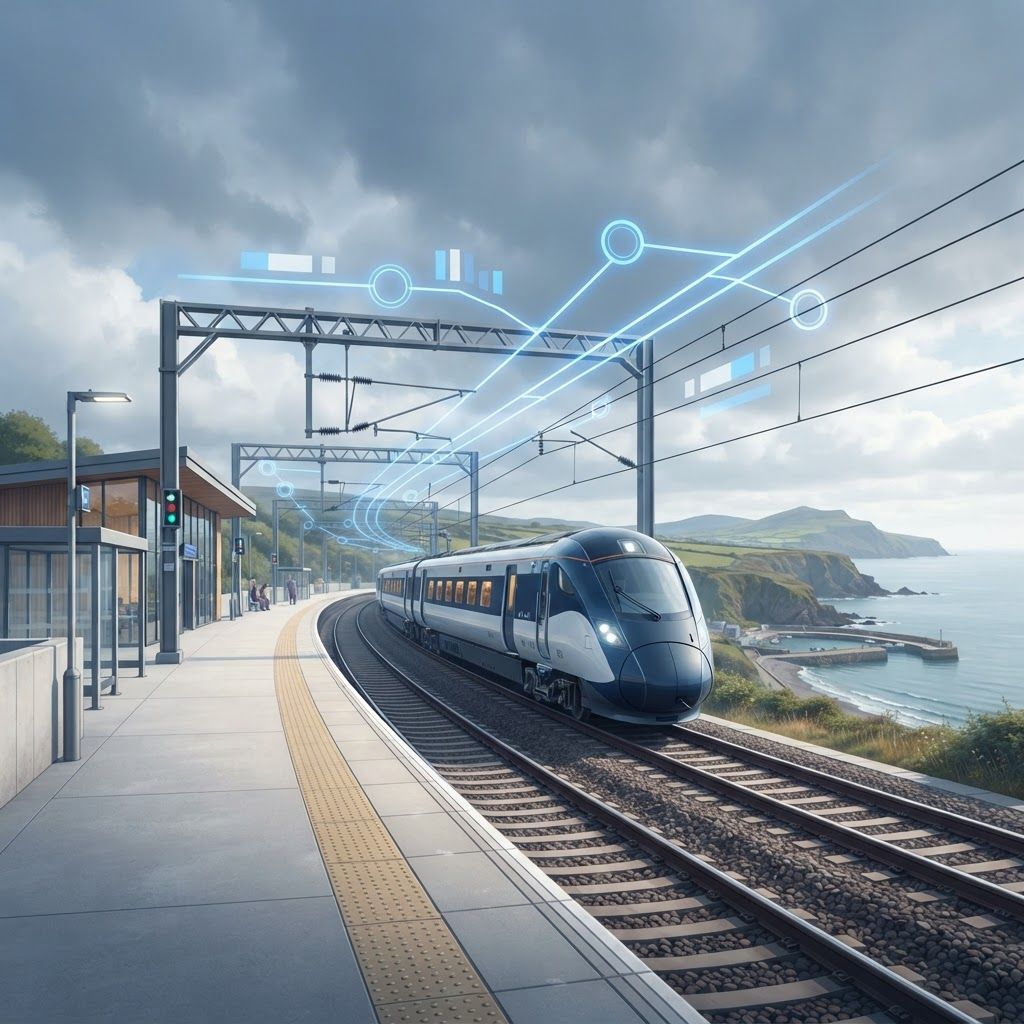
Rail's Place in Neath Port Talbot
Rail has shaped this borough for nearly two centuries. The South Wales Main Line runs directly through it, linking Swansea in the west with Cardiff, Newport, Bristol and London in the east. Two principal stations serve the area: Neath, close to the town centre and market, and Port Talbot Parkway, comprehensively redeveloped in recent years into a modern gateway station. Smaller stations including Briton Ferry, Baglan, Pyle and Skewen provide local access to the network.
Beyond passenger travel, rail freight has long supported the area's heavy industry, with bulk flows serving the steelworks. The combination makes the borough one of the more rail-significant locations in Wales, and understanding which operators do what helps both travellers and businesses make better decisions.
1. Transport for Wales
Transport for Wales operates the majority of local and regional services through the borough, connecting Neath and Port Talbot Parkway with Swansea, Bridgend, Cardiff and stations across Wales and the borders. As a publicly owned operator accountable to the Welsh Government, its remit extends beyond commercial performance to network development and social connectivity. Recent years have brought substantial fleet renewal, with newer trains offering improved accessibility, air conditioning, power sockets and passenger information.
2. Great Western Railway
Great Western Railway provides the long-distance intercity link from South Wales to London Paddington, with services calling at Port Talbot Parkway and Neath depending on the timetable. Electrification of the route as far as Cardiff and the introduction of bi-mode Intercity Express trains have improved journey times and capacity. For business travellers heading to London, Reading or Bristol, GWR is usually the fastest option from the borough.
3. CrossCountry
CrossCountry connects South Wales with Birmingham, the North of England and Scotland without requiring a change in London. For residents travelling to Manchester, Nottingham or beyond, these services remove a significant interchange and are often overlooked in journey planning.
4. Network Rail
Network Rail owns and maintains the track, signalling, bridges and major stations. Its role in the borough includes maintaining the main line through challenging coastal and valley terrain, managing level crossings and delivering enhancement projects. Passengers experience its work indirectly through reliability, engineering possessions and station improvements, and its infrastructure decisions ultimately determine what services can be operated.
5. DB Cargo UK
DB Cargo is among the largest rail freight operators in Britain and has a long association with the South Wales steel industry. It moves bulk materials, steel products and industrial commodities on flows that would otherwise require very large numbers of lorry movements. Its presence is a significant factor in the region's freight carbon performance.
6. Freightliner
Freightliner operates both intermodal container services and bulk rail freight, connecting Welsh industry with deep sea container ports and aggregate markets. Intermodal rail is particularly valuable for exporters shipping full container loads, combining lower emissions with competitive trunk haul economics.
7. GB Railfreight
GB Railfreight has grown rapidly across the UK network and operates a broad mix of intermodal, bulk, infrastructure and specialist traffic. Competition among freight operating companies has improved service innovation and pricing for industrial customers in South Wales.
8. Heritage and Preserved Railways in the Region
South Wales has an active heritage rail sector, with preserved lines within easy reach of the borough operating steam and heritage diesel services. These organisations, largely volunteer-run, preserve the industrial railway heritage that built the valleys and provide popular family days out, seasonal specials and educational visits.
9. Rail Delivery Group and Industry Bodies
Industry-wide bodies coordinate ticketing, retail standards and information across operators. For passengers, their practical significance is the ability to buy a single ticket covering multiple operators, use national journey planning tools and access consistent compensation arrangements when services are disrupted.
10. Transport for Wales Rail Infrastructure and Metro Development
Ongoing rail development in Wales, including the South Wales Metro programme and wider network enhancement proposals, has direct implications for the borough. Discussions around improved frequencies, additional stations and better connectivity between the coastal main line and valley communities continue to shape long-term planning.
Practical Travel Advice
Book long-distance journeys in advance, since walk-up fares to London are substantially higher than advance purchase tickets. Consider Port Talbot Parkway for intercity departures if driving, as parking is purpose-built and the station was designed as a park-and-ride gateway. Check for engineering work at weekends, when replacement bus services are common on the main line. Railcards offer significant savings for eligible travellers, and for regular commuting between Neath, Port Talbot, Swansea and Cardiff, season tickets and multi-journey products are considerably cheaper than daily purchases.
Accessibility and Station Facilities
Station accessibility varies. Port Talbot Parkway's redevelopment delivered step-free access and modern facilities, while smaller stations in the area have more limited provision. Assistance can be arranged in advance through the train operator, and passengers with mobility requirements are strongly advised to book assistance ahead of travel rather than relying on staff availability at unstaffed stations.
Trends and Future Outlook
Three developments deserve attention. Decarbonisation of rail continues through electrification and battery and bi-mode traction, reducing emissions on routes that cannot be fully electrified. Integrated ticketing across bus and rail in Wales is progressing, which matters in a borough where many journeys require both modes. And the changing industrial base, particularly the steel sector's transition, will reshape freight flows through the area over the coming decade.
Final Thoughts
Rail gives Neath Port Talbot something many similarly sized areas lack: direct intercity connectivity alongside regional and local services, plus genuine freight capability. For commuters, leisure travellers and businesses alike, the network is one of the borough's strongest practical assets. Planning ahead on fares, checking engineering works and choosing the right station for the journey will make the most of it.
Want your brand featured in front of decision-makers? Publish a guest post or get a link insertion in our guides through AAMAX's guest post and link insertion service.
Helpful Links
 SponsoredAAMAX — Full-Service Digital Agency
Write for Us
Share your expertise with our readers. We welcome guest contributions from industry specialists.
Pitch your idea