

Plastics Manufacturing in Newcastle-under-Lyme
The plastics industry in Newcastle-under-Lyme developed alongside the region's engineering and ceramics base, initially producing tooling, jigs and replacement components before growing into a sector in its own right. Today the borough and its immediate surroundings host injection moulders, vacuum formers, extruders, rotational moulders and plastic fabricators serving automotive, medical, construction, packaging and industrial customers.
What characterises the local sector is technical versatility rather than volume. Many firms here run high-mix, low-to-medium volume work, handling engineering polymers and awkward geometries that higher-throughput operations avoid. That flexibility, paired with in-house toolmaking in several cases, allows borough manufacturers to take a product from concept to production without a long chain of intermediaries.
Processes Available Locally
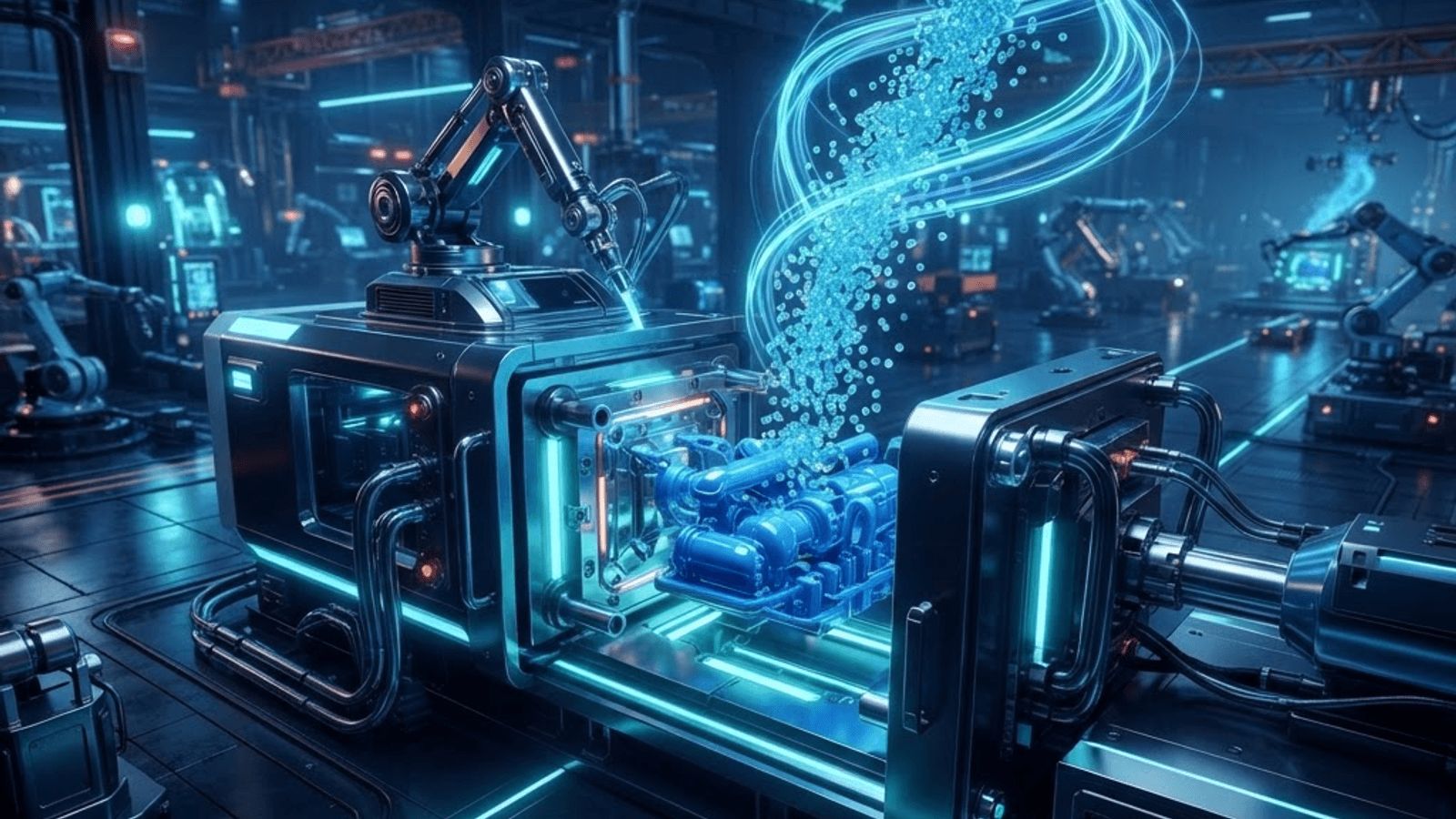
Injection moulding is the most common, producing high volumes of dimensionally precise parts from thermoplastics. Tooling costs are significant, so it suits established products with predictable demand. Vacuum forming and pressure forming create larger, shallower parts from sheet with far lower tooling investment, making it ideal for machine covers, trays and low-volume housings.
Extrusion produces continuous profiles, tube and sheet. Rotational moulding creates large hollow items such as tanks and containers. Plastic fabrication, using cutting, bending, welding and bonding of sheet material, handles bespoke one-offs and small batches economically. CNC machining of polymer stock serves prototyping and precision engineering components, while additive manufacturing has become a standard tool for rapid iteration.
The Top 10 Plastic Manufacturers Serving Newcastle-under-Lyme
1. Lymedale Plastics. A well-established injection moulder running a broad range of machine tonnages with in-house toolmaking and maintenance. Its ability to modify and repair tools on site keeps customer downtime short, which is a meaningful competitive advantage.
2. Chesterton Vacuum Forming. Specialists in thermoforming for machine guarding, point-of-sale displays, trays and large cosmetic covers. Lower tooling costs make it the natural route for products in the hundreds rather than hundreds of thousands.
3. North Staffs Polymer Engineering. Focused on engineering polymers such as PEEK, acetal, nylon and PTFE, producing machined components for demanding mechanical, chemical and thermal environments.
4. Silverdale Extrusions. Manufacturing custom profiles, tubing and sheet for construction, sealing and industrial applications, with die design capability that allows genuinely bespoke cross-sections.
5. Keele Medical Plastics. Producing components for medical devices, diagnostics and laboratory equipment under cleanroom conditions, with the validation and documentation regulated customers require.
6. Madeley Rotational Moulding. Making large hollow products including water tanks, bins, planters and containment vessels, a process well suited to robust, seamless items in modest quantities.
7. Borough Plastic Fabrication. Cutting, bending, welding and bonding acrylic, polycarbonate and polypropylene sheet into bespoke enclosures, tanks, screens and displays, ideal for one-off and short-run requirements.
8. Trentside Recycled Polymers. Processing post-industrial and post-consumer waste into usable regrind and compounded material, supplying moulders looking to increase recycled content without sacrificing processability.
9. Audley Toolmaking. Designing and manufacturing injection moulds and thermoforming tooling, offering the mould flow analysis and design for manufacture input that determines whether a part moulds well or fights the process forever.
10. Newcastle Rapid Prototyping. Combining additive manufacturing, CNC polymer machining and bridge tooling to get functional prototypes and pre-production parts into customers' hands within days.
Material Selection: The Decision That Matters Most
Polymer choice determines cost, performance and manufacturability more than any other factor. Commodity plastics such as polypropylene, polyethylene and polystyrene are inexpensive and easy to process but limited in mechanical and thermal performance. Engineering polymers including ABS, nylon, acetal and polycarbonate offer better strength, impact resistance and dimensional stability at higher cost. High-performance polymers such as PEEK and PPS handle extreme temperature and chemical exposure but are expensive and demanding to process.
Good manufacturers will interrogate the application before recommending a material: service temperature, chemical exposure, UV and weathering, load and impact, regulatory requirements such as food contact or flame retardancy, and end-of-life expectations all shape the answer.
Sustainability in the Plastics Sector
The industry faces intense scrutiny, and serious manufacturers are responding substantively rather than cosmetically. Recycled content is increasing, driven partly by the plastic packaging tax which penalises packaging containing less than thirty per cent recycled material. Mono-material design, replacing multi-layer composites with single-polymer constructions, makes products genuinely recyclable. Lightweighting reduces material use and transport emissions simultaneously.
Process efficiency also matters. All-electric injection moulding machines consume considerably less energy than hydraulic equivalents. Closed-loop regrind systems capture sprues and runners for immediate reuse. Improved cooling design reduces cycle times and energy per part together.
Choosing a Plastics Manufacturing Partner
Match the process to your volume and geometry before seeking quotes, or better still, ask a capable manufacturer to advise. Many products quoted for injection moulding would be better and cheaper vacuum formed or fabricated at the volumes actually required.
Clarify tooling ownership and storage from the outset. Who owns the mould, where is it kept, who maintains it, and can it be transferred if you change supplier? These questions are far easier to settle before the tool is cut.
Assess quality systems. Dimensional inspection capability, ISO 9001 certification, first article inspection procedures and traceability of material batches all indicate a manufacturer taking quality seriously. For medical and food applications, additional certification is essential.
Final Thoughts
The plastics manufacturers around Newcastle-under-Lyme offer an unusually broad spread of processes and material expertise within a small geographic area. For product developers and buyers, that means the right process is usually available locally, along with the toolmaking and design input needed to get it right. Engage a manufacturer early, at the design stage rather than after drawings are frozen, and the resulting part will almost always be cheaper, stronger and easier to produce.
Want your brand featured in front of decision-makers? Publish a guest post or get a link insertion in our guides through AAMAX's guest post and link insertion service.
Helpful Links
 SponsoredAAMAX — Full-Service Digital Agency
Write for Us
Share your expertise with our readers. We welcome guest contributions from industry specialists.
Pitch your idea

