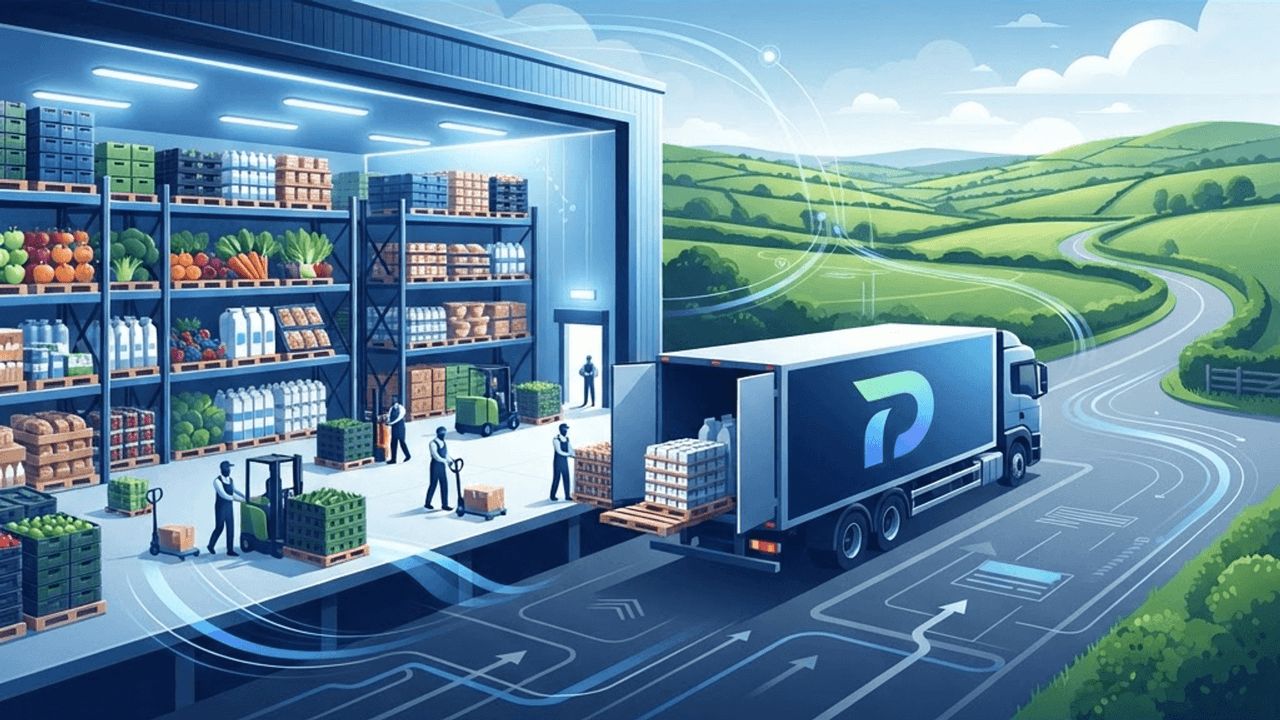
Farming on Crawley's Doorstep
It is easy to think of Crawley purely as a new town and an airport, but step a short distance beyond the built-up area and the landscape changes entirely. The Sussex Weald surrounds the borough with a patchwork of arable fields, pasture, woodland and horticultural holdings. Farms here work some of the most challenging soils in southern England, the heavy Weald clay that becomes unworkable when wet and sets hard when dry, and the farming enterprises that thrive do so through skill and adaptation.
Proximity to Crawley and to London gives these farms an advantage that more remote agricultural areas lack. A large, affluent population within a short drive supports farm shops, direct sales, box schemes, farmers markets and pick-your-own operations. Gatwick's hospitality sector provides a further outlet for local produce. This closeness to market has shaped the character of farming around Crawley, encouraging diversification and value-added production rather than pure commodity output.
The Agricultural Character of the Area
Several farming systems coexist around Crawley. Arable farming on the better-drained land produces wheat, barley, oilseed rape and increasingly break crops that support soil health. Livestock farming, principally beef cattle and sheep, makes productive use of the heavier clay pastures that are unsuitable for cultivation.
Horticulture has a strong presence, with field-scale vegetable production, soft fruit, orchards and protected cropping under glass and polytunnels. The Weald's microclimate and the region's growing viticulture sector have also brought vineyards into the landscape, with Sussex now firmly established as a serious English wine region.
Equestrian enterprises are notably numerous, reflecting both the landscape and the affluent local population. Livery yards, stud farms and grass keep arrangements form a meaningful part of the rural economy. Finally, diversified enterprises including farm shops, holiday accommodation, events venues, glamping and rural business units now contribute substantially to farm incomes.
The Ten Leading Farming Companies Serving the Crawley Area
1. Weald Arable Farming Company. A substantial arable enterprise growing combinable crops across the heavier Weald soils. They have adopted controlled traffic farming and reduced cultivation techniques to protect soil structure, and their precision application of inputs has cut both costs and environmental impact.
2. Sussex Pastures Livestock. A beef and sheep operation running grass-fed systems on permanent pasture. They supply local butchers and restaurants directly, and their rotational grazing approach has improved both sward productivity and biodiversity across their grassland.
3. Gatwick Edge Horticulture. A field-scale vegetable grower producing salad crops, brassicas and root vegetables for regional markets and direct sales. Their proximity to Crawley allows harvest-to-shelf times that distant growers cannot match, which is their main commercial advantage.
4. Ifield Valley Dairy. A dairy enterprise producing milk alongside on-farm processing into cheese, yoghurt and cream. Adding processing has transformed the economics of a modest herd, and their products appear in farm shops and independent retailers throughout the area.
5. Weald Vineyard Estates. A viticulture business producing sparkling and still wines from vineyards planted on south-facing Wealden slopes. Sussex viticulture has grown dramatically, and they combine wine production with visitor experiences, tastings and events that generate significant additional revenue.
6. Three Bridges Soft Fruit Growers. A soft fruit producer growing strawberries, raspberries and currants under protected cropping. Season extension through tunnels allows a long picking window, and they operate both wholesale supply and a pick-your-own operation that draws families from across the borough.
7. Crawley Downs Equestrian Farming. A combined grass keep, hay production and livery enterprise serving the substantial local equestrian community. Producing and selling forage alongside providing grazing and stabling creates complementary revenue streams from the same land base.
8. Sussex Regenerative Farming Collective. A group of holdings practising regenerative agriculture with cover cropping, minimal tillage, diverse rotations and integrated livestock. Their soil carbon and biodiversity monitoring has attracted interest from researchers and from buyers seeking lower-impact supply.
9. Broadfield Poultry and Egg Producers. A free-range egg and poultry enterprise supplying local retailers, farm shops and caterers. Their emphasis on welfare standards, ranging area quality and short supply chains resonates strongly with local consumers.
10. Pound Hill Farm Diversification Group. A farming business that has developed farm shop retail, a cafe, glamping accommodation and rural business units alongside continuing agricultural production. Their model illustrates how proximity to a large population can underpin farm viability.
Policy and Economic Change
British farming has been through a fundamental policy transition. The replacement of area-based subsidy with schemes rewarding environmental outcomes has changed the economics of land management considerably. Payments now attach to actions such as soil improvement, habitat creation, hedgerow management, nutrient management and public access rather than simply to hectares farmed.
For farms around Crawley, this has been broadly workable. Many holdings are modest in size and were never large subsidy recipients, and the environmental focus suits land that is marginal for intensive production. Woodland creation, wildflower margins and water quality measures fit naturally into Wealden farming systems.
Input cost volatility has been a harder challenge. Fertiliser, fuel and feed prices have swung sharply, squeezing margins and encouraging farms to reduce input dependency through better nutrient management, legume incorporation and grass-based livestock systems.
Labour availability remains a persistent constraint, particularly for horticulture where seasonal picking demand is intense. Growers have responded with mechanisation where possible and by improving worker accommodation and conditions to aid retention.
Environmental Stewardship and Biodiversity
Farms around Crawley sit within a landscape under development pressure, which gives their environmental management particular significance. Hedgerow restoration, pond creation, woodland management and field margin habitat all contribute to local ecological networks.
Biodiversity net gain requirements on development have created a new income stream. Developers must deliver measurable biodiversity improvement, and farmland can host these gains through long-term habitat agreements. Given the scale of development around Crawley and Gatwick, this represents a genuine opportunity for local landowners.
Water management has also risen in importance. The Weald clay generates rapid runoff, and farms are increasingly engaged in natural flood management through leaky dams, buffer strips and soil infiltration improvement, benefiting downstream communities as well as their own land.
Direct Selling and Local Food
Perhaps the most striking feature of farming around Crawley is the strength of direct sales. Farm shops, farmers markets, vegetable box schemes, honesty boxes and online ordering with local delivery all thrive here because the customer base is large, close and willing to pay for provenance.
Restaurants and hotels around Gatwick increasingly feature local produce on menus, and the marketing value of naming a nearby farm on a menu benefits both parties. This shortening of supply chains improves farm margins substantially compared with commodity selling, where the farm captures only a small fraction of retail value.
Conclusion
Farming around Crawley is a story of adaptation. Challenging soils, development pressure and policy upheaval might have discouraged agriculture entirely, yet the sector persists and in places thrives by leaning into its greatest asset: proximity to a substantial and appreciative market. The farms that are doing best combine sound agronomy with diversification, environmental stewardship and direct connection to the people who eat what they grow.
Want your brand featured in front of decision-makers? Publish a guest post or get a link insertion in our guides through AAMAX's guest post and link insertion service.
Helpful Links
 SponsoredAAMAX — Full-Service Digital Agency
Write for Us
Share your expertise with our readers. We welcome guest contributions from industry specialists.
Pitch your idea