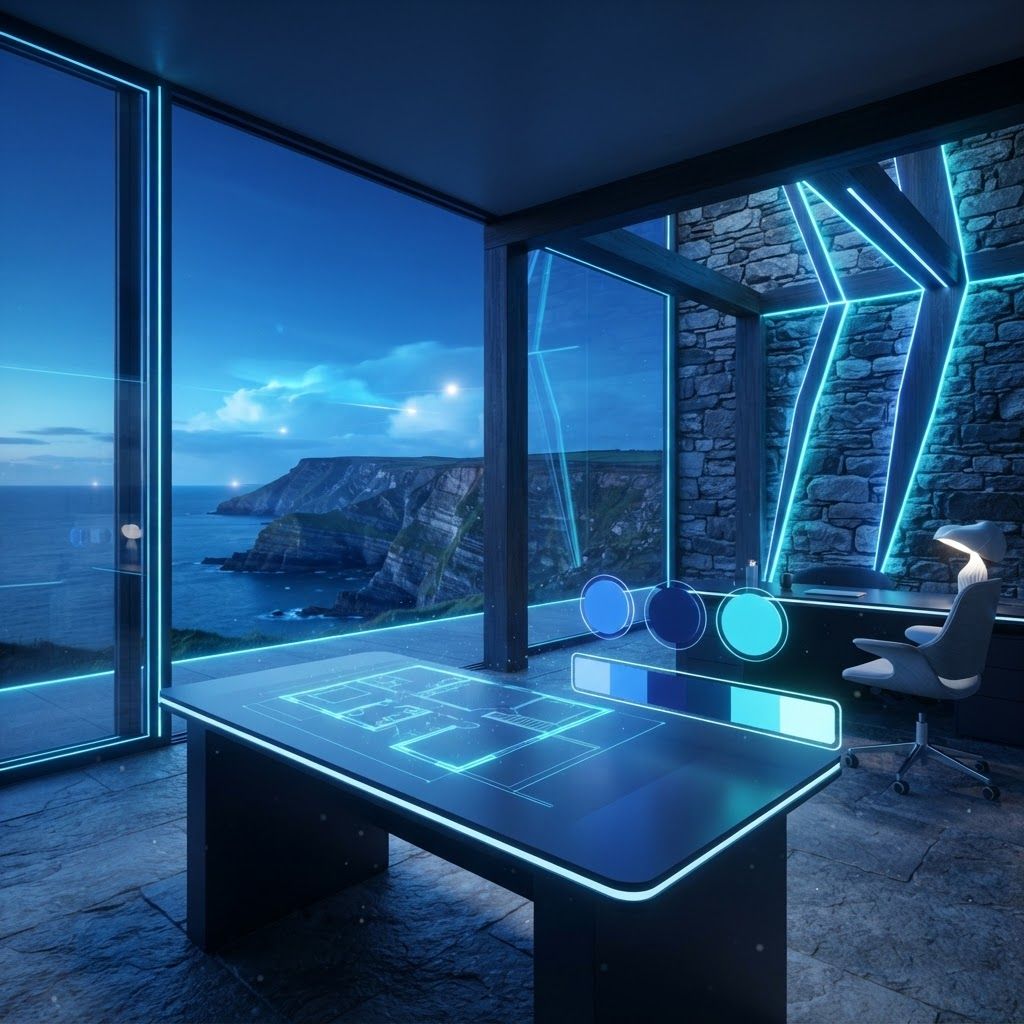
Designing Interiors for a Welsh Coastal County
Interior design in Pembrokeshire is shaped by the buildings it works with, and those buildings present distinctive challenges. Much of the county's housing stock is old: stone-built farmhouses, Georgian townhouses in Tenby and Haverfordwest, Victorian terraces in the waterway towns, chapels and barns converted to residential use. These buildings have solid walls, irregular geometry, small original windows and, frequently, listed status or conservation area constraints.
They also sit in one of the most demanding physical environments in Britain. Salt-laden air, driving rain from the Atlantic and sustained high winds test materials, finishes and fittings in ways that inland properties never experience. A designer who specifies a fashionable finish without considering coastal durability produces work that looks dated and damaged within a few seasons.
The best Pembrokeshire designers therefore combine aesthetic capability with genuine technical knowledge: how solid walls handle moisture, why breathable finishes matter in stone buildings, which timber and metal specifications survive coastal exposure, and how to introduce contemporary comfort into a historic structure without damaging it.
The Design Directions That Define the County
Coastal contemporary is the most visible aesthetic, characterised by large glazing oriented toward views, pale palettes, natural timber, oak and stone flooring and an emphasis on light. This suits newer builds and substantial extensions, and it dominates the premium market around Tenby, Saundersfoot and the north coast.
Welsh vernacular restoration takes the opposite approach, working with rather than against the character of older buildings. Lime plaster, slate, reclaimed timber, traditional joinery, inglenook fireplaces and Welsh wool textiles produce interiors rooted in place.
Rustic and agricultural conversion design applies to the county's many barn and outbuilding projects, celebrating structural timber, exposed stone and generous volumes while inserting modern services discreetly.
Holiday let and hospitality design forms a substantial commercial segment, requiring durability, photographic appeal and rapid turnaround alongside aesthetics, since these interiors must survive heavy use while photographing beautifully for booking platforms.
The Ten Leading Interior Design Firms
Coastal contemporary design studios serving Pembrokeshire specialise in high-end residential projects, typically working on new builds, substantial renovations and architect-led extensions along the coast. These practices handle full design service from concept through procurement to installation.
Heritage and listed building specialists occupy a critical niche. Pembrokeshire has a large number of listed buildings, and working on them requires understanding of listed building consent, appropriate materials and conservation principles. Designers with genuine heritage credentials prevent costly enforcement problems and produce more sympathetic results.
Narberth-based design practices reflect the town's position as Pembrokeshire's centre for independent design, retail and craft. Practices here often combine interior design with curated sourcing from Welsh makers, producing interiors with strong local identity.
Tenby and south coast designers serve the resort market, including the substantial second home and holiday property sector. Work here frequently involves maximising light and sea views within the constraints of Georgian and Victorian townhouse layouts.
Kitchen and bathroom design specialists across the county handle the two rooms that command the largest budgets and deliver the greatest impact on both daily living and resale value. Many operate showrooms in Haverfordwest and Pembroke Dock with full design and installation service.
Holiday let and hospitality interior designers serve a large local commercial market. Their expertise lies in balancing character, durability and photographic appeal, understanding that a cottage interior must survive fifty changeovers a year while still looking exceptional in listing photographs.
Commercial interior designers covering west Wales work on hotels, restaurants, retail premises, offices and co-working spaces. Pembrokeshire's hospitality sector has invested significantly in interiors as competition has intensified, creating steady demand for this specialism.
Sustainable and eco-design practices have grown notably. Specifying natural insulation, breathable lime finishes, reclaimed materials, low-VOC paints and locally sourced timber suits both environmental priorities and the technical requirements of historic Welsh buildings, making sustainability and conservation mutually reinforcing here.
Independent interior stylists and consultants offer lighter-touch services, including colour consultation, furniture sourcing, room styling and shopping lists. For homeowners with a clear vision but limited confidence, this hourly model delivers most of the benefit at a fraction of full-service cost.
Furniture makers and craft studios offering design services complete the list. Pembrokeshire has a genuine tradition of woodworking, ceramics, textiles and metalwork, and designers who integrate bespoke commissioned pieces produce interiors that cannot be replicated from a catalogue.
Trends in Pembrokeshire Interiors
Retrofit-led design is the most significant current trend. Rising energy costs and tightening regulation mean that interior projects increasingly begin with insulation, heating replacement and airtightness rather than with decoration. Designers who coordinate with retrofit specialists deliver better long-term outcomes than those treating aesthetics in isolation.
Natural and regional materials have gained ground strongly. Welsh slate, local stone, oak, wool and lime have moved from traditional necessity to contemporary preference, partly for environmental reasons and partly because they age well in a coastal climate.
Multi-functional space planning reflects changed living patterns. Home offices, boot rooms, utility spaces for outdoor equipment and flexible rooms that serve different purposes seasonally have become standard requirements in a county where outdoor life and remote work both shape how homes are used.
Choosing a Designer
Review portfolios for relevance rather than beauty. A designer whose published work consists entirely of new build coastal houses may not be the right choice for a Grade II listed farmhouse, however accomplished that work is.
Clarify the service scope and fee structure in writing. Interior design is charged variously by fixed fee, hourly rate, percentage of project cost or a combination, and procurement arrangements vary in whether the designer takes trade discount as their margin or passes it to you. Ambiguity here is the most common source of dispute.
Discuss the practicalities of rural projects explicitly. Delivery access on narrow lanes, contractor availability, lead times for specialist trades and the logistics of supervising a project in a remote location all affect timelines. A designer experienced in Pembrokeshire will have realistic answers; one used to urban projects may not.
Finally, check professional credentials and insurance. Membership of the British Institute of Interior Design indicates verified standards, and professional indemnity insurance matters on projects involving structural or building regulation implications. The strongest Pembrokeshire practices combine design confidence with technical rigour, and it is that combination, rather than aesthetic flair alone, that produces interiors which still look and perform well a decade later.
Want your brand featured in front of decision-makers? Publish a guest post or get a link insertion in our guides through AAMAX's guest post and link insertion service.
Helpful Links
 SponsoredAAMAX — Full-Service Digital Agency
Write for Us
Share your expertise with our readers. We welcome guest contributions from industry specialists.
Pitch your idea