

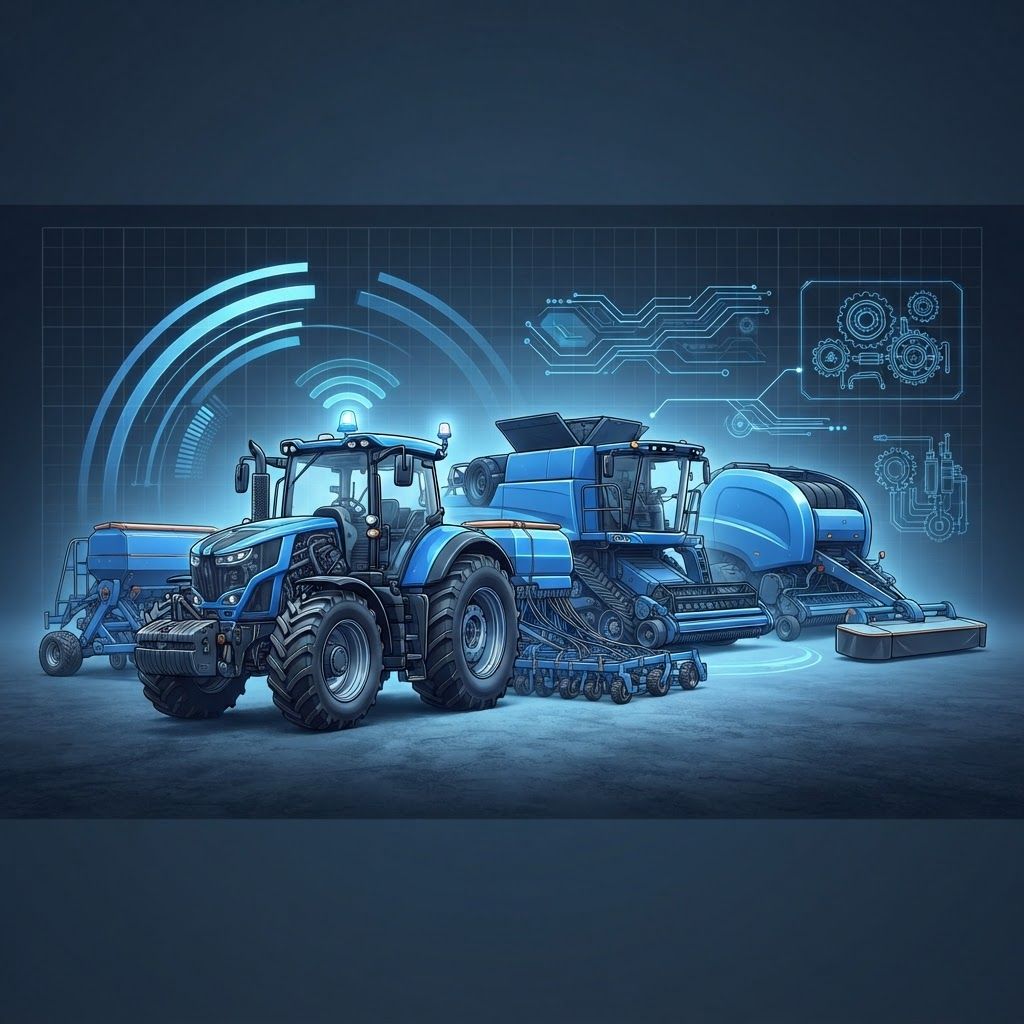
Machinery Choices in a Mixed Farming Borough
Ards and North Down presents a specific set of machinery challenges. Field sizes vary considerably, from large arable blocks on the peninsula to smaller, steeper drumlin fields inland. Narrow country roads limit practical transport widths, coastal salt air accelerates corrosion, and a mild but damp climate compresses the weather windows available for silage, drilling and harvest. Equipment that suits a wide continental plain does not automatically suit this borough.
For that reason, farmers here weigh brand reputation alongside three local factors: parts availability within a day, the quality of on-farm service support, and resale value in the Northern Ireland used market. A slightly more expensive machine with strong local backup routinely outperforms a cheaper alternative that sits idle waiting for a component.
How Local Farmers Evaluate Equipment
Practical evaluation criteria dominate. Fuel efficiency per hectare has become a leading concern as diesel costs remain elevated. Operator comfort matters more than it once did, both for productivity during long silage days and for recruiting and retaining skilled staff. Compatibility with precision systems, including GPS guidance, section control and data export, is now expected on new purchases rather than treated as a luxury. Serviceability is the quiet decider: machines designed for straightforward filter, belt and bearing access save real money over a decade of ownership.
The Ten Most Trusted Equipment Brands
1. John Deere
John Deere remains one of the most widely respected names across the borough, particularly for tractors in the mid and high horsepower bands and for forage harvesting. Its strengths are integrated precision agriculture systems, strong resale values and consistent build quality. Farmers running mixed arable and grassland operations often cite the brand's transmission refinement and data platform as decisive advantages.
2. Massey Ferguson
Massey Ferguson has deep historical roots in Northern Irish farming and continues to be a mainstay on family holdings. The brand's appeal lies in mechanical simplicity at the lower and mid horsepower end, sensible pricing and a very broad used market that keeps ownership costs predictable. For livestock farms doing feeding, bedding and yard work, it is a practical workhorse choice.
3. New Holland
New Holland is strongly represented in both tractors and combine harvesters. Its combines are well suited to the variable crop conditions found on the Ards Peninsula, where straw can be heavy and moisture unpredictable. The brand also offers a wide baler range, which matters in a borough where straw and hay trading is commonplace.
4. Case IH
Case IH earns its place through high-horsepower tractors and tillage equipment used by larger arable operators. The brand's continuously variable transmission options suit heavy draft work such as ploughing and deep cultivation, and its cab ergonomics are frequently praised by contractors who spend long hours in the seat.
5. Kubota
Kubota dominates the compact and utility end of the market. Smallholders, equestrian businesses, horticultural growers and groundcare operators across Holywood, Comber and Bangor rely on its compact tractors, mowers and mini excavators. Reliability, low running costs and manoeuvrability in tight spaces are the brand's consistent strengths.
6. Claas
Claas is closely associated with forage. Its self-propelled forage harvesters, mowers, rakes and balers are widely used by silage contractors, and chop quality and throughput are the qualities most often mentioned. In a borough where grass silage underpins livestock margins, forage-specialist machinery earns its premium.
7. Fendt
Fendt occupies the premium tier, chosen by operators who prioritise efficiency, precision and operator environment over initial purchase price. Its variable transmission and control systems deliver measurable fuel savings on high-hour applications, which is why larger contracting businesses in the area increasingly specify the brand.
8. Kverneland
Kverneland is a leading name in implements rather than tractors, covering ploughs, power harrows, seed drills, mowers and fertiliser spreaders. Its precision spreading and drilling equipment supports the variable-rate approaches now used on better-managed arable ground, and build robustness suits the stony soils found in parts of the borough.
9. McHale
McHale has a strong following for baling and wrapping equipment, with integrated baler-wrapper combinations that cut the number of passes needed during silage. For farms working around unpredictable weather, the ability to bale and wrap in one operation is a genuine risk-management tool rather than a convenience.
10. Malone and Regional Grassland Specialists
Irish-manufactured grassland equipment, including diet feeders, mowers, bale handlers and toppers, holds a respected position locally. These machines are designed around Irish and Northern Irish grassland conditions, tend to be straightforward to maintain, and benefit from short parts supply lines, making them practical choices for medium-sized livestock farms.
Technology Trends Worth Watching
Four developments are influencing purchasing decisions. Precision application is spreading downwards from large arable units to medium livestock farms, driven by fertiliser cost rather than technology enthusiasm. Telematics and remote diagnostics are reducing downtime by allowing dealers to identify faults before dispatching an engineer. Electrification is appearing first in compact and yard machinery, where duty cycles suit battery power. Finally, autonomy is emerging in specific tasks such as feeding and mowing, though widespread adoption in this borough remains some way off.
Buying Advice for Local Farms
The most consistent advice from experienced operators is to buy the dealer as much as the brand. Ask specifically about parts stock held locally, average response times during silage season, and whether service engineers cover weekends. Demonstrate machines on your own ground, not a flat demonstration field, since drumlin slopes and soft peninsula headlands reveal handling limitations quickly. Consider shared ownership or contracting for equipment used only a few days each year, which is often the smartest capital decision available. Finally, keep detailed running-cost records; over a five-year period, they will tell you far more about value than any brochure specification.
Want your brand featured in front of decision-makers? Publish a guest post or get a link insertion in our guides through AAMAX's guest post and link insertion service.
Helpful Links
 SponsoredAAMAX — Full-Service Digital Agency
Write for Us
Share your expertise with our readers. We welcome guest contributions from industry specialists.
Pitch your idea

