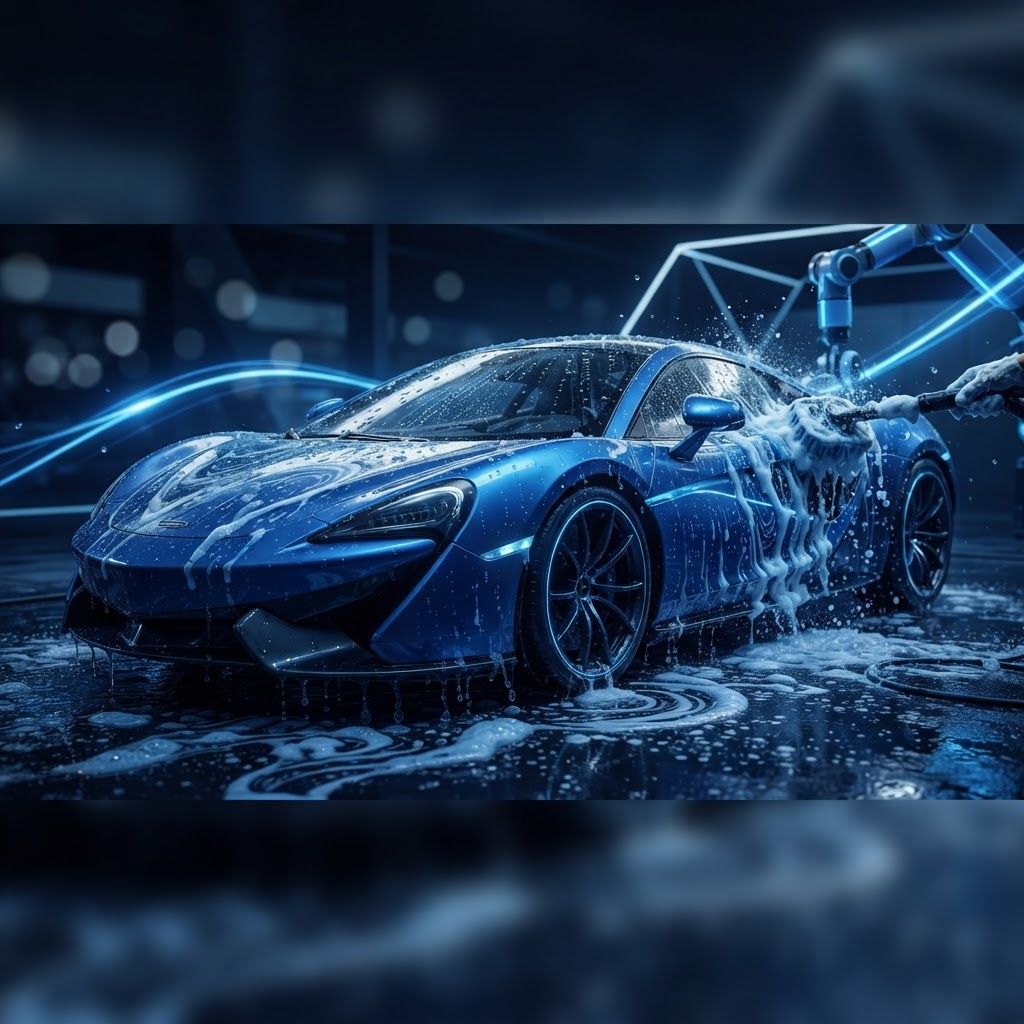
Why Washing Matters More in Scotland
Car washing in West Lothian is not simply cosmetic. Between November and March, local authorities grit and salt the M8, M9, A89, A801 and most urban routes heavily. That salt clings to underbody surfaces, wheel arches, brake components, sills and subframes, and it accelerates corrosion continuously while it remains in place. Rural roads around Linlithgow, Torphichen and Kirkliston add mud and agricultural debris, while summer brings tree sap, pollen and insect residue that etch clear coats if left.
Regular, correctly performed washing therefore protects vehicle value directly. Poor washing technique, however, causes its own damage — swirl marks, scratched paint and damaged trim are common results of aggressive brush systems and dirty wash mitts. Understanding the options available locally lets owners protect both appearance and resale value.
1. Hand Car Wash Facilities
Hand wash operations are widespread across Livingston, Bathgate and Broxburn, typically offering exterior wash, interior vacuum, glass cleaning and tyre dressing at accessible prices with quick turnaround. Their advantage over automated systems is that hands and mitts reach areas brushes cannot, and pressure can be adapted to the vehicle. Quality varies considerably, so the markers to look for are clean water, multiple buckets, separate mitts for wheels and paintwork, and clean drying towels. A well-run hand wash offers a genuinely better result than a mid-range automatic.
2. Automatic Rollover and Tunnel Washes
Automatic washes attached to fuel stations and supermarkets provide speed and convenience, and modern installations using soft cloth or foam media are considerably gentler than the older nylon brush machines. For a heavily soiled winter vehicle needing frequent salt removal, an automatic wash used regularly is far better than leaving the car dirty. Owners of dark-coloured or newly detailed vehicles should still be cautious, since accumulated grit in the wash media can leave fine marring over repeated visits.
3. Touchless and Jet Wash Systems
Touchless washes rely on high-pressure water and stronger chemical detergents rather than physical contact, eliminating the risk of brush-induced scratching. They suit vehicles with delicate paint, aftermarket wraps, ceramic coatings or complex body kits. The trade-off is reduced effectiveness on bonded contamination such as brake dust and traffic film, and the stronger alkaline chemicals can degrade wax protection over time. Many owners use touchless as a maintenance wash and hand wash periodically for deeper cleaning.
4. Self-Service Jet Wash Bays
Coin and card-operated jet wash bays remain popular with cost-conscious and enthusiast owners alike. They allow thorough underbody rinsing, which is arguably the single most valuable winter maintenance action in Scotland, and they let the user control exactly how much pressure is applied and where. Enthusiasts often bring their own snow foam, wash media and drying towels, using the bay only for water supply. Care is needed around door seals, engine bay electronics and any existing paint damage, where high pressure can lift edges.
5. Mobile Valeting Services
Mobile valeters travel to homes, driveways and workplaces, which suits Livingston's commuter population and business parks well. Services range from a basic wash and vacuum through to full interior sanitisation and exterior polish. Modern operators typically carry their own water tanks and generators, so no household supply is needed. The convenience factor is significant for owners with limited free time, and quality among established mobile valeters is often high because their business depends almost entirely on repeat local custom.
6. Full Valeting Centres
Dedicated valeting centres provide comprehensive interior and exterior treatment: shampooed carpets and upholstery, leather cleaning and conditioning, engine bay cleaning, machine polishing and protective sealant application. This level of service is particularly valuable before sale or lease return, where presentation directly influences price or end-of-contract charges. Full valets also address issues casual washing never touches, such as embedded pet hair, headlining stains, ventilation odours and heavily contaminated boot linings.
7. Professional Detailing Studios
Detailing operates at a different level from valeting. A detailer performs decontamination, clay bar or chemical fallout removal, paint depth measurement, multi-stage machine correction to remove swirls and scratches, and then applies long-term protection. Interior detailing includes deep extraction and trim restoration. This is a considered investment appropriate to premium, performance, classic and enthusiast-owned vehicles, and results transform paintwork condition in a way no wash can replicate.
8. Ceramic Coating Specialists
Ceramic coatings have become the leading paint protection option, and specialist applicators across the Central Belt now offer them widely. A properly prepared and applied coating creates a hard, hydrophobic layer that resists salt, chemical staining and water spotting for years rather than weeks. In the Scottish climate, the practical benefits are substantial: winter grime releases more easily, washing becomes faster and safer, and protection persists through repeated wet-weather driving. Preparation quality determines the result, so applicator skill matters far more than product brand.
9. Paint Protection Film Installers
Paint protection film, often called clear bra or PPF, is a transparent urethane layer applied to high-impact areas — bonnet leading edge, front bumper, wing mirrors, A-pillars and sills. On Scottish roads, where loose chippings and winter grit are a persistent hazard, PPF prevents the stone chip damage that afflicts almost every high-mileage motorway vehicle. Modern films are self-healing against light scratches and can be combined with a ceramic coating over the top. Installation precision, particularly around edges and complex curves, separates good work from poor.
10. Fleet and Commercial Vehicle Washing
Businesses across West Lothian operating vans, HGVs, minibuses and company car fleets need scheduled washing services, and specialist providers handle this on site or at depots. Clean liveried vehicles function as mobile advertising, and for HGV operators, clean lights, plates and reflective markings are a compliance matter as well as a presentation one. Commercial providers typically offer contract scheduling, water recycling systems and out-of-hours attendance so vehicles are cleaned without losing operational time.
Getting the Best Results Year Round
In winter, prioritise frequency and underbody rinsing over gloss. Washing every one to two weeks removes salt before it does lasting harm, and paying attention to wheel arches, sills and the area behind bumpers targets the places corrosion actually starts. Avoid washing in freezing conditions where water can freeze in door and boot seals.
In warmer months, remove insect residue, sap and bird lime promptly because they etch clear coat quickly in sunlight. Apply a wax or sealant in autumn so protection is in place before the salting season. If you wash at home, use the two-bucket method with grit guards, wash top-down, use a separate mitt for wheels, and dry with a clean microfibre or a drying aid rather than letting hard water evaporate on the panels.
Environmental and Practical Considerations
Responsible operators manage wastewater properly, using interceptors to prevent detergents, oils and heavy metals from entering surface drains. Many now use water recycling systems and biodegradable, pH-neutral chemicals, which reduce both environmental impact and paint damage risk. Waterless and rinseless wash products have also improved considerably and suit lightly soiled vehicles or locations where water use is restricted.
Final Thoughts
The right choice depends on your vehicle, budget and priorities. Automatic and touchless washes deliver frequency and convenience through winter, hand washes offer better results for modest cost, mobile valeters solve the time problem, and detailers, ceramic coating specialists and PPF installers protect long-term value. Whichever route you take, consistency matters more than any single treatment — regular salt removal is the most effective corrosion protection available to any driver in West Lothian.
Want your brand featured in front of decision-makers? Publish a guest post or get a link insertion in our guides through AAMAX's guest post and link insertion service.
Helpful Links
 SponsoredAAMAX — Full-Service Digital Agency
Write for Us
Share your expertise with our readers. We welcome guest contributions from industry specialists.
Pitch your idea