

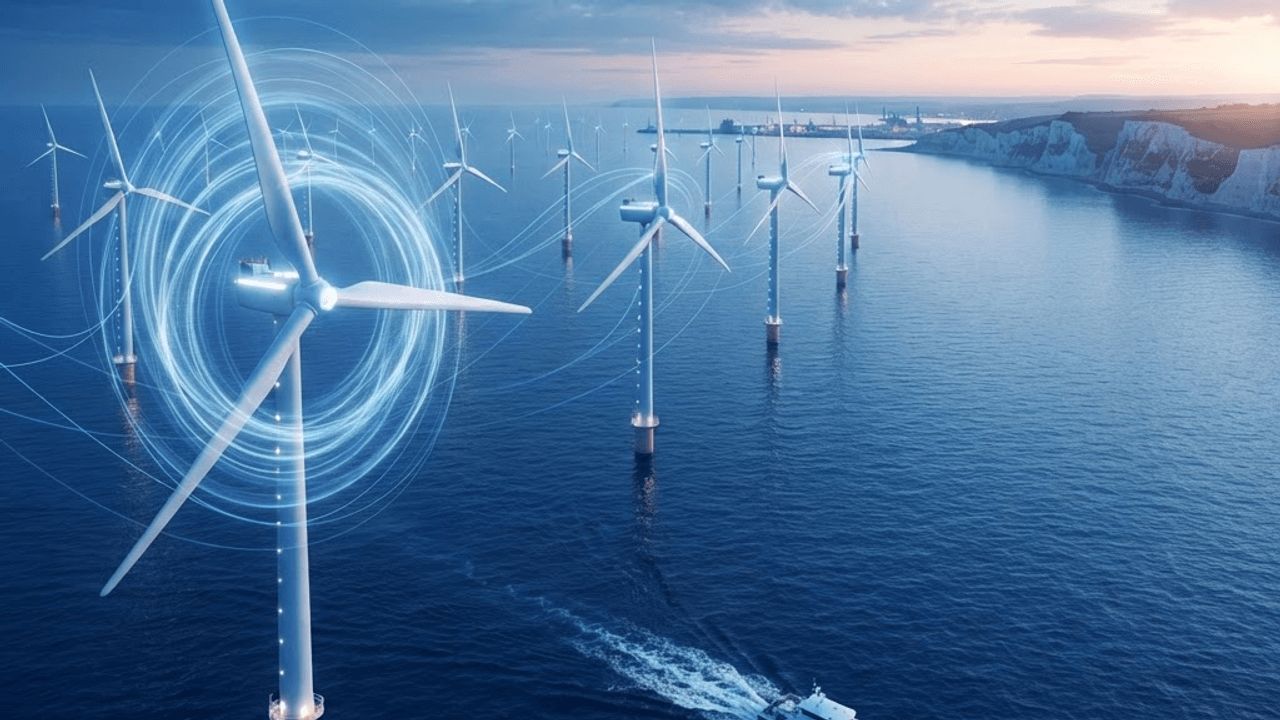
Wind Power and the Thanet Coastline
Of all the places in Britain associated with wind energy, Thanet holds a special position. The array off its coast was, at the time of its commissioning, among the largest offshore wind developments in the world, and it remains one of the most visible symbols of the country's energy transition. From the cliffs at Broadstairs and North Foreland, the turbines mark the horizon as a permanent reminder of how the district's relationship with the sea has evolved.
Beyond the visual landmark, wind energy has delivered tangible economic substance. Ramsgate's port functions as an operations and maintenance base, supporting technicians, crew transfer vessels, engineering contractors and training providers. For a district that historically relied on seasonal tourism and declining industry, year-round skilled employment in a growth sector has been genuinely significant.
The Ten Leading Wind Energy Companies in Thanet
1. Thanet Offshore Wind Services is the principal operations and maintenance contractor working from Ramsgate, managing scheduled servicing, unplanned repairs and technician logistics for offshore assets in the Thames Estuary.
2. Ramsgate Marine Energy Support provides port-side infrastructure, vessel berthing coordination, component storage and welfare facilities for offshore crews, making use of the harbour's deep-water capability.
3. Isle Renewable Engineering delivers specialist mechanical and structural services including blade inspection and repair, bolt tensioning, gearbox servicing and corrosion protection in demanding marine conditions.
4. Kent Coast Turbine Maintenance focuses on onshore and small-scale wind installations across east Kent, servicing farm-scale turbines, performing electrical testing and managing statutory inspections.
5. Northdown Wind Consultants undertakes wind resource assessment, yield modelling, environmental impact work and planning support for proposed developments, advising landowners and developers alike.
6. Margate Offshore Logistics coordinates the movement of components, tooling and personnel between suppliers, port and site, a discipline where scheduling efficiency directly determines project cost.
7. Broadstairs Wind Technician Training delivers the safety and technical certification required for offshore work, including working at height, sea survival, first aid and electrical competence.
8. Westwood Cable and Grid Services specialises in subsea and onshore cable installation, jointing, testing and fault location, along with substation and grid connection works.
9. Cliftonville Marine Survey and Inspection provides hydrographic survey, scour monitoring, remotely operated vehicle inspection and geotechnical assessment around turbine foundations.
10. Thanet Wind Data Analytics applies condition monitoring and predictive maintenance analysis to turbine performance data, identifying component degradation before failure occurs and reducing costly unplanned downtime.
How Modern Offshore Turbines Work
A wind turbine converts the kinetic energy of moving air into rotational mechanical energy, which a generator converts into electricity. The power available increases with the cube of wind speed, which explains why even modest improvements in site wind resource produce substantial gains in output, and why offshore locations with steady, unobstructed wind are so valuable.
Turbine scale has grown dramatically. Early offshore machines rated at a few megawatts have given way to units exceeding fifteen megawatts with blades longer than a hundred metres. Larger machines reduce the number of foundations, cables and service visits per unit of energy produced, which is the principal reason offshore wind costs have fallen so sharply.
Foundations vary with water depth and seabed conditions. Monopiles dominate in shallower waters such as those off Thanet, while jackets and, increasingly, floating platforms extend development into deeper sites.
Operations, Maintenance and the Ramsgate Base
Building an offshore array is a multi-year project; operating it is a multi-decade commitment. Technicians transfer to turbines by crew vessel or helicopter, carrying out scheduled servicing, oil changes, blade inspections and electrical testing, as well as responding to faults.
Weather windows govern everything. Wave height limits determine whether transfer is possible, so operators plan work around forecasts and maintain flexible scheduling. Ramsgate's proximity to the array reduces transit time, improving the proportion of each shift spent productively on the turbine rather than travelling.
Condition monitoring has transformed this discipline. Vibration sensors, oil particle analysis, thermal imaging and performance analytics allow operators to identify a failing bearing weeks before it seizes, converting an emergency lift operation into a planned intervention at a fraction of the cost.
Onshore and Small-Scale Wind
While offshore dominates the headlines, small and medium-scale wind has a role in rural east Kent. Farm-scale turbines can offset substantial on-site electricity consumption for irrigation, cold storage and processing. Viability depends heavily on genuine site wind resource, which requires measurement rather than assumption, along with planning permission, grid connection capacity and proximity to residential properties.
Turbulence from buildings and trees significantly reduces output from poorly sited machines, which is why reputable consultants insist on proper resource assessment before any commitment.
Environmental and Community Considerations
Offshore wind development involves detailed environmental assessment covering marine ecology, ornithology, fisheries, navigation, archaeology and seascape impact. Monitoring continues through operation, and foundations often develop into artificial reef habitat supporting marine life.
Community response in Thanet has been broadly positive, aided by the visible connection between the turbines offshore and the jobs onshore. Community benefit funds and local supply chain commitments have reinforced that relationship.
Careers in Wind Energy
The sector offers a genuine career route for local residents. Entry typically comes through an apprenticeship or a technician conversion programme combining electrical or mechanical fundamentals with offshore safety certification. Progression leads to senior technician, lead technician, site supervisor and management roles, with transferable skills across the wider marine and energy industries.
Demand consistently exceeds supply nationally, and training providers in Thanet have positioned themselves to serve the entire southern offshore fleet, not just the local array.
The Future of Wind in the Region
Repowering of older arrays with larger, more efficient turbines, extension of existing sites, development of floating platforms for deeper water and integration with hydrogen production and battery storage all feature in the sector's medium-term outlook. Grid capacity in the south east remains the principal constraint, making transmission reinforcement and flexible demand increasingly central to the conversation.
For Thanet, the strategic position is favourable. A working port, an established technician base, proximity to major arrays and a training infrastructure already in place give the district a durable role in an industry that will be operating and expanding for decades.
Want your brand featured in front of decision-makers? Publish a guest post or get a link insertion in our guides through AAMAX's guest post and link insertion service.
Helpful Links
 SponsoredAAMAX — Full-Service Digital Agency
Write for Us
Share your expertise with our readers. We welcome guest contributions from industry specialists.
Pitch your idea

