

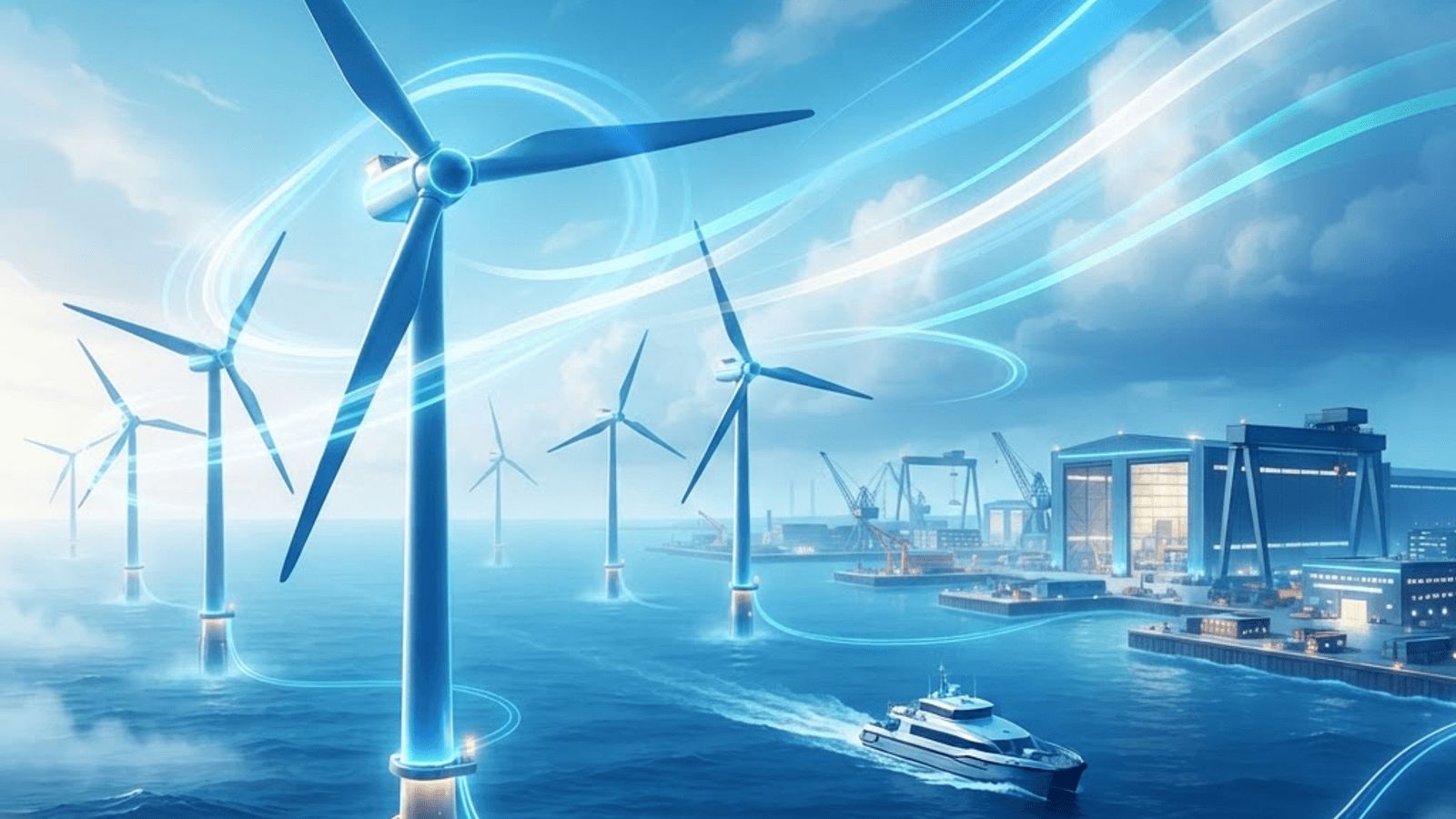
From Shipbuilding to Turbines
South Tyneside's industrial identity was forged on the river. Shipyards at Jarrow, Hebburn and South Shields once produced vessels recognised worldwide, and although that era ended, the underlying capabilities did not disappear. Heavy fabrication, precision welding, marine logistics, quayside handling, subsea engineering and vessel operations are precisely the skills the offshore wind industry requires, and the transition has given the riverside a genuine second industrial chapter.
The North Sea now hosts some of the largest offshore wind farms in the world, and the Tyne has established itself as an operations, maintenance and logistics base supporting them. That activity ripples outward into a wide supply chain: fabrication workshops, cable and connector suppliers, crew transfer operators, inspection specialists, training providers and engineering consultancies, many of them based within or adjacent to South Tyneside.
The Structure of the Wind Energy Supply Chain
Development and consenting covers site assessment, environmental surveys and grid connection. Manufacturing and fabrication covers foundations, transition pieces, secondary steel, platforms and cable protection systems. Installation covers heavy lift vessels, cable laying and jack-up operations. Operations and maintenance covers technician deployment, blade inspection and repair, gearbox and generator servicing, and remote condition monitoring. Onshore wind, though smaller in the borough, involves turbine installation, planning support and community engagement. Underpinning all of it are training, safety and certification providers.
The Top 10 Wind Energy Companies in South Tyneside
1. Riverside Offshore Wind Services
A cornerstone of the local supply chain, Riverside Offshore Wind Services provides fabrication support, component handling, quayside marshalling and technician mobilisation for North Sea projects, with an operational culture rooted in marine engineering discipline.
2. Tyne Turbine Maintenance
Specialising in operations and maintenance, Tyne Turbine Maintenance deploys certified technicians for scheduled servicing, fault rectification, torque and tension work and high-voltage switching on offshore assets.
3. Jarrow Heavy Fabrication
Drawing directly on shipyard heritage, Jarrow Heavy Fabrication manufactures secondary steel structures, access platforms, boat landings, ladders and transition piece components to offshore coating and inspection standards.
4. Shields Blade Inspection & Repair
This company undertakes rope access and platform-based blade inspection, leading edge erosion repair, composite laminate work and coating restoration, extending blade life and protecting energy yield.
5. Boldon Subsea Cable Services
Boldon Subsea Cable Services focuses on array and export cable work, including cable protection systems, scour management, burial assessment, jointing support and survey interpretation.
6. Hebburn Crew Transfer & Marine Logistics
Operating vessels and shore-side coordination, Hebburn manages technician transfer, tooling and spares movement, port scheduling and marine coordination for offshore campaigns.
7. Simonside Wind Engineering Consultancy
Simonside provides structural and geotechnical engineering input, fatigue and load analysis, foundation assessment, lifetime extension studies and independent verification for asset owners.
8. Coast Offshore Safety Training
Delivering industry-recognised safety and technical training, Coast Offshore Safety Training covers working at height, sea survival, first aid, manual handling and high-voltage authorisation for offshore personnel.
9. Cleadon Onshore Wind Developments
Cleadon works on small and medium-scale onshore turbines for industrial and agricultural sites, handling feasibility, wind resource assessment, planning applications and grid connection negotiation.
10. Harbour Condition Monitoring Systems
Harbour supplies remote monitoring and analytics for turbine drivetrains and structures, using vibration, temperature and strain data to predict component failure before unplanned downtime occurs.
Careers and Skills in Offshore Wind
For local people, offshore wind offers one of the clearest technical career routes in the region. Wind turbine technician roles combine mechanical, electrical and hydraulic work with strict safety discipline, and entry typically follows an apprenticeship or a conversion pathway from marine, automotive or industrial maintenance backgrounds. Certification requirements are substantial, covering working at height, sea survival, first aid, manual handling and high-voltage authorisation, and these qualifications are portable across employers and projects. Beyond technician work, the sector employs welders and fabricators, rope access specialists, blade repair composite technicians, marine crew, project engineers, planners, inspectors and data analysts monitoring turbine performance. Rotational offshore patterns are demanding, but pay levels and progression opportunities are considerably above regional averages for comparable skill levels.
Trends Shaping Wind Energy
Turbine size continues to grow, which raises the engineering demands on foundations, vessels and port infrastructure while reducing cost per megawatt hour. Lifetime extension has become a major workstream as early wind farms approach original design life, creating steady inspection and refurbishment demand. Floating offshore wind is emerging as the route to deeper waters, requiring new mooring and dynamic cable expertise. Grid capacity and connection queues remain a persistent constraint. Skills pipelines, particularly welders, electrical technicians and rope access specialists, are the sector's tightest bottleneck.
Working With Wind Energy Suppliers
For asset owners and tier-one contractors, supplier selection turns on certification, safety performance and demonstrable offshore experience rather than price alone, because vessel time makes delay extraordinarily expensive. For local businesses seeking to enter the supply chain, the practical route is accreditation first, followed by subcontract work with an established tier-two supplier to build offshore-relevant track record. Clear documentation, traceable materials and robust quality control are non-negotiable expectations.
Final Thoughts
Wind energy has given South Tyneside a credible industrial future built on capabilities it already possessed. From heavy fabrication and blade repair to subsea cable work, crew transfer, training and condition monitoring, the borough hosts companies embedded across the offshore value chain, and continued North Sea investment suggests that role will keep expanding.
Want your brand featured in front of decision-makers? Publish a guest post or get a link insertion in our guides through AAMAX's guest post and link insertion service.
Helpful Links
 SponsoredAAMAX — Full-Service Digital Agency
Write for Us
Share your expertise with our readers. We welcome guest contributions from industry specialists.
Pitch your idea

