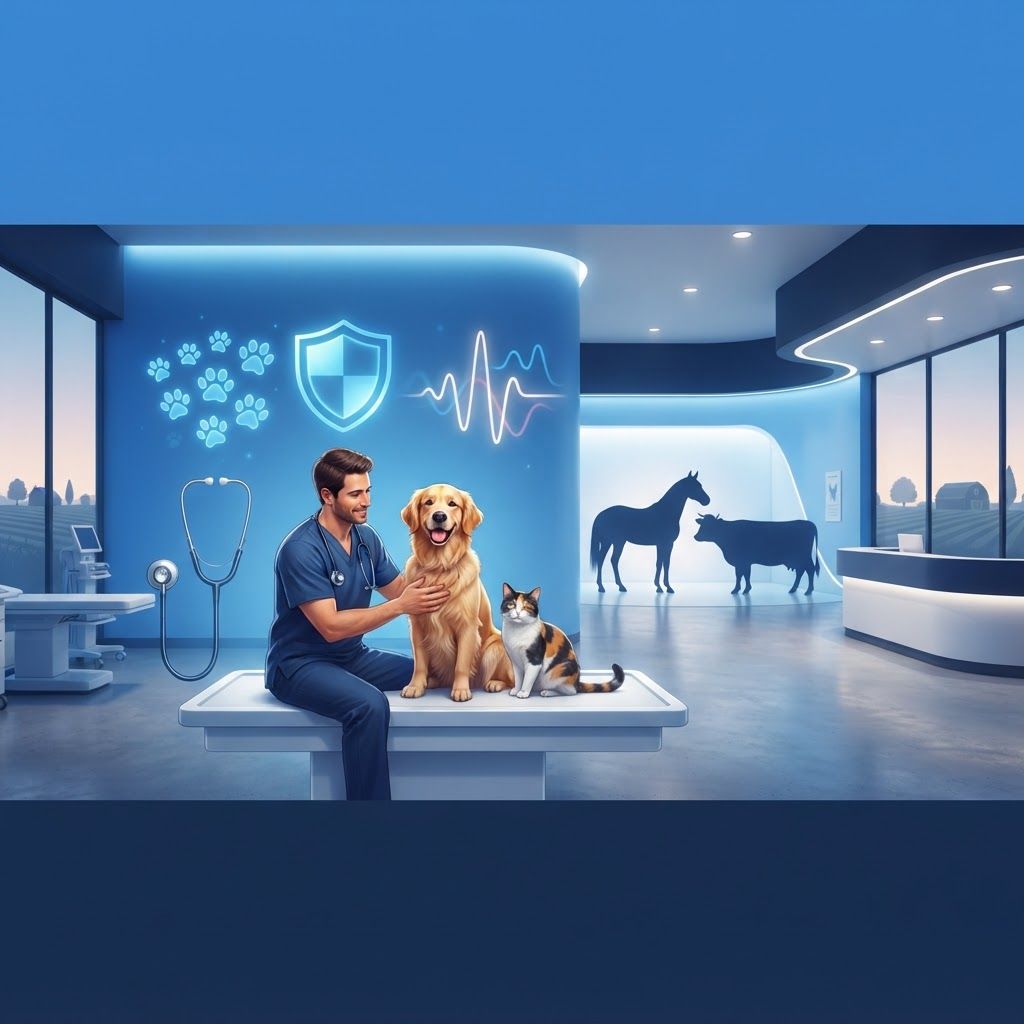
Veterinary Care in a Mixed Rural and Urban District
North Lincolnshire presents an unusual veterinary landscape. Scunthorpe and its suburbs generate high volumes of companion animal work, from routine vaccination and neutering to complex diagnostics and orthopaedic referral. Beyond the town, the arable and livestock farms of the Ancholme valley, the Isle of Axholme and the Wolds fringe require large animal and herd health services, while a substantial equine population around Brigg, Barton-upon-Humber and the surrounding villages supports dedicated horse practice.
The result is a mix of practice types. Some are small-animal only, investing in advanced imaging, dentistry and soft tissue surgery. Others are genuinely mixed, running farm and equine rounds alongside a companion animal clinic. A growing number are part of larger veterinary groups, which brings access to referral networks and out-of-hours infrastructure, while independent practices continue to compete effectively on continuity and personal relationships.
The Ten Best Veterinary Clinics in North Lincolnshire
1. Ancholme Veterinary Group
Ancholme Veterinary Group is widely regarded as one of the strongest all-round practices in the district. Its companion animal service covers routine health care, in-house laboratory diagnostics, digital radiography, ultrasound and a well-equipped surgical suite, while its farm team supports herd health planning, fertility work and TB testing across the surrounding countryside. The practice's dedicated dental facility addresses one of the most under-treated aspects of pet health, and its preventative health plans make ongoing care predictable for owners.
2. Scunthorpe Veterinary Hospital
As the largest small-animal facility in the area, Scunthorpe Veterinary Hospital offers a depth of capability that smaller clinics cannot match. Inpatient wards with separate cat and dog accommodation, on-site diagnostics, orthopaedic surgery and extended consulting hours make it the natural choice for complex cases. Its nursing team runs dedicated clinics for weight management, senior pets and post-operative rehabilitation, and referral relationships mean cases needing specialist imaging or oncology are moved on quickly rather than lingering.
3. Brigg Veterinary Practice
Brigg Veterinary Practice combines companion animal care with substantial equine and farm work, reflecting its market-town catchment. Owners value the continuity of seeing the same vet across years of an animal's life, which improves both diagnosis and compliance. The practice is well regarded for chronic disease management in older pets, particularly arthritis, kidney disease and endocrine conditions, where regular monitoring and familiar clinical relationships genuinely improve quality of life.
4. Barton Animal Health Centre
Serving Barton-upon-Humber and the northern edge of the district, this clinic has built its reputation on a calm, low-stress approach to consultations. Cat-friendly handling protocols, separate waiting areas and pheromone-supported examination rooms reduce anxiety for nervous animals, which makes clinical examination more accurate as well as more humane. The centre also runs strong puppy and kitten programmes covering behaviour and socialisation, not just vaccination.
5. Axholme Farm and Equine Vets
Axholme Farm and Equine Vets is the specialist choice for agricultural and horse owners across the Isle of Axholme. Its work covers dairy and beef herd health, sheep flock management, lambing and calving support, pre-purchase examinations, lameness investigation and dental care for horses. The team's willingness to work at scale on farm, including scheduled routine visits that reduce emergency call-outs, delivers real economic value to producers as well as better animal welfare.
6. Winterton Veterinary Surgery
Winterton Veterinary Surgery is a smaller independent practice that competes on accessibility and personal service. Appointments are typically available quickly, the same clinicians handle most cases and the fee structure is transparent. For village residents, avoiding a journey into Scunthorpe for routine work is a substantial benefit, and the surgery handles a surprisingly broad range of medical and minor surgical cases in-house.
7. Humberside Small Animal Clinic
This clinic differentiates itself through diagnostic investment, including advanced ultrasound, endoscopy and a strong in-house laboratory. Cases that would otherwise require referral for investigation can often be worked up locally, which saves owners both time and money. Its clinicians have particular interest in internal medicine and dermatology, two areas where persistent, poorly resolved problems are common and specialist attention makes a visible difference.
8. Kirton Lindsey Veterinary Centre
Kirton Lindsey Veterinary Centre serves a rural catchment with a genuinely mixed caseload, including smallholdings, poultry, sheep and companion animals. As small-scale livestock keeping has grown in popularity, practices comfortable advising on a handful of sheep or a domestic flock have become valuable, and this centre has embraced that role with practical, proportionate advice rather than treating hobby keepers as an inconvenience.
9. Trent Bank Veterinary Clinic
Trent Bank Veterinary Clinic has developed a strong reputation for exotic and small mammal care, covering rabbits, guinea pigs, reptiles and birds. These species are frequently underserved, and the clinic's species-appropriate anaesthesia, dental and husbandry expertise fills an important gap. Rabbit owners in particular benefit from its dental and gut stasis experience, areas where general practice knowledge can be thin.
10. Normanby Veterinary Practice
Rounding out the list, Normanby Veterinary Practice is known for its emphasis on preventative medicine and client education. Wellness plans, nutritional consultations, parasite control tailored to local risk and proactive senior screening form the backbone of its approach. The practice invests in explaining conditions clearly, which improves owner compliance and generally results in problems being caught earlier and treated less invasively.
Trends in Veterinary Medicine Locally
Several developments are reshaping veterinary care in the district. Preventative health plans have become standard, spreading the cost of vaccination, parasite control and check-ups across monthly payments and improving attendance for routine care. Alongside this, advanced diagnostics have moved into general practice, with in-house ultrasound and laboratory analysis allowing faster decisions without referral.
Antimicrobial stewardship is another major shift, particularly in farm practice, where responsible use targets, herd health planning and vaccination strategies have replaced routine prophylactic treatment. On the companion animal side, awareness of pet obesity, behavioural health and end-of-life quality of life assessment has grown substantially, with many practices now offering dedicated clinics and home visit euthanasia to reduce distress. Consolidation into corporate groups continues, bringing investment and out-of-hours resilience but making genuinely independent practices more prized by some owners.
How to Choose the Right Veterinary Practice
Proximity matters more than owners expect, because emergencies rarely happen conveniently. Establish where your practice's out-of-hours service is based, how far you would need to travel at three in the morning and what the emergency fee structure looks like before you need to know. For rural livestock and equine owners, ask about routine visit scheduling and how quickly a vet can attend an urgent call during busy seasons such as lambing.
Beyond logistics, assess continuity and communication. Will you see the same vet, or a rotating team? Are estimates provided in writing before procedures? Does the practice explain options including the choice not to treat? Accreditation under recognised practice standards schemes provides a useful baseline for facilities and clinical governance, and it is worth asking whether the practice holds cat-friendly or similar species-specific accreditation if that is relevant to your animals.
Final Thoughts
North Lincolnshire is well served by veterinary practices that reflect the district's dual character, balancing sophisticated companion animal medicine in and around Scunthorpe with genuine agricultural and equine expertise across the surrounding countryside. Whether you keep a single cat in Ashby, a small flock near Crowle or a dairy herd in the Ancholme valley, there is a practice locally with the right capability. Choose on the basis of continuity, out-of-hours arrangements and clarity of communication, and the clinical quality across the district's better practices will do the rest.
Want your brand featured in front of decision-makers? Publish a guest post or get a link insertion in our guides through AAMAX's guest post and link insertion service.
Helpful Links
 SponsoredAAMAX — Full-Service Digital Agency
Write for Us
Share your expertise with our readers. We welcome guest contributions from industry specialists.
Pitch your idea