A Region Rich in University Options
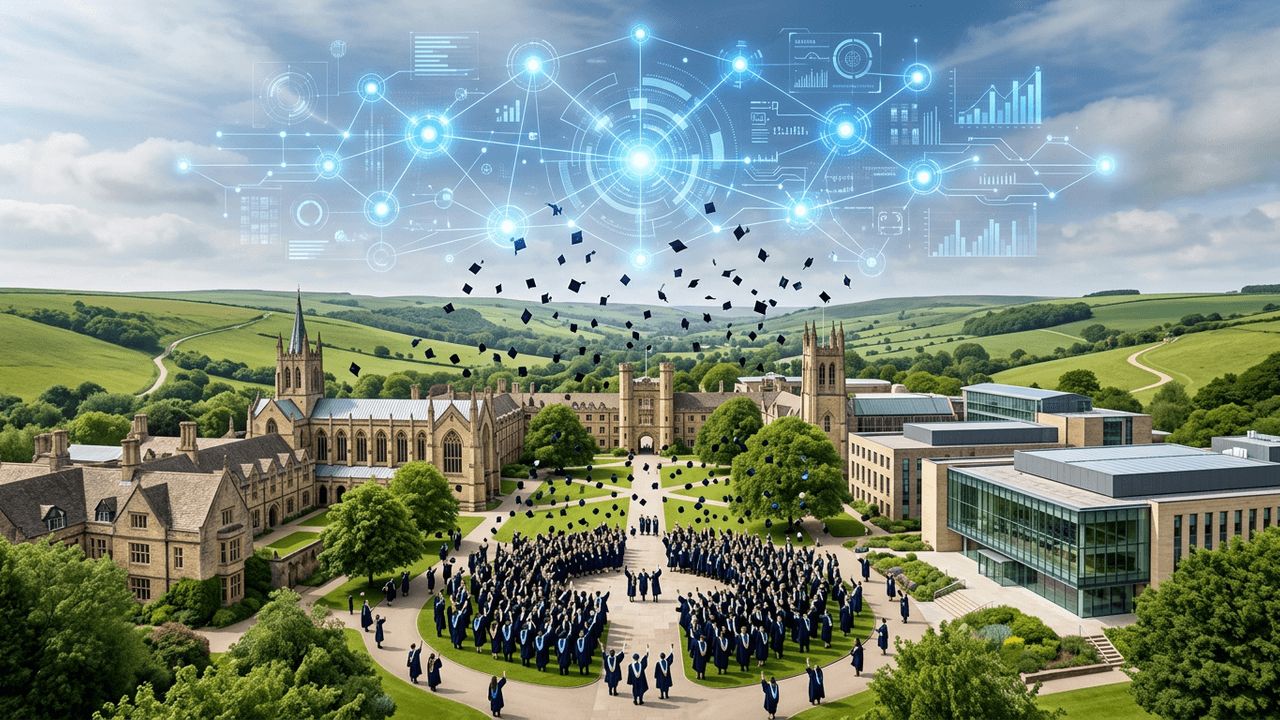
South Norfolk residents live at the center of a remarkably concentrated higher education market. Hampton Roads hosts public research universities, a nationally recognized historically Black university, private liberal arts institutions, a medical school, a maritime academy and multiple military-focused programs, all within roughly an hour's travel. For students who prefer to study without relocating, that density is a substantial financial and personal advantage.
Universities differ from colleges primarily in scope. They offer graduate and professional degrees, sponsor funded research, maintain doctoral programs and organize themselves into multiple constituent colleges. For students aiming at research careers, professional licensure or advanced technical fields, that scope matters.
What to Evaluate in a University
Reputation is easy to measure badly. More useful indicators include six-year graduation rates, retention from first to second year, student-to-faculty ratio in your intended major, research expenditure in relevant departments, internship and cooperative education pipelines, and post-graduation outcomes measured by employment and graduate school placement. For graduate study, faculty research alignment and funding availability matter far more than institutional rankings.
1. Old Dominion University
Old Dominion University is the largest public research university in the immediate region and the most practical flagship option for South Norfolk students. ODU is organized into colleges spanning engineering and technology, sciences, health sciences, business, education, and arts and letters. It carries national recognition in modeling and simulation, maritime and coastal engineering, cybersecurity, bioelectrics and coastal resilience research, the last of which is deeply relevant to a region facing sea-level rise. ODU's distance learning infrastructure is among the oldest and most developed in Virginia, and its transfer agreements with community colleges are exceptionally well mapped.
2. Norfolk State University
Norfolk State University is one of the nation's larger historically Black universities and a cornerstone of the region's educational and cultural life. Its academic portfolio includes computer science, engineering technology, social work, mass communications, business, education and materials science, with graduate programs in several fields. NSU is recognized for strong mentorship culture, undergraduate research participation and pipeline programs that move students into graduate study and federal careers. Scholarship support and a close-knit campus community are frequently cited by students as decisive factors.
3. Eastern Virginia Medical School at Old Dominion University
The region's academic medical institution trains physicians, physician assistants, and a wide range of health professionals while conducting clinical and translational research. It has an internationally recognized history in reproductive medicine and maintains strong programs in public health, medical and health professions education, and community health outreach. Its integration with Old Dominion University has strengthened interdisciplinary research across health sciences and engineering. For South Norfolk students pursuing medicine or advanced health careers, it is the region's primary destination.
4. Regent University
Located in Virginia Beach, Regent University is a private Christian institution offering undergraduate, graduate and doctoral programs across law, business and leadership, communication and the arts, education, psychology and counseling, government, and divinity. Regent has invested heavily in online delivery, making it accessible to working professionals throughout Hampton Roads. Its law school, communication programs and leadership studies attract students from well beyond the region.
5. Christopher Newport University
Christopher Newport University in Newport News is a public liberal arts and sciences university known for small class sizes, an emphasis on undergraduate teaching and a strong leadership studies program. Its academic culture prioritizes faculty accessibility, undergraduate research and civic engagement. Programs in political science, neuroscience, business and the performing arts are well regarded, and the university's residential experience appeals to students seeking a traditional campus environment close to home.
6. Hampton University
Hampton University is a private historically Black university with a distinguished history dating to the years immediately following the Civil War. It offers programs across engineering and technology, business, journalism and communications, nursing, pharmacy, marine and environmental science, and liberal arts, with doctoral offerings in several fields. Hampton's proton therapy research institute and its atmospheric and planetary science research give it a research profile unusual among institutions of its size. Its waterfront campus and strong alumni network are notable draws.
7. The College of William and Mary
Roughly an hour from South Norfolk, William and Mary is one of the oldest universities in the United States and among the most selective public institutions in the country. It combines a small liberal arts teaching culture with substantial research capacity, and includes a highly ranked law school, business school, school of education and the Virginia Institute of Marine Science. For academically strong students willing to commute or live on campus, it represents one of the best value propositions in American public higher education.
8. Virginia Wesleyan University
Virginia Wesleyan University is a private liberal arts institution located on the Norfolk and Virginia Beach line. Its strengths lie in small seminar-style instruction, environmental and marine science, business, education and social sciences. The university emphasizes experiential learning through internships, undergraduate research and study abroad. Its scale suits students who want faculty mentorship and campus involvement rather than the anonymity that can accompany large institutions.
9. Military and Defense-Focused University Programs
Given the extraordinary concentration of naval and joint military commands in Hampton Roads, several universities operate programs specifically designed for service members and defense civilians. These offerings emphasize credit for military training, flexible terms compatible with deployment, security-cleared research opportunities and degrees in fields such as national security studies, logistics, engineering management and cybersecurity. Tuition assistance coordination and veteran support offices are central to their value.
10. Online and Executive Graduate Programs
For working professionals in South Norfolk, online and executive-format graduate programs have become the dominant mode of advanced study. Regional and national universities deliver master's degrees in business administration, healthcare administration, education leadership, engineering management, public administration, data analytics and cybersecurity through evening, weekend and asynchronous formats. The best of these programs maintain the same faculty and admission standards as their on-campus equivalents and provide cohort structures that preserve peer networking.
Making the Financial Case Work
Cost management strategies matter as much as institutional choice. Completing general education requirements at a community college and transferring under a guaranteed admission agreement can reduce total bachelor's degree cost substantially while producing an identical diploma. In-state residency, institutional scholarships, departmental awards, employer tuition reimbursement and military benefits stack in ways many students never fully explore. For graduate study in research fields, funded assistantships that cover tuition and provide a stipend should be prioritized over unfunded admission at a more prestigious institution.
Regional Research Strengths Worth Knowing
Hampton Roads universities cluster their research around the region's defining industries and challenges. Coastal resilience and sea-level rise research is nationally significant given local flooding exposure. Maritime and naval engineering benefits from proximity to the world's largest naval base and major shipyards. Modeling, simulation and cybersecurity research draws on the region's defense and technology employers. Marine and environmental science leverages the Chesapeake Bay watershed. Students who align their studies with these clusters gain access to funding, internships and employers that would be difficult to reach elsewhere.
Final Thoughts
From a major public research university and two respected historically Black institutions to a medical school, selective public liberal arts colleges and flexible military and online programs, South Norfolk students face an enviable range of university options. Evaluate graduation and retention data, examine faculty and research alignment with your goals, calculate true net cost after aid, and use community college transfer pathways strategically. The region's academic depth rewards students who plan deliberately.
Want your brand featured in front of decision-makers? Publish a guest post or get a link insertion in our guides through AAMAX's guest post and link insertion service.
Helpful Links
 SponsoredAAMAX — Full-Service Digital Agency
Write for Us
Share your expertise with our readers. We welcome guest contributions from industry specialists.
Pitch your idea