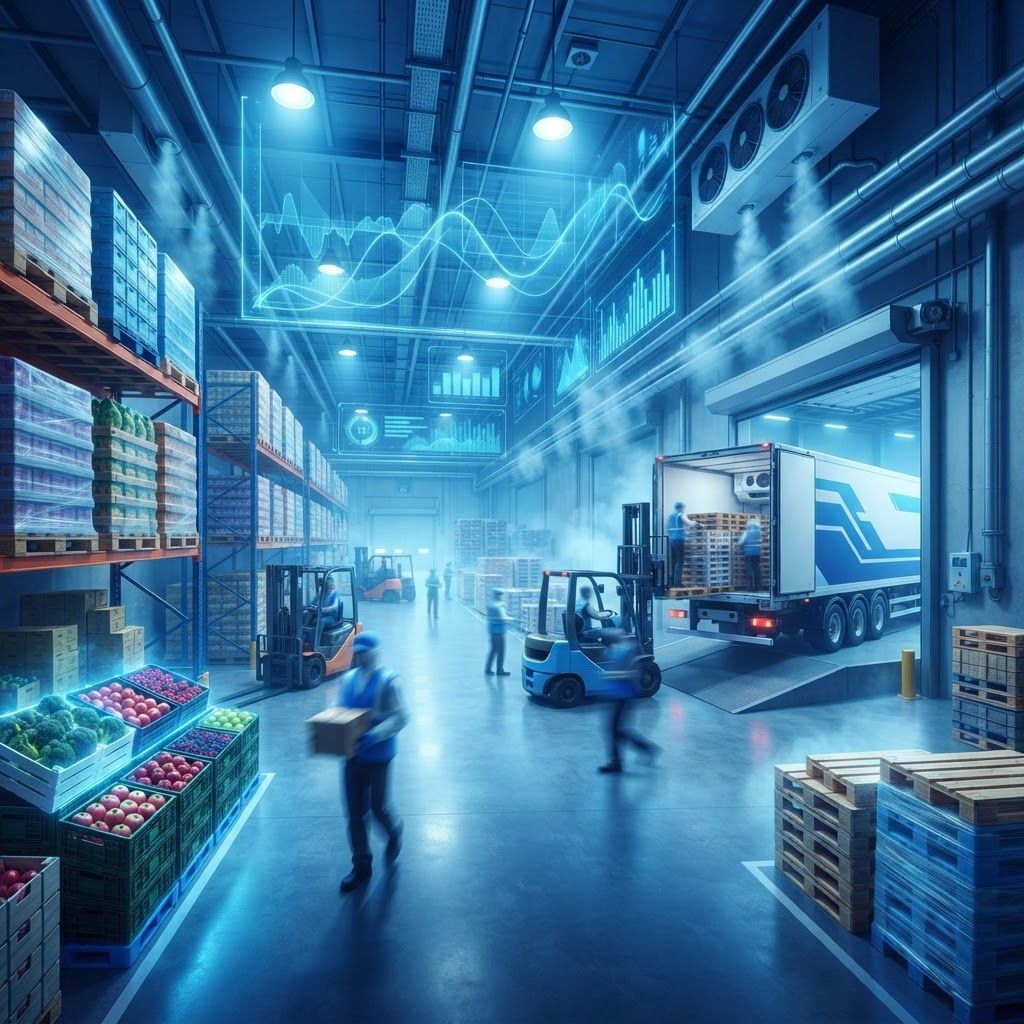
Why Stockton-on-Tees Is a Strategic Food Distribution Hub
Food wholesaling in Stockton-on-Tees benefits from a combination of geography, infrastructure and demand. The borough sits alongside the A19 and A66, with the A1(M) a short drive west, giving distributors overnight reach into Newcastle, York, Leeds and much of Yorkshire. Teesport adds import capability for ambient goods and frozen containers, while the surrounding towns of Thornaby, Billingham, Yarm and Norton provide a dense customer base of hospitality venues, convenience retailers, bakeries and institutional caterers.
That mix matters because food wholesalers rarely serve a single type of buyer. A depot in Stockton might load a chilled vehicle for a school catering contract at 4am, drop dry goods at a village pub in the Tees Valley by mid-morning, and finish the round with a butcher's shop or a takeaway needing frozen product before evening service. The best operators in the area are built around that rhythm rather than fighting it.
The Main Categories of Food Wholesaler
Before comparing suppliers it helps to understand the segments, because the term covers very different businesses. Broadline or full-line wholesalers stock everything from cooking oil and canned tomatoes to disposables and cleaning chemicals, allowing a kitchen to consolidate its order into one delivery. Fresh produce specialists work on daily or near-daily cycles, buying from growers and markets and grading to order. Meat and seafood wholesalers operate under tight cold-chain and traceability rules, often with in-house butchery or filleting. Frozen specialists focus on ambient-to-minus-eighteen storage, chips, pastry, ice cream and ready components. Finally, cash and carry operators serve smaller independents who prefer to collect, inspect and pay on the spot rather than commit to a delivery schedule.
Many Teesside buyers use a blend: a broadliner for the bulk of the order, a produce house for fruit and vegetables, and a local butcher-wholesaler for centre-of-plate items where provenance is a selling point on the menu.
What Distinguishes the Leading Operators
Cold chain integrity and compliance
The single biggest differentiator among food wholesalers is temperature control. Strong operators run multi-temperature vehicles with continuous data logging, maintain documented HACCP plans, and hold third-party accreditation such as BRCGS or SALSA depending on their scale. They can produce a temperature trace for any delivery on request, which is exactly what an environmental health officer or a national franchise audit will ask for.
Traceability and allergen data
Since the introduction of stricter allergen labelling rules, wholesalers have become an essential source of ingredient information. The best in Stockton-on-Tees supply full product specifications, allergen matrices and country-of-origin data through their ordering platforms, so a chef can generate accurate menu labelling without chasing paperwork. For schools, hospitals and care providers in the borough, this documentation is often a contractual requirement rather than a nicety.
Order cut-offs and delivery reliability
A wholesaler is judged on whether the van arrives when promised. Leading Teesside distributors offer late evening cut-offs for next-day delivery, named delivery windows, and proactive contact when a line is short rather than a surprise gap in the tote box. Fill rate, the percentage of ordered lines actually delivered, is the metric experienced buyers ask about first.
Local sourcing and regional range
There is genuine appetite across Teesside for regional products, from North East bakery goods and dairy to locally reared beef and lamb from the Cleveland Hills and North Yorkshire. Wholesalers who curate a regional range give their customers a marketing story as well as a shorter supply chain, which is increasingly valuable to gastropubs and independent cafés in Yarm and Norton.
Notable Names Serving the Stockton-on-Tees Market
The borough is served by a layered mix of national groups, regional independents and specialist houses. Among the national and multi-regional broadliners active across Teesside are Brakes, Bidfood and Sysco-affiliated operations, all of which combine large ambient, chilled and frozen ranges with structured account management and digital ordering. Booker and its wholesale network, together with Bestway and Dhamecha-style cash and carry models, support the convenience retail and takeaway trade, offering symbol group membership, retail pricing support and collect-or-deliver flexibility.
In frozen and food-to-go, Central Foods and similar frozen specialists supply pastry, buffet and dessert components widely used by Teesside caterers, while Country Range Group members give independents access to a shared own-brand range that competes on price with national labels. For produce, regional fresh houses operating out of the Tees Valley and County Durham grade daily to order and handle prepared vegetables for high-volume kitchens.
Meat and protein is a strong local category. Regional butchery wholesalers across Teesside and North Yorkshire supply bulk primals, portion-controlled cuts and burger or sausage manufacture, often with full farm-assured traceability. Seafood reaches Stockton kitchens through North East merchants drawing on Whitby, North Shields and Hartlepool landings, which shortens the chain considerably compared with southern suppliers. Bakery is covered by both large plant bakers and craft wholesale bakeries in the wider region, the latter increasingly popular for sourdough and artisan lines.
Ethnic and world food wholesaling is another important strand, with importers and distributors across Teesside supplying South Asian, Middle Eastern, Chinese and Eastern European ranges to restaurants, takeaways and independent grocers. These businesses often hold specialist lines that broadliners simply do not stock.
Industry Trends Shaping Local Wholesale
Several forces are reshaping how food wholesalers in Stockton-on-Tees operate. Input cost volatility has made transparent pricing and forward agreements more valuable to buyers than headline discounts. Energy costs in cold storage have pushed investment in refrigeration efficiency, solar generation on depot roofs and route optimisation software. Electric and low-emission delivery vehicles are appearing on urban rounds, helped by relatively short drop distances within the borough.
Waste reduction has become commercially significant as well as environmental. Better forecasting, shorter-dated clearance programmes and redistribution partnerships with community food projects across Teesside reduce write-offs. Meanwhile digital ordering has matured: mobile apps with order templates, spend analytics, contract price visibility and integration into kitchen management systems are now expected rather than exceptional.
How to Choose the Right Food Wholesaler
Start with your actual order profile. A small café ordering three times a week has different priorities from a 700-cover contract caterer. Compare landed cost rather than list price, factoring in delivery charges, minimum order values, pack sizes and yield on fresh product. Ask for fill rate and on-time delivery statistics, request sample documentation for allergens and temperature traces, and check credit terms and price-hold periods.
Trial the relationship before committing. Run a two- or four-week pilot on a representative basket, then review substitutions, quality complaints and invoice accuracy. Where possible, keep a credible secondary supplier for critical lines so a single depot issue does not close your kitchen. Finally, talk to the account manager about local knowledge: a representative who understands Teesside trade patterns, seasonal tourism in the Tees Valley and the demands of the borough's school and care sector will add more value than a purely transactional contact.
Final Thoughts
Food wholesaling in Stockton-on-Tees is competitive in the best sense. Buyers can access national scale and buying power alongside regional specialists with genuine local sourcing, and the borough's road links mean service levels are typically strong. The right partner is the one whose range, delivery rhythm, documentation and pricing structure match how your business actually cooks and sells, and reviewing that fit annually is one of the simplest ways to protect both margin and quality.
Want your brand featured in front of decision-makers? Publish a guest post or get a link insertion in our guides through AAMAX's guest post and link insertion service.
Helpful Links
 SponsoredAAMAX — Full-Service Digital Agency
Write for Us
Share your expertise with our readers. We welcome guest contributions from industry specialists.
Pitch your idea