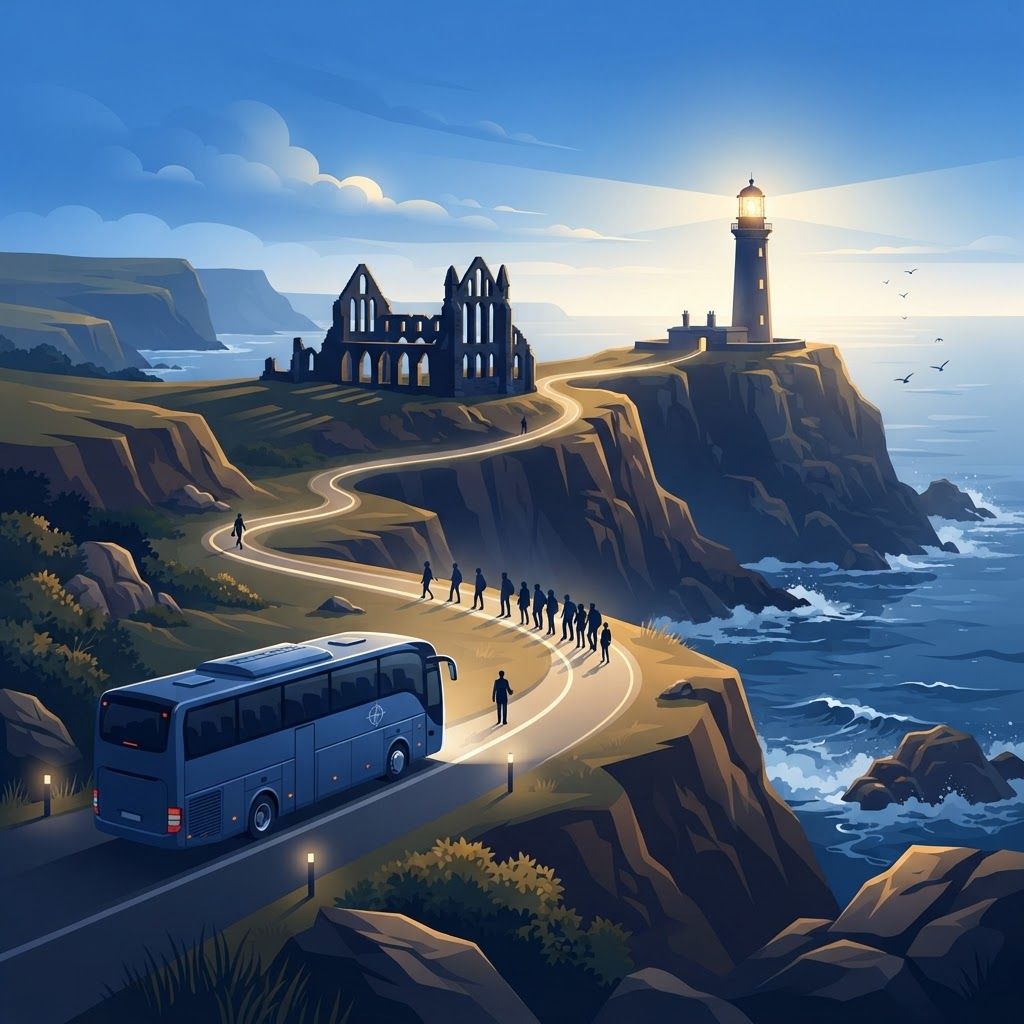
South Tyneside as a Touring Base
South Tyneside contains an unusual density of touring material for a compact borough. There is Roman heritage at Arbeia, one of the most significant excavated forts on Hadrian's Wall frontier. There is Anglo-Saxon history at Jarrow, associated with the Venerable Bede and one of the most important early monastic sites in Europe. There is dramatic coastal geology at Marsden Bay, maritime history along the Tyne, and the industrial story of shipbuilding and coal that shaped the entire region.
Tour operators here therefore split into two categories: those running experiences within the borough, and those using it as a departure point for wider North East and cross-border touring. Both have grown as domestic travel has strengthened and as visitors increasingly seek guided context rather than self-directed sightseeing.
Ten Tour Operators and Experience Providers
1. Arbeia Roman Fort Guided Experiences. Interpretation-led tours of the reconstructed gateway, barracks and commanding officer's house in South Shields. Expert guides connect the site to the wider Hadrian's Wall frontier system, making it far more rewarding than an unguided visit.
2. Jarrow Hall Anglo-Saxon Farm and Bede Museum Tours. Guided and educational tours covering early medieval life, the monastery associated with Bede and reconstructed Anglo-Saxon buildings and livestock. Especially strong for school groups and history enthusiasts.
3. Souter Lighthouse and The Leas Guided Walks. National Trust-managed coastal experiences combining lighthouse interiors, engineering history and cliff-top natural heritage including seabird colonies. The combination of built and natural interest is genuinely distinctive.
4. Marsden Grotto and Coastal Heritage Tours. Walks and interpretive tours exploring the limestone stacks, caves and smuggling folklore of Marsden Bay, typically including the cliff lift descent and geology commentary.
5. River Tyne Cruise and Ferry Heritage Operators. Water-based sightseeing along the Tyne, covering shipbuilding history, port operations and the piers at the river mouth. Seeing the borough from the water reframes its industrial story effectively.
6. North East Coach Tour Operators. Established coach companies running day excursions from South Tyneside pick-up points to Northumberland, Durham, the Lake District, Scottish Borders and Yorkshire. Reliable, sociable and popular with older travellers and community groups.
7. Hadrian's Wall Walking and Cycling Tour Specialists. Guided and self-guided multi-day operators using the eastern end of the Wall as a start point, providing luggage transfer, accommodation booking and route guidance.
8. Newcastle and Tyneside City Tour Providers. Operators running walking and bus tours in the neighbouring city, widely used by South Tyneside visitors given the short Metro connection.
9. Custom Private Guide Services in Tyne and Wear. Independent qualified guides offering bespoke itineraries for small groups, cruise passengers and international visitors, tailored to specific interests such as maritime history, literature or industrial archaeology.
10. Food, Drink and Cultural Tour Organisers. Newer operators building tours around Ocean Road dining culture, regional brewing and the borough's festival programme, appealing to visitors seeking contemporary rather than purely historical experiences.
What Distinguishes an Excellent Tour Operator
Guide quality is the single most important variable. The best guides are storytellers with genuine subject knowledge who adapt pace and content to the group in front of them. Ask whether guides are formally accredited or subject specialists, and whether the same guide leads the whole tour.
Group size follows closely. Smaller groups permit questions, better sightlines and access to spaces larger parties cannot use. Operators that cap numbers usually charge more and are usually worth it. Logistics matter too: reliable pick-up points, realistic timings that do not compress the best sites, and honest descriptions of walking distance and terrain.
Weather resilience deserves particular attention on this coastline. Strong operators build sheltered alternatives into itineraries rather than cancelling or marching visitors through horizontal rain at Marsden.
Trends in the Regional Tour Market
Domestic and short-haul visitors now expect experiences rather than sightseeing, which has pushed operators towards hands-on elements such as craft demonstrations, tasting components and participatory reconstruction at heritage sites. Accessibility has improved markedly, with more operators publishing detailed terrain and step information in advance.
Sustainability is influencing routing, with growing use of public transport connections, walking segments and locally owned suppliers. There is also rising demand for shoulder-season and winter touring, with storm-watching along the cliffs, seabird seasons and heritage-by-lamplight events extending the calendar well beyond summer.
Planning a Tour in the Borough
Combine one heritage site with one coastal experience for the strongest single day. Arbeia in the morning and the cliffs at Marsden in the afternoon gives a genuine sense of the borough across two thousand years. Book guided slots in advance during school holidays and festival weekends, dress for wind rather than temperature, and allow time simply to walk the pier or the promenade, which most visitors report as a highlight despite appearing on no itinerary.
For anyone building a longer North East trip, South Tyneside works exceptionally well as an affordable, well-connected base from which several of the region's most significant tours depart.
Want your brand featured in front of decision-makers? Publish a guest post or get a link insertion in our guides through AAMAX's guest post and link insertion service.
Helpful Links
 SponsoredAAMAX — Full-Service Digital Agency
Write for Us
Share your expertise with our readers. We welcome guest contributions from industry specialists.
Pitch your idea