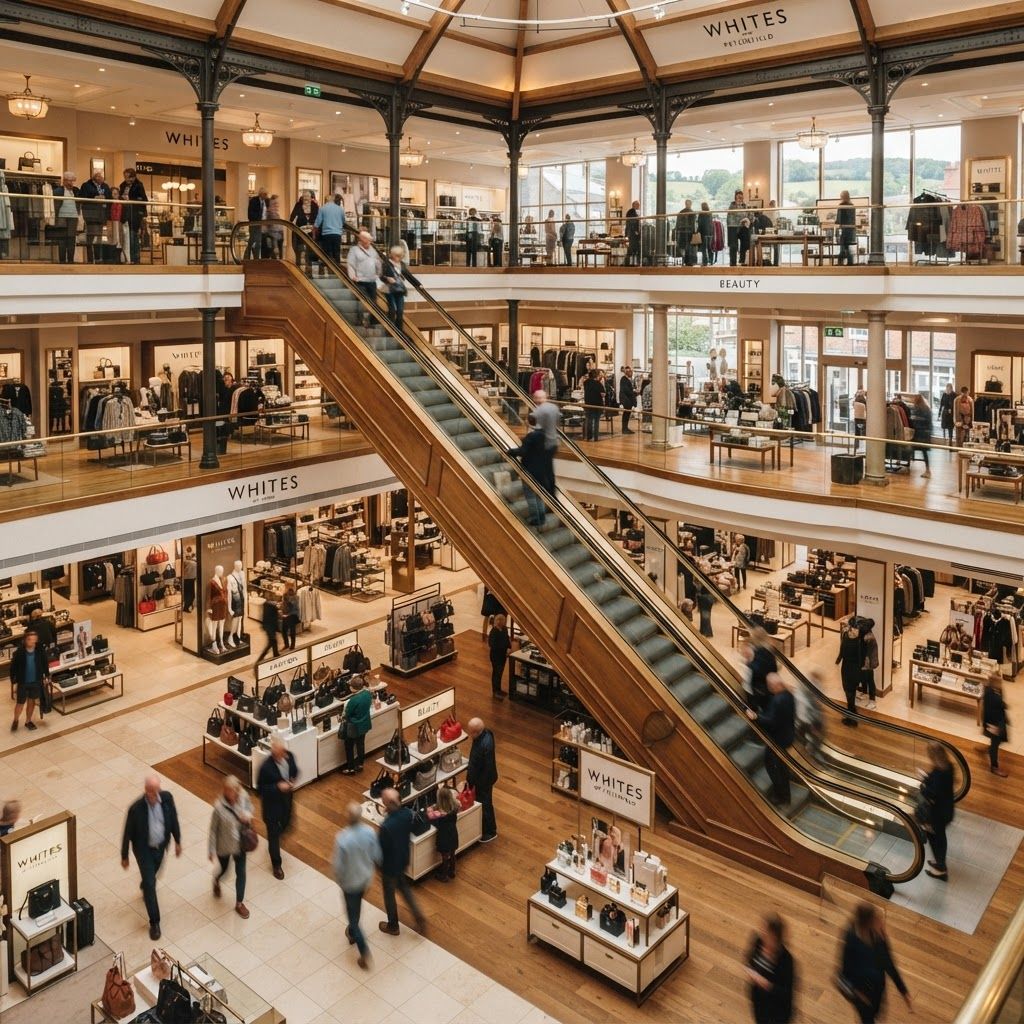
Grocery Shopping in Newark and Sherwood
Newark and Sherwood presents a grocery landscape shaped by geography. Newark-on-Trent supports large superstores serving the town and a wide rural catchment. Southwell and the larger villages are covered by mid-sized stores and convenience formats. Smaller settlements across the Sherwood area rely on village shops, mobile services and, increasingly, online delivery.
This has real consequences for how people shop. Many households in the district run a hybrid pattern: a main shop at a discounter or superstore, topped up locally through the week, with specialist items bought from butchers, bakers and farm shops. Understanding where each retailer genuinely excels makes that pattern far more efficient.
What Separates a Good Supermarket From an Average One
Price per unit is the obvious measure, but it is incomplete. Fresh produce quality and shelf life determine how much food is actually eaten rather than discarded, which affects real cost significantly. Availability matters too: a slightly cheaper store that is frequently out of stock on staples costs time and forces second trips.
Own-label quality has become the most important competitive battleground. The tiered own-brand ranges now offered by most chains often match branded products at considerably lower prices, and the gap between the best and worst own-label lines is wider than the gap between chains.
Finally, consider the whole experience: parking, store layout, checkout speed, staff availability, dietary range coverage and how straightforwardly a delivery or collection slot can be booked.
The Ten Best Supermarket Chains in Newark and Sherwood
1. Asda
Consistently among the most competitive on a full weekly basket, Asda's large-format stores serving the district offer comprehensive ranges across food, household, clothing and general merchandise. The scale of the stores means fewer stock gaps, and the combination of low base pricing and frequent promotions suits larger households particularly well.
2. Tesco
The most complete national coverage, operating across superstore, Express and online formats. Tesco's strength is flexibility: a household can do a major shop, a convenience top-up and a home delivery through the same retailer and loyalty scheme. Its Finest range competes credibly with premium retailers.
3. Aldi
The discounter that reset expectations across the sector. Aldi's limited range model, built around high-volume own-label lines, delivers exceptional value, and its fresh produce and bakery have won substantial recognition. The weekly specials create genuine interest and cover non-food categories at very competitive prices.
4. Lidl
Aldi's closest competitor and equally strong on value. Lidl's in-store bakery is particularly well regarded, and its fresh produce, meat and cheese ranges punch well above their price point. The rotating middle-aisle offers cover everything from tools to sportswear.
5. Sainsbury's
Positioned slightly above the mainstream on quality, Sainsbury's is strong on fresh food, dietary-specific ranges and its Taste the Difference line. Its Nectar loyalty pricing delivers meaningful savings for regular shoppers, and store layouts are generally easy to navigate quickly.
6. Morrisons
Distinguished by its fresh counters and in-store production. Butchery, fishmongery, bakery and deli counters staffed by people who can cut to order remain a genuine advantage over pre-packed alternatives, and the vertical integration behind the meat supply chain shows in quality.
7. The Co-operative Food
Essential to the district's villages, where Co-op stores frequently serve as the only substantial food retailer. Prices are higher than the superstores, but member pricing narrows the gap considerably, and the community fund model returns money to local causes. Convenience and accessibility are its core strengths.
8. Marks & Spencer Food
A premium specialist rather than a full weekly shop for most households. M&S excels at ready meals, prepared foods, desserts, entertaining ranges and seasonal products. Many shoppers use it alongside a discounter, buying value staples in one place and treats in another.
9. Iceland
Strong on frozen food, which is underrated both nutritionally and economically. Frozen vegetables, fish and fruit retain nutrients well and eliminate waste entirely, and Iceland's ranges are priced accessibly. Home delivery thresholds are among the most generous in the sector.
10. Local Independent Food Retailers and Farm Shops
Newark's market traders, village butchers, bakers, greengrocers and the district's farm shops collectively form a genuinely competitive option. Quality on meat, bread and seasonal produce frequently exceeds supermarket equivalents, prices on in-season produce can be lower, and the money stays within the local economy.
Trends Affecting Grocery Shopping Locally
Loyalty-based pricing has fundamentally changed how supermarkets compete. Significant discounts now require scheme membership, which means shoppers without a card effectively pay a premium. Signing up to the schemes at the two or three stores you use most is straightforward and worthwhile.
Online delivery and click-and-collect have become genuinely reliable, which matters a great deal in rural parts of the district. For households without easy transport, this has widened choice considerably.
Food waste reduction is a growing focus, with clearer date labelling, reduced-price sections and surplus food schemes all becoming more visible. These offer real savings for shoppers willing to plan around them.
Demand for local and traceable food continues to rise, benefiting the district's farm shops and butchers and pushing the chains to label regional sourcing more clearly.
Practical Advice for Cutting Your Grocery Bill
Shop the discounters for staples and the specialists for the few items where quality genuinely matters to you. This hybrid approach consistently outperforms loyalty to any single retailer.
Compare price per kilogram or litre rather than pack price, since larger packs are not always cheaper per unit. Check the unit price labels on the shelf edge, which make this straightforward.
Plan meals around what is in season and on promotion rather than deciding a menu first and buying whatever it requires. Seasonal produce is cheaper, better and more likely to be locally grown.
Finally, shop later in the day for reduced items if your schedule allows, and make use of the freezer aggressively. Both reduce waste, which is usually the largest hidden cost in a household food budget.
Final Thoughts
Newark and Sherwood is well served across every grocery format, from aggressive discounters to premium specialists and genuinely excellent local independents. The cheapest single store is rarely the best overall strategy. Combine retailers according to their strengths, use loyalty pricing, and support the local producers who give the district's food scene its character.
Want your brand featured in front of decision-makers? Publish a guest post or get a link insertion in our guides through AAMAX's guest post and link insertion service.
Helpful Links
 SponsoredAAMAX — Full-Service Digital Agency
Write for Us
Share your expertise with our readers. We welcome guest contributions from industry specialists.
Pitch your idea