Farming in the Shadow of the Cotswold Escarpment
Cheltenham sits at a meeting point of two distinct agricultural landscapes. To the east rise the Cotswold hills, where thin, free-draining limestone brash soils have historically favoured sheep and cereals. To the west stretches the Severn Vale, with heavier clay soils better suited to grassland, dairy and mixed farming. Within a short distance of the town, farmers work under quite different conditions, and the businesses that succeed have adapted closely to their particular ground.
This proximity to an affluent market town shapes the local agricultural economy in important ways. Direct sales, farm shops, box schemes and supply relationships with Cheltenham's restaurants offer routes to market that farms in more remote areas cannot access as easily. A significant number of holdings have built substantial businesses on that advantage.
The Forces Reshaping Gloucestershire Agriculture
British farming is in the middle of its most significant policy transition in half a century. The shift away from area-based subsidy toward payments for environmental outcomes has fundamentally changed the financial logic of many holdings. Farms are now paid for soil health, habitat creation, water quality improvement and public access alongside, or sometimes instead of, food production. Businesses that have engaged early with these schemes have generally managed the transition better than those that delayed.
Regenerative practices have moved from the margins toward the mainstream. Minimum tillage, cover cropping, diverse leys, herbal swards and rotational grazing are all increasingly common across the Cotswolds. The motivation is partly environmental but substantially economic, as reduced input costs and improved soil resilience directly affect profitability.
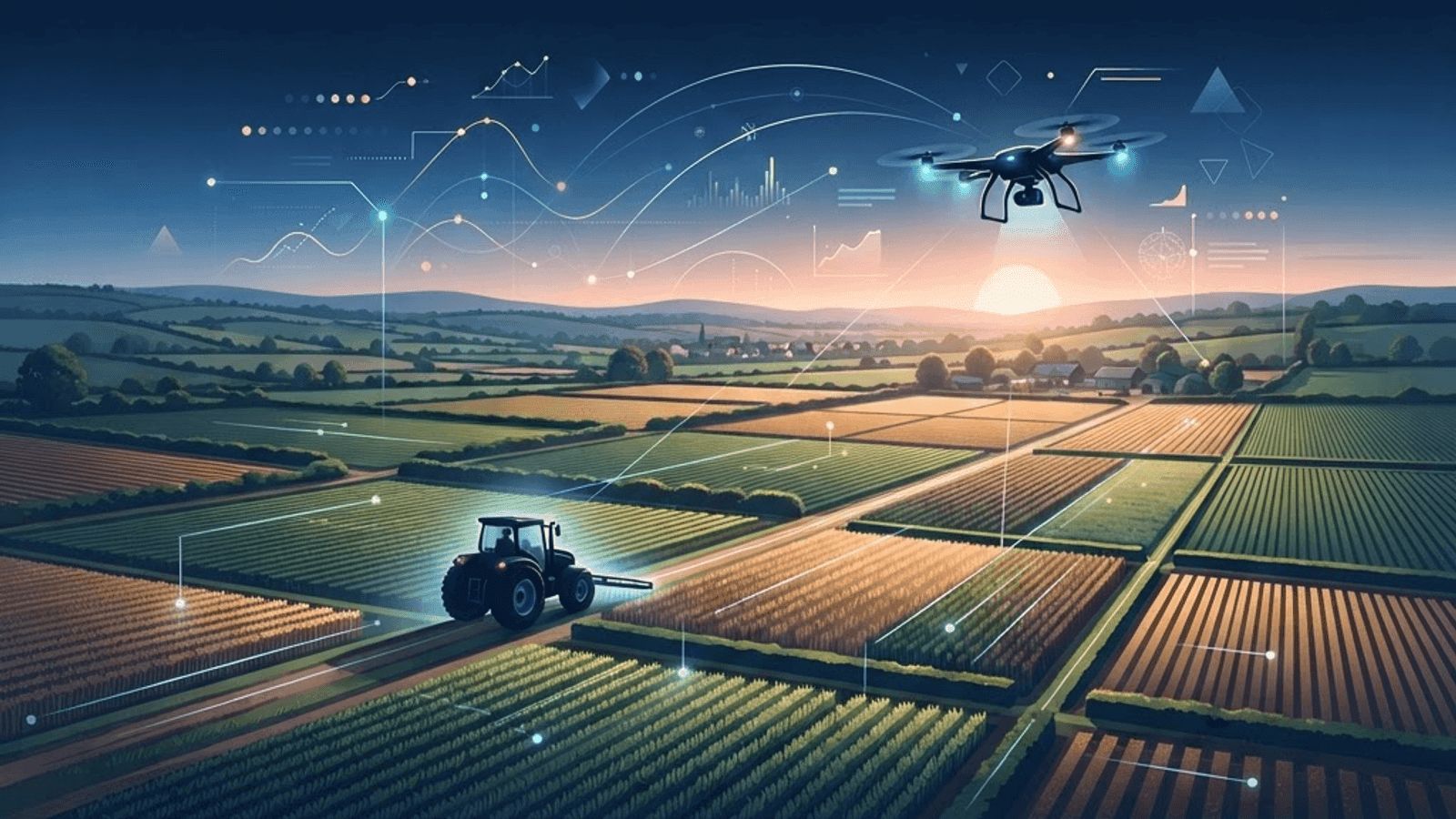
Technology adoption has accelerated too. Satellite-guided machinery, variable rate application, soil mapping and livestock monitoring systems have become common on larger holdings, allowing inputs to be targeted precisely rather than applied uniformly.
Diversification remains critical. Very few farms around Cheltenham derive all income from commodity production. Holiday accommodation, event hosting, equestrian facilities, renewable energy and direct retail all contribute significantly to farm business viability.
Ten Farming Companies Around Cheltenham
Cotswold Edge Farming operates a substantial arable enterprise on the escarpment, growing wheat, barley and oilseed rape with a strong emphasis on soil management. Their move toward reduced cultivation and cover cropping has become something of a local reference point for neighbouring farms considering similar changes.
Severn Vale Dairy Holdings runs a grass-based dairy operation on the heavier vale soils, using rotational grazing to maximise forage utilisation. Investment in herd health monitoring and milk quality has supported access to premium supply contracts.
Leckhampton Hill Livestock manages sheep and beef across hill and lowland ground, with conservation grazing agreements covering ecologically sensitive areas. This dual role, producing food while maintaining priority habitat, illustrates the direction of modern upland farming.
Vale Regenerative Agriculture has built its whole system around soil biology, integrating diverse herbal leys, mob grazing and minimal synthetic inputs. The business also hosts farm walks and knowledge-sharing events, contributing to wider adoption across the county.
Prestbury Mixed Farms operates a traditional mixed rotation combining arable cropping with livestock, an approach that has regained favour as the agronomic benefits of integrating animals into arable rotations have become better appreciated.
Cheltenham Market Garden Company produces vegetables, salads and soft fruit at field scale for local restaurants, farm shops and box schemes. Short supply chains and rapid harvest-to-plate timelines are central to their commercial proposition.
Cotswold Organic Estates farms a certified organic system across arable and livestock enterprises. Organic certification requires rigorous record keeping and long conversion periods, and their established status represents a considerable accumulated investment.
Gloucestershire Poultry Enterprises operates free-range egg and poultry production with a focus on welfare standards and biosecurity. Avian influenza risk has made robust biosecurity protocols an operational necessity across the sector.
Pittville Agroforestry Partnership integrates tree planting with productive farming, using silvopasture and alley cropping systems. The approach delivers shelter, carbon sequestration and diversified income while maintaining agricultural output.
Severn Heritage Breeds focuses on native and rare breed livestock, supplying speciality meat to butchers and restaurants while contributing to genetic conservation. Gloucestershire's own historic breeds feature prominently in the enterprise.
Challenges the Sector Faces
Weather volatility is now the defining operational risk. Wet autumns that prevent drilling, late frosts and summer drought have all disrupted recent seasons, and resilience planning has become as important as yield optimisation. Diverse rotations and improved soil structure both help, but they cannot eliminate the exposure.
Labour availability remains difficult, particularly for seasonal horticultural work and skilled livestock roles. Automation addresses part of this, though the capital cost is substantial for smaller holdings.
Input costs, especially fertiliser and fuel, have been volatile, which has accelerated interest in systems that reduce dependency on purchased inputs. Meanwhile, land values around Cheltenham remain high, driven partly by non-agricultural demand, making expansion through purchase difficult for working farms.
Prospects for Local Agriculture
Despite these pressures, the outlook has genuine positives. Consumer interest in local, traceable food is strong and growing, and Cheltenham's market provides an unusually accessible outlet. Environmental payments, once schemes are properly established, offer a revenue stream that rewards good land management rather than production volume alone.
The farms most likely to thrive are those combining productive efficiency with environmental delivery and some form of direct market access. That combination spreads risk across different income types and aligns the business with both policy direction and consumer sentiment, which is a considerably more stable footing than commodity production alone.
Want your brand featured in front of decision-makers? Publish a guest post or get a link insertion in our guides through AAMAX's guest post and link insertion service.
Helpful Links
 SponsoredAAMAX — Full-Service Digital Agency
Write for Us
Share your expertise with our readers. We welcome guest contributions from industry specialists.
Pitch your idea