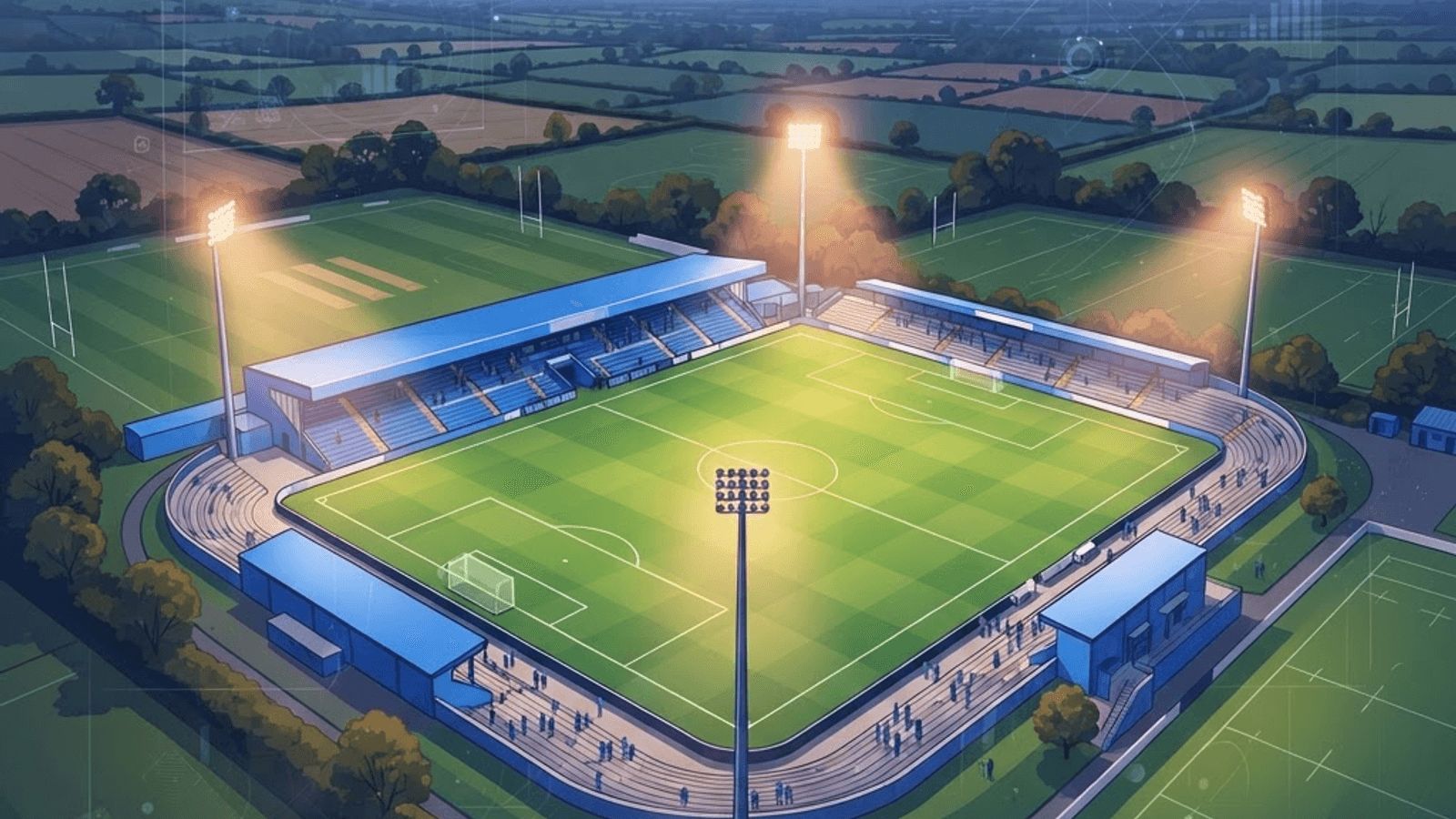
Sporting Infrastructure at the Heart of the Community
Hinckley and Bosworth may not host top-tier professional sport, but the borough sustains an unusually healthy grassroots and semi-professional sporting culture. Football, rugby, cricket, athletics, hockey and bowls all have established homes here, and the venues that host them do far more than stage fixtures. They provide changing facilities, clubhouses, coaching bases, junior development pathways and social hubs that hold communities together through the seasons.
The character of these venues reflects their setting. Grounds in Hinckley and Burbage serve larger populations and support multi-team clubs with substantial junior sections. Village grounds in Market Bosworth, Desford, Barlestone and Newbold Verdon often occupy beautiful settings on the edge of open countryside, where a Saturday fixture is as much a community gathering as a competitive match.
Ten Notable Sporting Venues in the Borough
1. Hinckley Community Stadium is the borough's principal football venue, with covered seating, standing terracing, floodlights and a clubhouse. It hosts senior non-league fixtures alongside extensive junior and academy use through the week.
2. Bosworth Sports Ground in Market Bosworth offers a classic English sporting setting, combining a cricket square with winter football pitches and a pavilion that serves as a genuine village social centre.
3. Burbage Recreation Ground is a large multi-use facility supporting football, cricket, tennis and informal recreation, with well-maintained surfaces and strong community programming throughout the year.
4. Ambion Park Athletics Centre provides track and field facilities including running lanes, jumps and throws areas, supporting school competition, club training and community running groups.
5. Earl Shilton Sports Club combines football and cricket with an established clubhouse, hosting one of the borough's more active junior sections and regular midweek league fixtures.
6. Barwell Football Ground is a characterful non-league venue known for a close, vocal atmosphere generated by terracing that brings spectators near the pitch, and for consistently good playing surfaces.
7. Desford Sports Park offers multiple senior and junior pitches alongside training areas, making it a natural host for tournaments, festivals and multi-team fixture days.
8. Sketchley Rugby Grounds supports rugby union across age groups, with a main pitch, training areas, floodlighting and a clubhouse culture that is central to the club's identity.
9. Newbold Verdon Village Ground is a smaller but well-loved venue, hosting cricket in summer and football in winter, and demonstrating how a single well-run pitch can anchor village life.
10. Groby Community Sports Hub completes the list with a modern multi-sport facility combining artificial surfaces, grass pitches and indoor space, supporting year-round participation in all weathers.
What Makes a Good Community Stadium
Playing surface quality is the foundation. Drainage determines how many fixtures survive a wet winter, and clubs that invest in aeration, sand dressing and seasonal renovation lose far fewer matches. Surfaces that cope with heavy use also reduce injury risk, which matters enormously for junior players.
Facilities beyond the pitch increasingly determine a venue's viability. Adequate changing rooms, including separate provision for women's and girls' teams and match officials, are now an expectation rather than a luxury. Accessible spectator areas, safe parking, reliable floodlighting and a clubhouse capable of generating income outside match days all contribute to sustainability.
Atmosphere is harder to quantify but unmistakable. Smaller grounds where spectators stand close to the touchline create an intensity that larger modern stadiums often lack, and this is one of the enduring appeals of non-league football across Leicestershire.
Artificial Surfaces and All-Weather Provision
One of the most significant developments in community sport has been the spread of third-generation artificial pitches. These surfaces tolerate far greater usage than natural grass and remain playable through winter, which transforms training capacity for clubs with many teams. A single artificial pitch can support several hundred hours of use per month, whereas a grass pitch might manage a fraction of that before deteriorating.
Artificial surfaces are not a universal replacement. Many players prefer grass, some sports have specific surface requirements, and installation and periodic resurfacing costs are considerable. The most effective model tends to be hybrid provision, where artificial surfaces absorb training and junior activity while grass pitches are preserved for senior competition.
Funding and Sustainability Challenges
Community venues face persistent financial pressure. Energy costs for floodlighting and clubhouse heating have risen sharply, maintenance equipment is expensive, and much of the work depends on volunteers whose availability is finite. Successful clubs diversify income through function hire, bar operations, junior membership, sponsorship, holiday camps and community programming that fills facilities midweek.
Grant funding from sporting bodies and local authorities supports capital improvements, but applications increasingly favour venues that demonstrate broad community benefit, including provision for women and girls, disability sport, older participants and health-focused programmes. Venues that serve multiple sports and demographics are consequently better placed for investment.
Visiting and Getting Involved
For residents, these venues offer accessible, affordable sport. Non-league football matches provide genuine competitive drama at a fraction of professional ticket prices, village cricket offers an unhurried summer afternoon, and clubhouses welcome newcomers readily. Junior sections across the borough are generally open to new players regardless of experience.
Volunteering is where the greatest need lies. Clubs require coaches, officials, groundskeeping help, committee members and people willing to run a bar or a raffle. The stadiums and grounds of Hinckley and Bosworth exist because generations of residents have given time to them, and their future depends on that tradition continuing.
Want your brand featured in front of decision-makers? Publish a guest post or get a link insertion in our guides through AAMAX's guest post and link insertion service.
Helpful Links
 SponsoredAAMAX — Full-Service Digital Agency
Write for Us
Share your expertise with our readers. We welcome guest contributions from industry specialists.
Pitch your idea