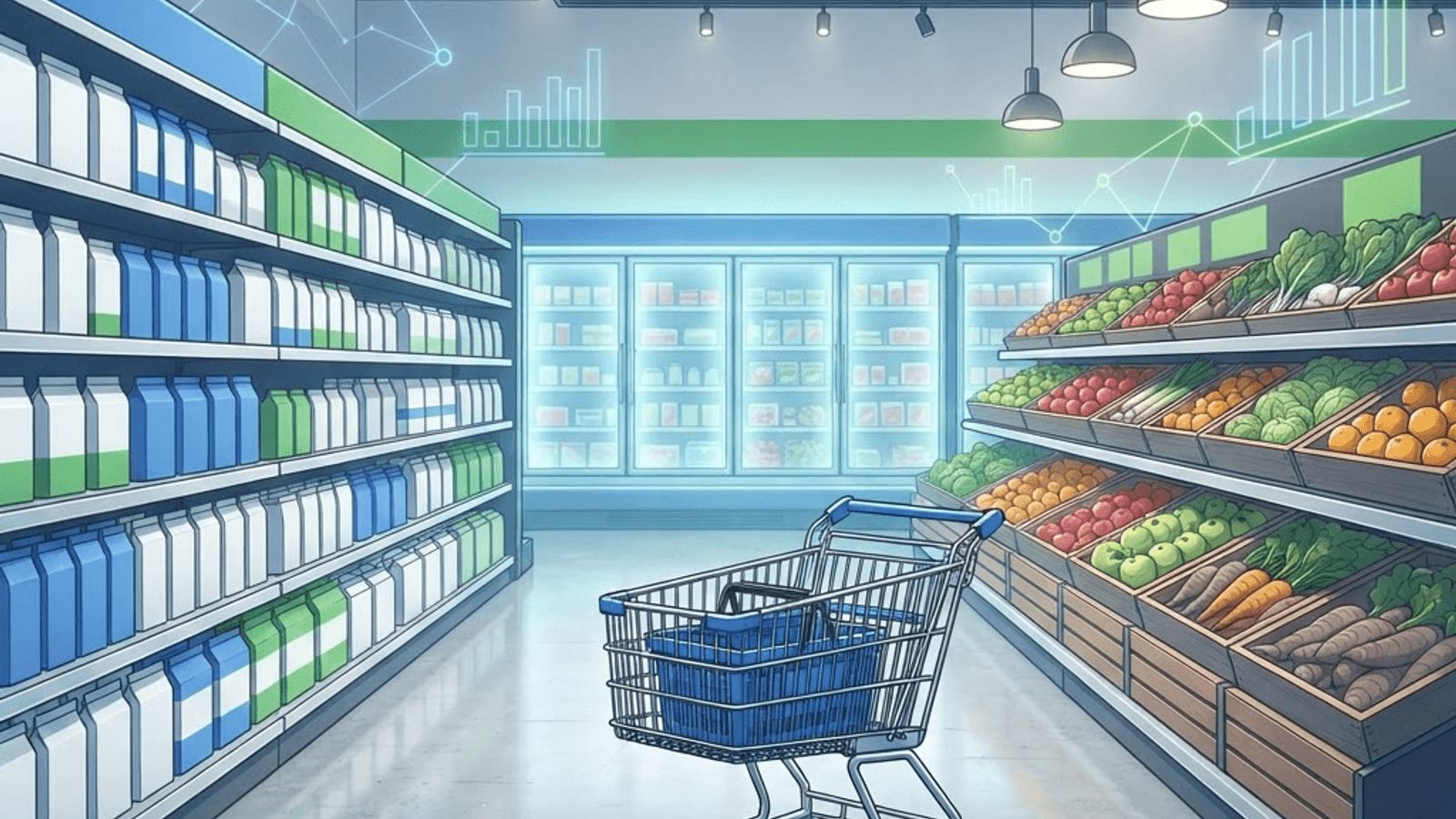
Grocery Shopping in Dundee
Dundee has an unusually well-served grocery market for a city of its size. The full range of national chains operates locally, from large out-of-town superstores through mid-sized supermarkets to city centre convenience formats and the discounters that have reshaped British grocery over the past decade. This density gives shoppers genuine choice and keeps competitive pressure on pricing.
The city's demographics shape the market meaningfully. Two universities create substantial demand for budget-conscious shopping and convenience formats near student areas. Family households in the suburbs favour weekly superstore shopping with car access. Older residents and city centre flat dwellers rely more on accessible smaller stores. Each chain has positioned itself against a segment of this mix.
Understanding Supermarket Formats
The format matters as much as the brand. Superstores carry the widest range, typically twenty to thirty thousand lines including non-food, and offer the lowest unit prices on bulk items. They require car access and reward planned weekly shopping. Mid-sized supermarkets carry a reduced range covering most needs and serve neighbourhood catchments.
Discounters operate a fundamentally different model, stocking perhaps two thousand carefully chosen lines with heavy own-brand emphasis, minimal merchandising and rapid stock turnover. This limited range is precisely what enables their pricing. Convenience formats carry a small selection at higher unit prices, trading on proximity and extended hours. Online delivery and click-and-collect overlay all of these.
Leading Supermarket Chains Serving Dundee
Tesco operates across multiple formats in the city, from large superstores to Express convenience stores, giving it the broadest coverage of any chain. Its strength lies in range breadth, a well-developed loyalty scheme offering meaningful member pricing, and reliable online delivery infrastructure that covers most Dundee postcodes.
Asda competes strongly on price for larger household shops, with superstore formats offering both groceries and substantial non-food ranges including clothing and homeware. For families shopping weekly with car access, the combination of low pricing and one-stop breadth is genuinely efficient.
Sainsburys positions somewhat above the price leaders, emphasising product quality, fresh food standards and own-brand development. Its Taste the Difference range and strong bakery and produce sections appeal to shoppers prioritising quality within a mainstream budget.
Morrisons differentiates through fresh food counters, with in-store butchery, fishmongery and bakery operations that most competitors have reduced or removed. For shoppers wanting meat cut to order or genuinely fresh baked goods, this vertically integrated approach delivers something the range-focused chains do not.
Aldi has fundamentally changed Scottish grocery shopping with its limited-range, low-price discount model. Its own-brand products regularly perform well in independent quality comparisons, and its commitment to sourcing from Scottish suppliers where possible has strengthened its local standing considerably.
Lidl operates a comparable discount model with its own distinct character, including a well-regarded in-store bakery and rotating non-food promotional lines that create a discovery element. Like Aldi, it has invested in Scottish supplier relationships and fresh produce quality.
Marks and Spencer Food occupies the premium end, focusing on prepared meals, quality fresh produce and distinctive own-brand products rather than competing on staple pricing. Many Dundee shoppers use it selectively alongside a main shop elsewhere, buying specific items rather than complete grocery lists.
Co-op serves neighbourhood and convenience needs across the city with a genuine local presence. Its member-owned structure, community fund distributing money to local causes, and emphasis on ethical sourcing including Fairtrade give it a distinct identity beyond convenience.
Iceland specialises in frozen food, which offers real practical advantages including waste reduction, portion control and nutrient retention in frozen vegetables. For students and smaller households, frozen ranges reduce the food waste that fresh shopping frequently produces.
Scotmid and local Scottish convenience operators serve neighbourhood shopping across Dundee with a Scottish co-operative identity, stocking local products alongside standard convenience lines and often providing services such as post office counters that support community access.
Scottish Sourcing and Local Produce
Scottish provenance carries genuine weight with Dundee shoppers, and supermarkets have responded. Scotch beef and lamb, Scottish salmon, Scottish dairy, soft fruit from the Tay valley and Angus, and bakery products from Scottish producers all feature prominently. The Tayside region in particular is significant for soft fruit production, and Dundee shoppers can buy genuinely local berries in season.
Beyond supporting Scottish agriculture, local sourcing typically means shorter supply chains and consequently fresher produce. Shoppers wanting to prioritise this can look for Scotch and Scottish assurance labelling, buy seasonally when local produce is at its best and cheapest, and supplement supermarket shopping with local butchers, fishmongers, bakeries and the city's market offerings.
Shopping Economically Without Compromising Quality
Grocery costs have risen substantially, making efficient shopping genuinely valuable. The most effective techniques are unglamorous but reliable. Planning meals for the week and shopping to a list prevents both impulse purchasing and the waste that comes from buying fresh items without a plan for using them.
Comparing unit prices rather than pack prices reveals genuine value, since larger packs are not automatically cheaper per unit. Own-brand products, particularly at the discounters, frequently match branded quality at substantially lower prices, and the difference is often imperceptible in cooking. Reduced-price sections at end of day offer significant savings on items suitable for immediate use or freezing. Frozen vegetables and fish are nutritionally comparable to fresh, cheaper and generate no waste.
Splitting shopping across chains works well for many households, using a discounter for staples and a mainstream chain for specific items and fresh counters. Loyalty schemes with member pricing have become significant, sometimes making a difference of ten percent or more on a full basket.
Food Waste and Sustainability
UK households discard a substantial proportion of the food they purchase, which represents both financial and environmental loss. Practical reduction measures include correct storage, understanding the difference between use-by dates concerning safety and best-before dates concerning quality, freezing surplus before it spoils and planning meals to use ingredients across several dishes.
Supermarkets have improved on packaging reduction, loose produce availability and surplus redistribution to community organisations. Several chains partner with food redistribution schemes and support local food banks and community pantries, which matters in a city with genuine pockets of food insecurity alongside general prosperity.
Online Shopping and Delivery
Online grocery has become firmly established in Dundee, with most major chains delivering across the city. The advantages include convenience, easier budget control through a visible running total, and reduced impulse purchasing. The disadvantages include delivery fees, substitution of unavailable items and inability to select fresh produce personally.
Click-and-collect offers a middle path, avoiding delivery charges while retaining the planning benefits of online ordering. For households without car access, particularly in city centre flats, online delivery has made large-basket shopping practical in a way it previously was not.
Final Thoughts
Dundee's grocery market is competitive and well served, with all major formats present and genuine choice at every price point. Tesco and Asda provide breadth and value at scale, Sainsburys and Marks and Spencer serve quality-focused shopping, Morrisons offers fresh counters, Aldi and Lidl deliver exceptional value on limited ranges, and Co-op and Scotmid provide community-rooted convenience. Shoppers who plan, compare unit prices, embrace own-brand quality and split their shopping strategically eat considerably better for less than those shopping habitually in one place.
Want your brand featured in front of decision-makers? Publish a guest post or get a link insertion in our guides through AAMAX's guest post and link insertion service.
Helpful Links
 SponsoredAAMAX — Full-Service Digital Agency
Write for Us
Share your expertise with our readers. We welcome guest contributions from industry specialists.
Pitch your idea