Solar Power in Ashfield
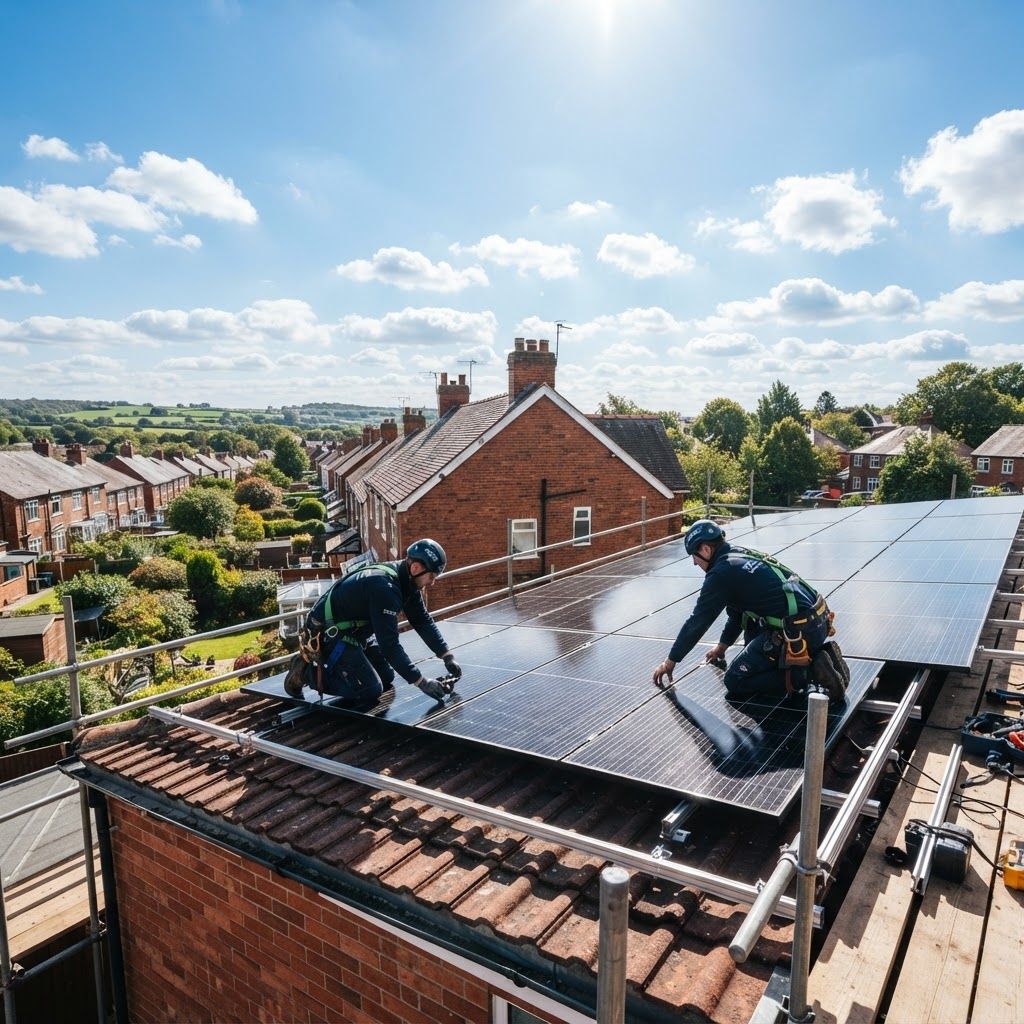
Solar photovoltaic installation has grown from a niche interest into a mainstream investment across Ashfield. Falling panel prices, rising electricity costs and improved battery technology have combined to make rooftop generation financially attractive for a far wider range of properties than a decade ago. Domestic installations now appear across housing estates throughout Sutton-in-Ashfield, Kirkby-in-Ashfield and Hucknall, while commercial arrays are increasingly visible on the district's warehouse and factory roofs.
A common misconception is that the United Kingdom lacks sufficient sunlight for solar to be worthwhile. In reality, photovoltaic panels generate from daylight rather than direct heat, and modern modules perform efficiently in diffuse light conditions. Panels also operate more efficiently at cooler temperatures, which partly offsets the lower irradiance compared with southern Europe.
The Types of Solar Installation Available
Domestic rooftop systems typically range from small arrays on terraced properties to larger installations on detached homes. System design balances available roof area, orientation, pitch, shading and household consumption patterns. South-facing roofs deliver the highest total output, but east-west split arrays often suit households better by spreading generation across morning and evening periods when occupancy is highest.
Commercial rooftop systems represent the strongest economic case in Ashfield. Industrial and distribution buildings combine extensive flat or shallow-pitched roof area with substantial daytime electricity demand, meaning a high proportion of generation is consumed on site rather than exported. Self-consumption is where the value lies, as avoided purchase price considerably exceeds export payment rates.
Ground-mounted arrays suit properties with available land, including farms, large commercial sites and former industrial plots. They allow optimal orientation and easier maintenance access, though they require planning consideration.
Solar carports combine covered parking with generation and electric vehicle charging, an increasingly popular option for employers and retail sites.
Battery storage integration has become near-standard on domestic installations. Storing daytime generation for evening use significantly increases self-consumption, and combining batteries with time-of-use electricity tariffs allows cheap overnight charging alongside solar input.
Solar thermal remains available for hot water heating, though photovoltaic paired with a heat pump or immersion diverter has largely displaced it in new installations.
What Distinguishes the Best Solar Companies
The leading installers serving Ashfield differ from volume operators in several measurable ways. Proper design methodology comes first. A quality installer models shading across the full year, calculates generation using recognised industry methodology, matches inverter capacity appropriately to the array and reviews your actual consumption data rather than applying generic assumptions.
Component quality and transparency matter considerably. Panels vary in efficiency, degradation rate and warranty length. Inverters, which are the component most likely to require replacement within the system lifetime, vary even more. Reputable installers name the exact products proposed and explain why.
Structural and electrical competence is essential. Roof structures must support the additional load, mounting systems must maintain weather integrity, and electrical work must comply with wiring regulations and network operator requirements. Certified installers handle network notification as part of the process.
Realistic financial projections distinguish honest companies. Payback estimates should state their assumptions about electricity price, self-consumption percentage and export rate, and should account for inverter replacement. Projections presenting unusually short paybacks generally rest on optimistic assumptions.
Aftercare completes the picture. Monitoring platforms, clear warranty documentation, responsive fault resolution and periodic performance review protect the investment over a system life measured in decades.
Trends in the Solar Market
Several developments are shaping solar adoption. Battery cost reduction continues, improving the economics of storage and making higher self-consumption achievable.
Smart tariffs that vary pricing through the day reward households and businesses able to shift or store consumption, increasing the value of integrated solar and battery systems.
Export arrangements vary meaningfully between suppliers, and choosing the right export tariff can materially affect returns.
Building integrated photovoltaics, including solar tiles and facade systems, are gaining traction where planning or aesthetic considerations restrict conventional panels.
Commercial power purchase agreements allow businesses to host third-party funded arrays and buy the generated electricity at a fixed rate, removing capital cost as a barrier.
How to Evaluate Solar Quotations
Insist on a site survey. Any quotation produced purely from aerial imagery or a telephone conversation lacks the information needed for accurate design.
Compare specifications line by line, including panel model and wattage, inverter model, mounting system, battery capacity and usable capacity, cabling, scaffolding and any roof remedial work.
Check certification and scheme membership, which is required both for quality assurance and for eligibility under export arrangements.
Ask about the self-consumption assumption underpinning the financial model, as this single variable has the largest effect on projected returns.
Review warranty detail carefully, distinguishing product warranty, performance warranty and workmanship warranty, each of which may have different durations and providers.
Conclusion
Solar energy in Ashfield has moved decisively from early adoption to mainstream investment. With careful design, quality components and an installer committed to realistic projections and proper aftercare, a photovoltaic system offers households and businesses in the district a reliable route to lower energy costs and reduced carbon emissions over a very long operating life.
Want your brand featured in front of decision-makers? Publish a guest post or get a link insertion in our guides through AAMAX's guest post and link insertion service.
Helpful Links
 SponsoredAAMAX — Full-Service Digital Agency
Write for Us
Share your expertise with our readers. We welcome guest contributions from industry specialists.
Pitch your idea