

Metalworking as the Backbone of Local Industry
Almost every manufactured product depends on metalwork somewhere in its production, whether as the finished article, the machine that made it or the structure housing the process. West Lancashire has retained a strong metalworking base, concentrated on the industrial estates around Skelmersdale and Burscough but extending into rural workshops serving agriculture and construction.
The sector spans a wide capability range. At one end sit precision machining shops working to tolerances measured in microns for aerospace and instrumentation customers. At the other sit heavy fabricators producing structural steelwork, tanks and agricultural equipment. Between them lie sheet metal specialists, welders, surface finishers and architectural metalworkers producing balustrades, gates and decorative features.
Understanding Metalworking Capabilities
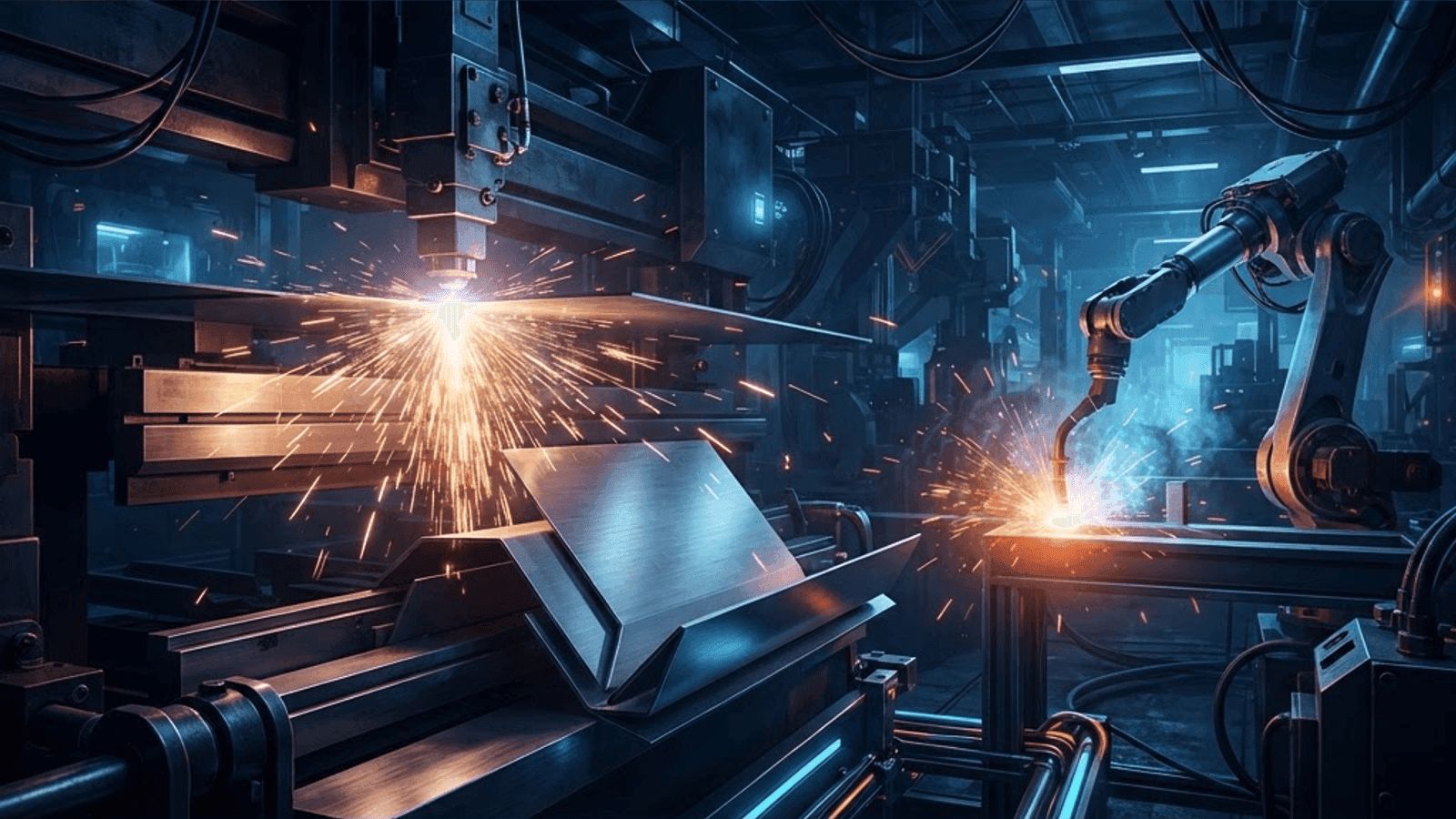
Buyers benefit from understanding the main processes. Laser and plasma cutting produce accurate profiles from sheet and plate quickly. Press braking folds those profiles into three-dimensional forms. Welding joins components, with different processes suited to different materials and thicknesses. Computer-controlled machining removes material to produce precise features. Surface treatment, including powder coating, galvanising and anodising, protects the finished item.
Certification indicates capability in critical applications. Structural steelwork requires execution class compliance and factory production control. Welding for pressure or structural work requires qualified procedures and certified welders. Precision machining for regulated sectors requires documented inspection and calibrated measuring equipment. Asking for evidence is entirely reasonable and reveals a great deal about a workshop's maturity.
The Top 10 Metalworks Companies in West Lancashire
1. West Lancs Fabrications
A general steel fabricator producing structural steelwork, platforms, staircases and heavy weldments, with certified welding procedures and in-house painting facilities.
2. Skelmersdale Precision Engineering
A machining specialist operating multi-axis machining centres and turning equipment for close-tolerance components, supported by a temperature-controlled inspection room.
3. Ormskirk Sheet Metal Works
Focused on laser cutting, punching and press braking for enclosures, panels and brackets, with rapid prototyping capability from customer drawings.
4. Burscough Stainless Steel Fabrication
Specialising in hygienic stainless fabrication for food and pharmaceutical customers, including tanks, tables, guarding and pipework with polished finishes.
5. Pimbo Laser Cutting
A cutting bureau offering fibre laser profiling in steel, stainless and aluminium, supplying cut parts to other fabricators as well as end users.
6. Douglas Valley Welding Services
Providing mobile and workshop welding across a range of materials and processes, frequently engaged for repair and maintenance work on plant and machinery.
7. Tarleton Agricultural Metalwork
Manufacturing and repairing agricultural equipment, gates, handling systems and trailers, built for durability in demanding farm environments.
8. Lathom Architectural Metalwork
Producing balustrades, staircases, gates, canopies and decorative features for commercial and residential projects, combining structural competence with visual finish quality.
9. Up Holland Powder Coating
A surface finishing business offering powder coating, shot blasting and pretreatment, providing durable finishes for fabricated products from other local workshops.
10. Rufford Tube and Pipework
Specialising in tube bending, pipework fabrication and installation for process, hydraulic and structural applications.
Technology Trends in Metalworking
Fibre laser cutting has replaced older technologies in most workshops, offering higher speed, better edge quality and lower running costs. Automation has spread beyond cutting into bending and welding, improving consistency on repetitive work. Robotic welding in particular has made medium-volume fabrication considerably more competitive against imports.
Digital workflow is transforming the sector, with three-dimensional models flowing directly into nesting and machine programming, reducing errors and shortening lead times. Additive manufacturing has found a role in tooling and complex low-volume parts. Meanwhile, energy costs have pushed workshops toward more efficient equipment and better material utilisation through improved nesting software.
How to Select a Metalworks Partner
Be clear about tolerance and finish requirements from the outset, as these drive both price and process selection. Over-specifying tolerance is a common and expensive mistake. Supply proper drawings or models rather than sketches, since ambiguity leads to rework.
Assess whether the workshop's equipment genuinely suits your part size and volume. A precision machining shop is the wrong home for heavy structural work and vice versa. Ask about material sourcing and whether certification can be provided. Confirm inspection procedures and what documentation accompanies delivery. Finally, visit if possible, because workshop organisation, machine condition and how work in progress is handled tell you a great deal about likely quality.
Material Choice and Surface Protection
Selecting the right metal is as important as choosing the right workshop. Mild steel is economical, strong and easily welded, but requires protective treatment in any exposed environment. Stainless steel resists corrosion without coating and is essential for food, pharmaceutical and marine applications, though it costs considerably more and machines differently. Aluminium offers excellent strength for its weight and natural corrosion resistance, making it attractive where handling or transport weight matters.
Surface protection determines service life, particularly given the damp and wind-driven rain common across the West Lancashire plain. Hot dip galvanising provides decades of protection for structural steelwork exposed to weather. Powder coating delivers a durable coloured finish suitable for architectural and product applications, though it performs best over properly prepared and pretreated surfaces. Combining galvanising with powder coating gives both longevity and appearance for demanding external installations.
Preparation quality matters more than coating thickness. Shot blasting to remove mill scale and contaminants, followed by prompt coating before flash rusting occurs, makes the difference between a finish lasting twenty years and one failing within three.
Final Thoughts
Metalworks companies in West Lancashire offer an impressive combination of traditional craft skill and modern digital manufacturing. From micron-tolerance machining to heavy structural fabrication and architectural feature work, the borough supports a complete capability spectrum. For buyers, the key is matching the requirement to the right type of workshop and communicating specifications clearly, which together deliver far better results than shopping purely on price.
Want your brand featured in front of decision-makers? Publish a guest post or get a link insertion in our guides through AAMAX's guest post and link insertion service.
Helpful Links
 SponsoredAAMAX — Full-Service Digital Agency
Write for Us
Share your expertise with our readers. We welcome guest contributions from industry specialists.
Pitch your idea

