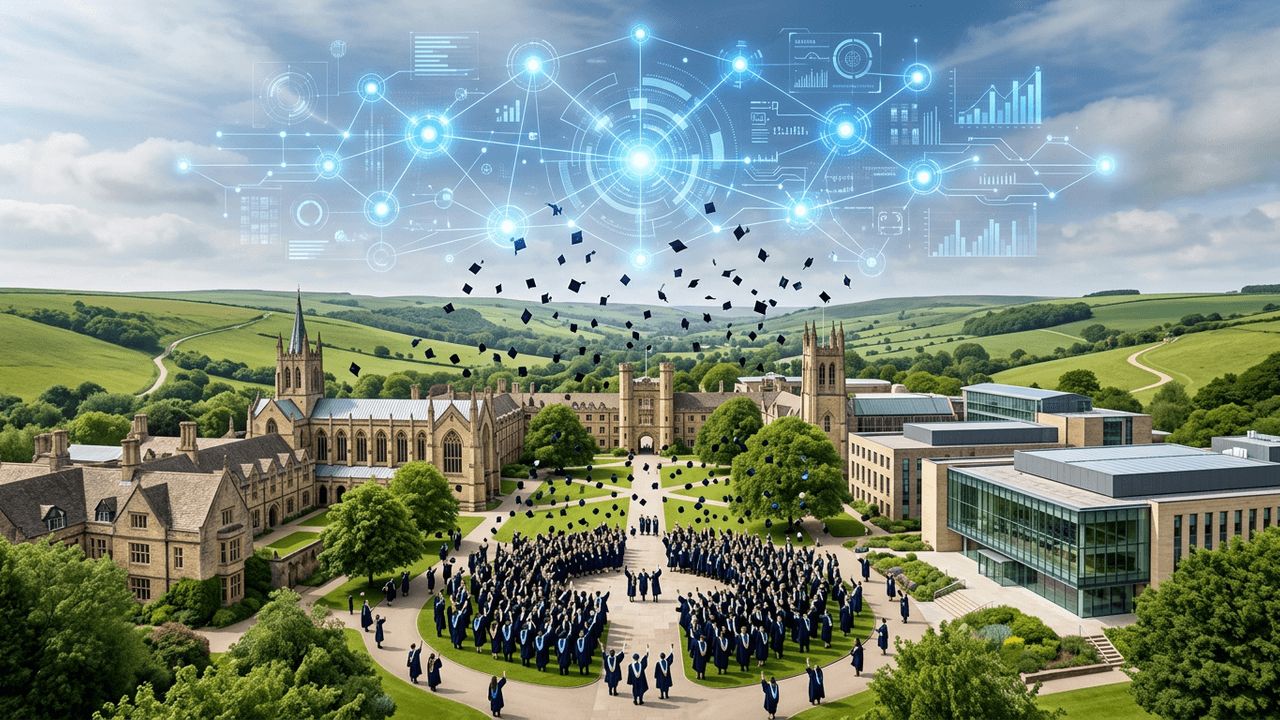
Education in Bury: A Borough That Takes Schooling Seriously
Few boroughs in Greater Manchester have an educational identity as pronounced as Bury's. The town retains selective grammar provision, supports a strong network of Church of England, Catholic and Jewish schools, and hosts community comprehensives that have improved markedly over the past decade. Add in respected independent options and the result is a genuinely competitive local market where parents have real choice, and where school reputation influences house prices street by street.
That choice brings complexity. Selective schools require entrance testing, faith schools apply religious criteria, and popular community schools regularly fill on distance alone. Understanding how each admissions route works, and preparing early, matters as much as identifying which school looks best on paper.
The Top 10 Schools in Bury
1. Bury Grammar School — Among the most recognised names in the borough, this independent school traces its history back centuries and has built a reputation for academic rigour combined with genuine breadth. Its strengths include small teaching groups, well-resourced science and music provision, extensive sport, and a sixth form with strong university progression. Entry is by assessment, and preparation typically begins a year or more in advance.
2. Woodhey High School — Located in Ramsbottom within the borough, this community secondary is consistently among the most oversubscribed non-selective schools locally. Parents cite calm corridors, high expectations around uniform and behaviour, and a curriculum that keeps academic subjects open to a wide ability range rather than narrowing options early.
3. Bury Church of England High School — A voluntary aided school with a clear faith ethos, known for a supportive pastoral structure and strong emphasis on personal development alongside examination results. Its house system, chaplaincy and community service programme give students a strong sense of belonging, and its arts provision is a particular highlight.
4. St Monica's Roman Catholic High School — Serving Catholic families across Bury and neighbouring Prestwich, this school combines academic ambition with a distinctive commitment to inclusion. It has invested heavily in science, technology and vocational pathways, and its careers guidance and employer engagement programme is well regarded by parents.
5. Derby High School — A large community secondary with a broad curriculum offer and a reputation for supporting students of all starting points to make strong progress. Its performing arts and sports facilities are used by the wider community, and its transition programme for incoming Year 7 pupils is thorough and reassuring for anxious families.
6. Elton High School — Known for a strong sporting culture and an increasingly robust academic core, this school has made visible improvements in recent years. Leadership has focused on reading fluency, attendance and consistent classroom routines, and outcomes have followed. It suits families who want a busy, energetic environment with plenty of extracurricular opportunity.
7. Tottington High School — A medium-sized secondary popular with families in the north-west of the borough. Its scale is part of the appeal: staff know pupils individually, tutor groups are stable across year groups, and communication with parents is direct. Music, design technology and outdoor education are notable strengths.
8. Philips High School — Serving Whitefield and surrounding areas, this school emphasises character education alongside attainment, with a well-structured personal development curriculum covering careers, wellbeing and citizenship. It has a good record of supporting pupils with additional needs through a visible and accessible learning support team.
9. Holy Cross College Preparatory Provision and Feeder Primaries — Bury's primary sector deserves attention in its own right, and the borough contains a cluster of consistently high-performing primaries including St Joseph's, Chesham, Fairfield Community and Springside. Strong phonics teaching, early mathematics mastery and settled staffing are common threats among them, and they feed reliably into the borough's better secondaries.
10. The Elms and Independent Preparatory Options — For families considering fee-paying primary education, Bury and its immediate surroundings offer preparatory provision with small classes, extended school days, structured homework, and early exposure to languages, instrumental music and competitive sport. These schools typically prepare pupils for selective entrance assessment at eleven.
How Admissions Actually Work
For community and voluntary controlled schools, the local authority coordinates admissions and applies published oversubscription criteria, which usually prioritise looked-after children, siblings, medical need and then straight-line distance from home to school. Because distance is the final tiebreak, catchment distances shift year to year with birth rates and housing developments, so last year's cut-off is a guide rather than a guarantee.
Voluntary aided faith schools set their own criteria, generally requiring a supplementary information form signed by a member of clergy confirming attendance patterns over a defined period. Independent and selective schools run their own assessments, typically covering English, mathematics and reasoning, sometimes with an interview element. Deadlines are firm, and late applications are processed only after on-time ones, which materially reduces the chance of a preferred offer.
Beyond League Tables: What to Look For on a Visit
Published performance data tells you something, but not everything. Progress measures are more informative than raw attainment because they show what a school adds regardless of intake. Attendance and persistent absence rates reveal whether pupils want to be there. Staff turnover indicates whether a school is a stable place to work.
On an open evening, observe the details. Do pupils speak confidently and unprompted about their learning? Are corridors calm during transitions? Is displayed work recent and genuinely produced by students? Ask how the school identifies a child who is quietly struggling, how it handles bullying, how it communicates with parents when something goes wrong, and what happens in the first six weeks for a new Year 7. The quality of those answers usually tells you more than any statistic.
Trends in Bury's Schools
Several developments are reshaping local provision. Multi-academy trust membership has brought shared curriculum resources and centralised professional development to a number of Bury schools. Attention to reading and vocabulary has intensified across both primary and secondary phases, reflecting evidence that literacy underpins performance in every subject. Mental health provision has expanded, with more schools employing dedicated wellbeing staff and structured intervention pathways. Vocational and technical routes have also strengthened, giving sixth-form students credible alternatives to a purely academic post-sixteen programme.
Making the Right Choice
The strongest school in Bury is the one that fits your child. A confident, academically driven student may thrive under selective pressure; another may flourish in a smaller, more nurturing community secondary. Consider the practical realities too: travel time, sibling logistics, after-school clubs, and whether friendship groups will carry over. Visit more than one school, use all your preference slots strategically rather than listing only the most popular option, and trust your impression of how pupils and staff interact. That relationship, more than any facility or ranking, shapes five years of a child's life.
Want your brand featured in front of decision-makers? Publish a guest post or get a link insertion in our guides through AAMAX's guest post and link insertion service.
Helpful Links
 SponsoredAAMAX — Full-Service Digital Agency
Write for Us
Share your expertise with our readers. We welcome guest contributions from industry specialists.
Pitch your idea