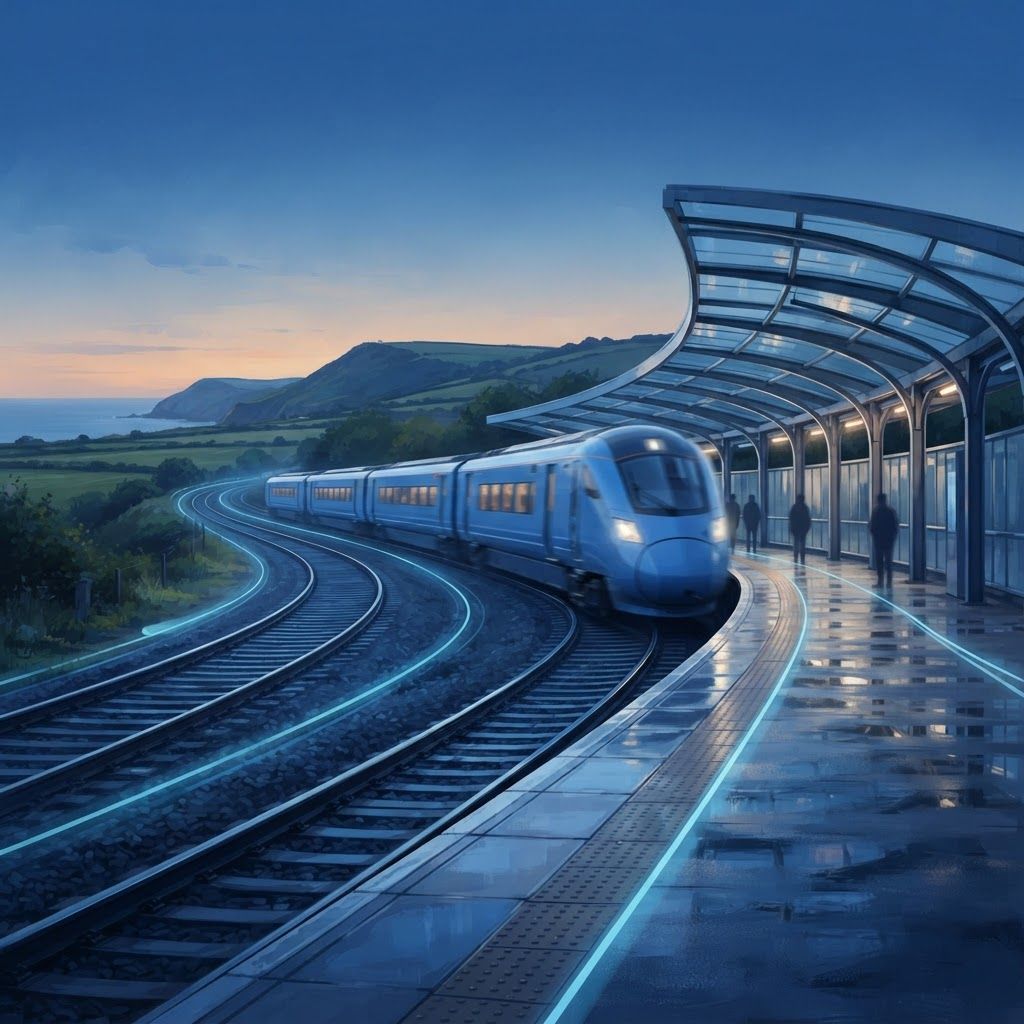
Rail Connectivity in North Somerset
The district is better connected by rail than many comparable areas. The main line linking Bristol with Taunton and Exeter passes through it, serving Weston-super-Mare, Worle, Yatton and Nailsea and Backwell. From these stations, direct or single-change journeys reach Bristol in well under half an hour, London in around two and a half hours, and Cardiff, Birmingham, Exeter and Plymouth without excessive difficulty.
That connectivity shapes local life. Commuters travel daily to Bristol, students reach universities and colleges, and residents access national services without driving. It also supports tourism, with Weston-super-Mare reachable directly from London and the Midlands, an inheritance of the Victorian excursion traffic that built the resort in the first place.
Understanding the Rail Industry Structure
British rail services are delivered by several distinct types of organisation. Train operating companies run passenger services under contract or licence. Network Rail owns and maintains track, signalling and most major stations. Freight operators run goods trains on the same network. Heritage railways operate preserved lines independently. Rolling stock companies own the trains themselves and lease them to operators.
For passengers, this matters mainly in two ways. First, tickets are generally interchangeable across operators on a given route unless the fare is operator-specific, which affects flexibility and price. Second, responsibility for delays and compensation rests with the operator you travelled with, even where the underlying cause was infrastructure related.
The Top 10 Railway Operators Relevant to North Somerset
1. Great Western Railway
The principal operator serving the district, running local, regional and long-distance services through Weston-super-Mare, Worle, Yatton and Nailsea. Direct trains to London Paddington, Bristol, Cardiff, Exeter and Plymouth make it the default choice for most journeys.
2. CrossCountry
Providing long-distance services connecting the South West with Birmingham, the North of England and Scotland. Valuable for cross-country journeys that would otherwise require multiple changes in London.
3. Network Rail
Responsible for the track, signalling, level crossings and structures across the district, including electrification and resilience works on the main line. Its investment decisions determine long-term capacity and reliability.
4. South Western Railway
Relevant for onward connections from the wider Somerset and Wiltshire network toward Salisbury, Southampton and London Waterloo, offering alternative routing for southern journeys.
5. Transport for Wales
Providing connections from Bristol and the Severn corridor into South and West Wales, useful for travellers heading toward Cardiff, Swansea and beyond.
6. Freightliner
A major rail freight operator running intermodal and bulk services along the western corridor, contributing to reduced road haulage on the M5 route.
7. GB Railfreight
Operating bulk aggregates, construction materials and infrastructure trains, including flows associated with Mendip quarry traffic that passes through the region.
8. DB Cargo UK
Handling steel, aggregates, automotive and intermodal freight on the national network, with services routed through the South West corridor.
9. West Somerset Railway
A heritage line operating preserved steam and diesel services along a scenic route in the wider county, offering a leisure rail experience popular with visitors and families from the district.
10. Strawberry Line Association and Community Rail Partnerships
Community rail groups working on station improvements, local promotion and active travel links, including cycle and walking connections between stations and surrounding villages.
Making the Most of Rail Travel Locally
Advance tickets deliver the largest savings on long-distance journeys, particularly to London and the Midlands, but tie you to specific trains. Off-peak returns offer more flexibility, and season tickets remain the economical choice for regular Bristol commuting. Railcards, including options for young people, older travellers, families and two people travelling together, frequently reduce fares by a third.
Split ticketing can lower costs on some routes, provided the train calls at the split point. For airport journeys, remember that Bristol Airport has no rail station, so a bus or taxi connection is required. Check engineering work notices before weekend travel, as the main line through the district sees periodic upgrade closures with replacement bus services.
Trends in Rail Provision
Several developments matter locally. Rolling stock renewal has improved comfort and capacity on regional services. Station accessibility upgrades continue, with step-free access and improved information systems progressively installed. Digital ticketing has largely replaced paper, simplifying travel and enabling automated delay compensation. Rail freight growth is being actively encouraged as a decarbonisation measure, and proposals for improved local service frequency and potential station reopenings remain part of regional transport discussions.
Final Thoughts
Rail is one of North Somerset's genuine infrastructure strengths, with four stations giving direct access to a national network. Great Western Railway handles the bulk of local journeys, CrossCountry opens northern routes, freight operators keep lorries off the M5, and heritage and community rail organisations add leisure and local value. Book in advance for long-distance trips, use a railcard where eligible, and check for engineering works, and the network offers a fast, low-stress alternative to driving toward Bristol and beyond.
Want your brand featured in front of decision-makers? Publish a guest post or get a link insertion in our guides through AAMAX's guest post and link insertion service.
Helpful Links
 SponsoredAAMAX — Full-Service Digital Agency
Write for Us
Share your expertise with our readers. We welcome guest contributions from industry specialists.
Pitch your idea