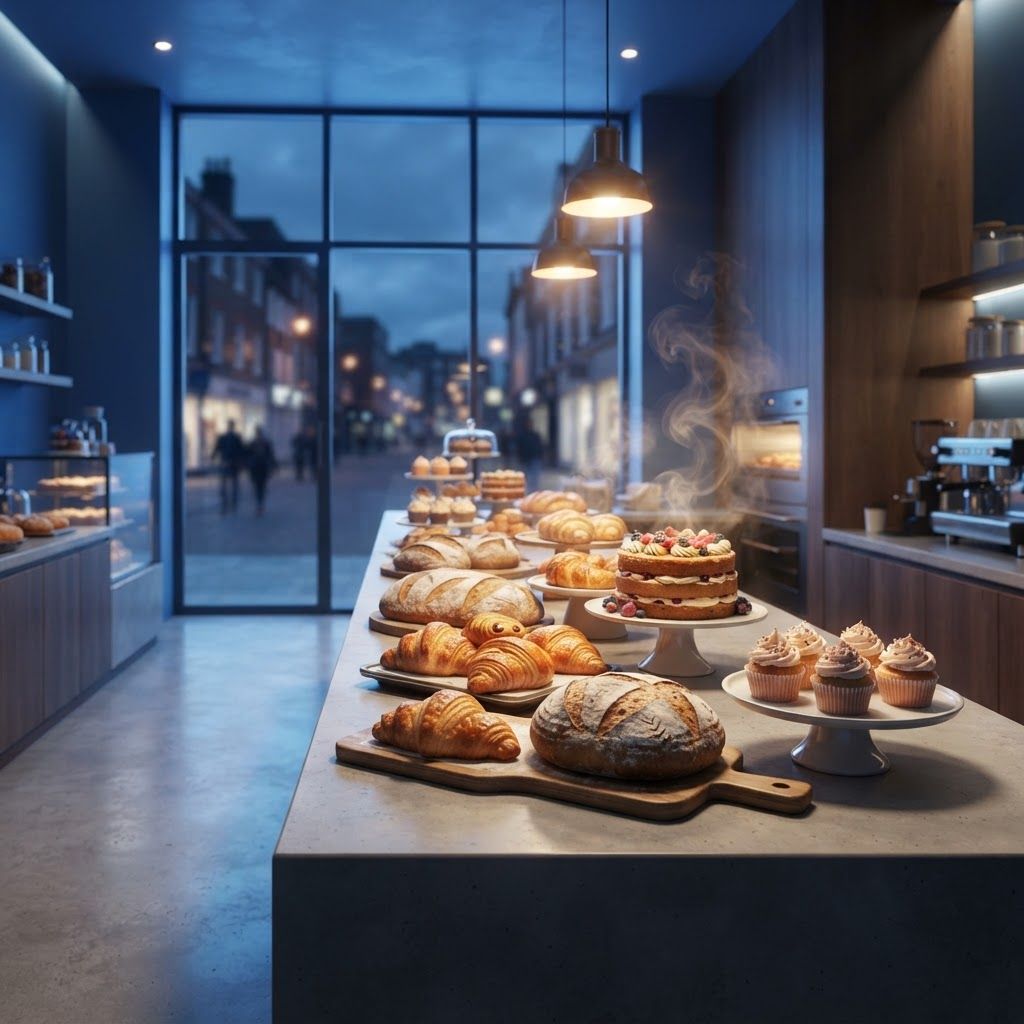
A Genuine Baking Revival in Sutton
Something rather good has happened to bread in Sutton. Where once the high street offered a choice between a supermarket bakery counter and a single traditional baker, the borough now supports a genuinely varied collection of artisan bakeries, patisseries and specialist producers. The revival mirrors a national return to interest in real bread, but it has taken a distinctly local form, shaped by Sutton's diverse population and its mix of residential neighbourhoods where a good bakery quickly becomes a fixture.
The economics have helped. Sutton's high streets and parades in Cheam, Carshalton, Wallington and Belmont offer premises at rents that allow a small independent producer to survive on quality rather than volume. Meanwhile, a customer base willing to pay properly for a well-made loaf has grown steadily. The result is a bakery scene with real depth.
Ten Bakeries Worth Seeking Out
Sutton Sourdough Company has become something of a local institution, working with long fermentation and stone-milled flours. Their country loaf, with its dark blistered crust and pronounced acidity, is the benchmark against which other local sourdough is measured. They also bake exceptional seeded rye.
Cheam Village Bakery represents the traditional end of the spectrum, producing consistently excellent tin loaves, bloomers, sausage rolls and the sort of iced buns that reward nostalgia. Long queues on Saturday mornings suggest they are doing something right.
Carshalton Ponds Patisserie focuses on French pastry, with laminated doughs handled properly. Their croissants have the honeycomb interior structure that indicates genuine skill, and their seasonal fruit tarts are made with restraint rather than decoration.
Wallington Wholegrain Bakehouse specialises in nutritionally dense breads, working extensively with spelt, emmer and wholegrain flours. They are the natural choice for anyone prioritising fibre and flavour over softness.
Belmont Bread and Butter is a small neighbourhood bakery with a tight, well-executed range and a notably good morning bun. Their approach is deliberately limited: fewer products, made properly.
Sutton Common Continental Bakery brings Eastern European baking traditions to the borough, with poppy seed rolls, dense rye breads and cheesecakes that reflect a different and welcome tradition entirely.
Rosehill Cake Studio concentrates on celebration cakes and elaborate decorated work alongside a daily counter selection, and has built a strong reputation for wedding commissions.
Worcester Park Bagel House produces boiled-then-baked bagels with proper chew, a product frequently done badly and here done well.
Benhilton Gluten-Free Bakery operates a dedicated facility, which matters enormously for customers with coeliac disease who cannot rely on shared production spaces. Their focaccia is impressive by any standard.
Sutton Green Vegan Bakehouse completes the list with entirely plant-based baking that succeeds on its own merits rather than as substitution, particularly their olive oil cakes and chocolate work.
What Distinguishes Good Baking
Several markers help identify quality. With bread, look at the crust: genuinely baked bread has colour and depth, developed through proper oven time. Examine the crumb structure, which should be irregular in a naturally leavened loaf and even in an enriched one, but never gummy. Good bread keeps for days, staling gracefully rather than turning to dust overnight.
Ingredient quality is often visible. Butter rather than margarine in pastry produces a distinct aroma and a cleaner finish on the palate. Fewer ingredients generally indicates confidence. Bakeries that list their flour supplier are usually proud of the choice for good reason.
Timing matters too. Bakeries bake to a schedule, and arriving shortly after a bake produces a markedly better experience than arriving at closing time. It is worth asking when particular items emerge.
Trends in the Local Bakery Scene
Long fermentation continues to spread, driven by both flavour and the widely reported digestibility benefits. Heritage and regional grain varieties are appearing more frequently, offering flavours that modern high-yield wheat does not provide. Laminated pastry innovation has become a competitive arena, with croissant variations proliferating, sometimes excellently and occasionally absurdly.
On the commercial side, pre-order and subscription models have taken hold, letting small bakeries plan production and reduce waste. Waste reduction generally has become a visible priority, with end-of-day discounting and surplus redistribution now standard practice among Sutton's independents. Plant-based and allergen-aware baking has moved from niche to mainstream expectation.
Making the Most of Sutton's Bakeries
Buy on the day you intend to eat, and store bread in paper or a bread bin rather than plastic, which softens the crust. Freeze surplus bread promptly rather than letting it stale, and refresh it in a hot oven for a few minutes. Talk to the bakers: independents are usually happy to explain their process, recommend pairings and tell you what came out best that morning.
Final Thoughts
Sutton's bakeries collectively represent one of the more enjoyable developments in the borough's food landscape. From rigorous sourdough to accomplished patisserie, traditional British baking to continental and plant-based specialists, the range is genuinely impressive for an outer London borough. Supporting these businesses is straightforward and rewarding: visit regularly, buy properly made bread, and the scene will continue to improve.
Want your brand featured in front of decision-makers? Publish a guest post or get a link insertion in our guides through AAMAX's guest post and link insertion service.
Helpful Links
 SponsoredAAMAX — Full-Service Digital Agency
Write for Us
Share your expertise with our readers. We welcome guest contributions from industry specialists.
Pitch your idea