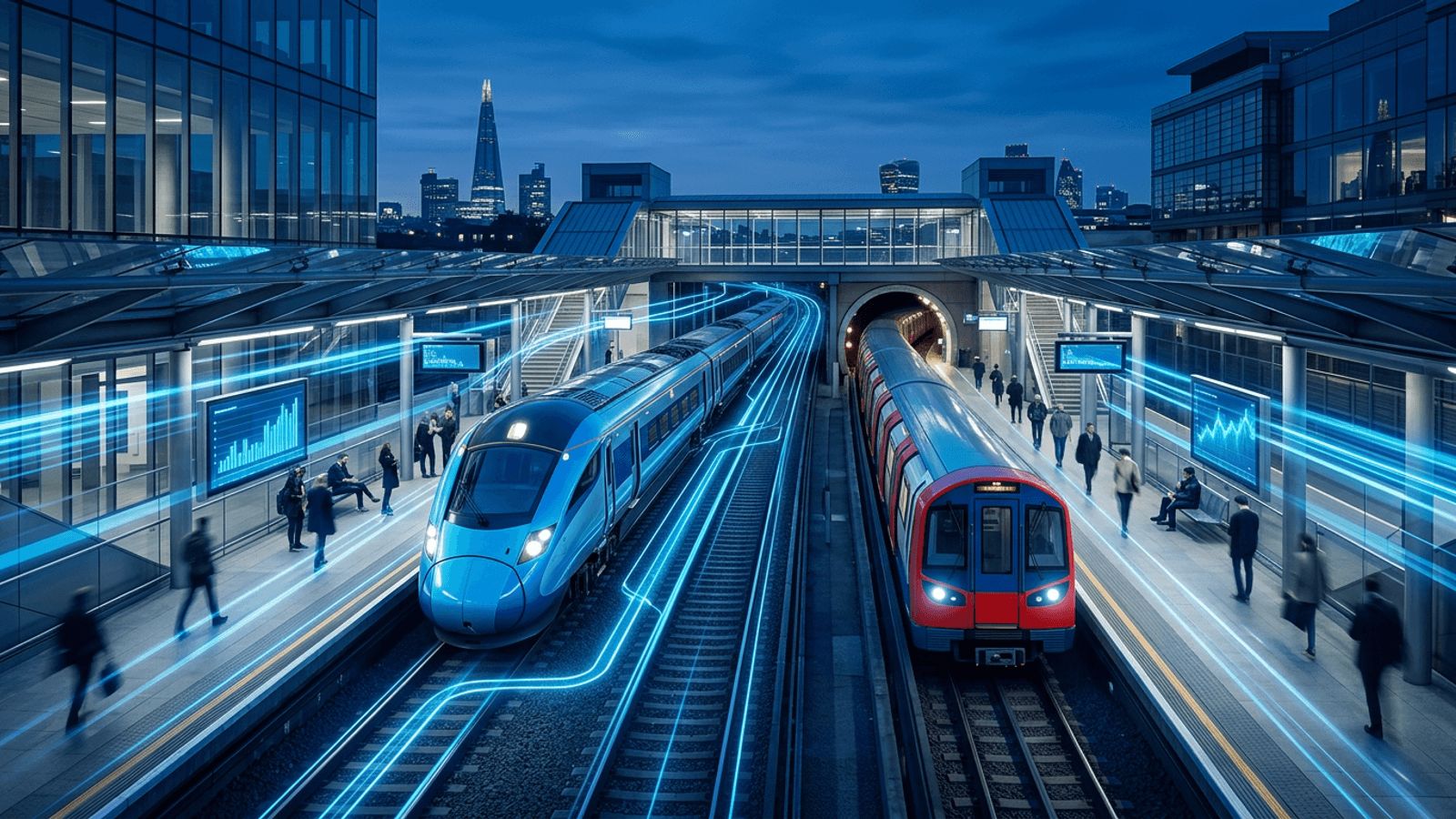
Rail Heritage and Modern Reality in Middlesbrough
Middlesbrough owes its existence to the railway. The town grew from a small settlement into a major industrial centre after the Stockton and Darlington Railway was extended to the Tees to export coal, and rail has shaped its geography ever since. That heritage is still visible in the alignment of lines through the town and in the restored grandeur of Middlesbrough station, which underwent significant redevelopment to accommodate longer trains and improved passenger facilities.
Today the town is served by Middlesbrough station and the smaller James Cook station, purpose-built to serve the hospital. Lines radiate towards Darlington and the East Coast Main Line, along the Tees Valley towards Stockton, Thornaby and Eaglescliffe, out to Redcar and Saltburn, and along the scenic Esk Valley route to Whitby. The reinstatement of a direct London service was a milestone for the town, improving business connectivity and giving the station a genuinely national role for the first time in decades.
Ten Key Railway Operators and Organisations
Northern is the dominant passenger operator, running the majority of local and regional services from Middlesbrough. It provides the essential connectivity to Darlington, Newcastle, Hartlepool, Redcar, Saltburn and across the Pennines to Manchester, and its rolling stock has improved substantially with refurbished and newer units offering better accessibility, air conditioning and passenger information.
TransPennine Express operates longer-distance services connecting Teesside with York, Leeds, Manchester and Manchester Airport, along with links towards Newcastle. Its role is significant for airport access and for business travel to the North West, and its trains generally offer higher-specification interiors and reservable seating.
London North Eastern Railway transformed Middlesbrough's connectivity by introducing direct services to London King's Cross via the East Coast Main Line. Direct intercity access, with onboard catering, at-seat service and through ticketing, materially improves the town's proposition for inward investment and professional travel.
Grand Central operates open-access services from the Tees Valley to London, providing competition and additional capacity on the corridor. Open-access operators have a strong record of stimulating demand at stations previously underserved by intercity trains, and their fares often undercut franchised alternatives.
CrossCountry connects the North East with the Midlands, the South West and Scotland, offering long-distance journeys that avoid the need to travel via London. For passengers heading to Birmingham, Bristol or the South Coast, these services are usually the most practical single-train option.
Network Rail is not a train operator but is fundamental to the local railway, owning and maintaining the track, signalling, bridges and larger stations. Its investment decisions on capacity, line speed, level crossings and station accessibility determine what operators can realistically deliver.
Freightliner runs intermodal and bulk freight services on the Teesside network, connecting port and industrial terminals with inland destinations. Freight is a substantial user of local rail capacity and a major contributor to reducing lorry mileage on the A19 and A66.
DB Cargo UK is the other principal rail freight operator in the area, handling steel, aggregates, chemicals and intermodal traffic. Its trainload services support exactly the heavy industry that defines the Tees estuary.
North Yorkshire Moors Railway provides a heritage dimension with real practical value, operating steam and heritage diesel services through the national park and running into Whitby. It is a major tourism draw for the wider region and an important employer of skilled engineering volunteers and staff.
Tees Valley Combined Authority, working alongside community rail partnerships, plays a growing role in shaping local rail provision through station investment, service specification advocacy and integration with bus networks. Devolved transport bodies have become increasingly influential in determining local rail priorities.
Trends Shaping Rail in the Tees Valley
Station investment has been a visible priority, with Middlesbrough station's redevelopment lengthening platforms, improving concourse facilities and enhancing accessibility. Step-free access, better waiting facilities and clearer information have practical effects on who can realistically use the railway.
Ticketing has modernised through smart and digital products, with e-tickets, split-ticketing awareness and contactless payment reducing friction. Delay repay schemes have also become more automated, improving compensation take-up.
Decarbonisation remains a live question for the region, since much of the local network is not electrified. Battery and bi-mode technologies are the most plausible medium-term answer for routes like the Esk Valley line where full electrification is difficult to justify economically.
Rail freight growth is another significant trend, supported by port expansion and the modal shift ambitions of major shippers. Each additional freight service represents a meaningful reduction in road haulage emissions and congestion.
Practical Advice for Rail Passengers
Book advance tickets for long-distance journeys, particularly to London, where early purchase can deliver dramatic savings compared with walk-up fares. Where multiple operators serve the same corridor, compare both price and journey time, as the cheapest option is not always the fastest.
Check whether your ticket is operator-specific before travelling, since restricted advance tickets are not valid on alternative services. For journeys involving a connection at Darlington or York, allow a sensible buffer, and understand your rights if a delay causes a missed connection.
Passengers requiring assistance should book it in advance through the operator, which guarantees staff availability at both ends of the journey. Cyclists should note that bike spaces are limited and usually require reservation on longer-distance services.
A Railway With Renewed Momentum
After decades in which Middlesbrough's rail offer was largely local, the town now combines regional connectivity through Northern and TransPennine Express with genuine intercity access via London North Eastern Railway, Grand Central and CrossCountry, alongside a busy freight railway and a nationally significant heritage line. Continued investment in stations, rolling stock and freight capacity suggests that momentum is likely to build further.
Want your brand featured in front of decision-makers? Publish a guest post or get a link insertion in our guides through AAMAX's guest post and link insertion service.
Helpful Links
 SponsoredAAMAX — Full-Service Digital Agency
Write for Us
Share your expertise with our readers. We welcome guest contributions from industry specialists.
Pitch your idea