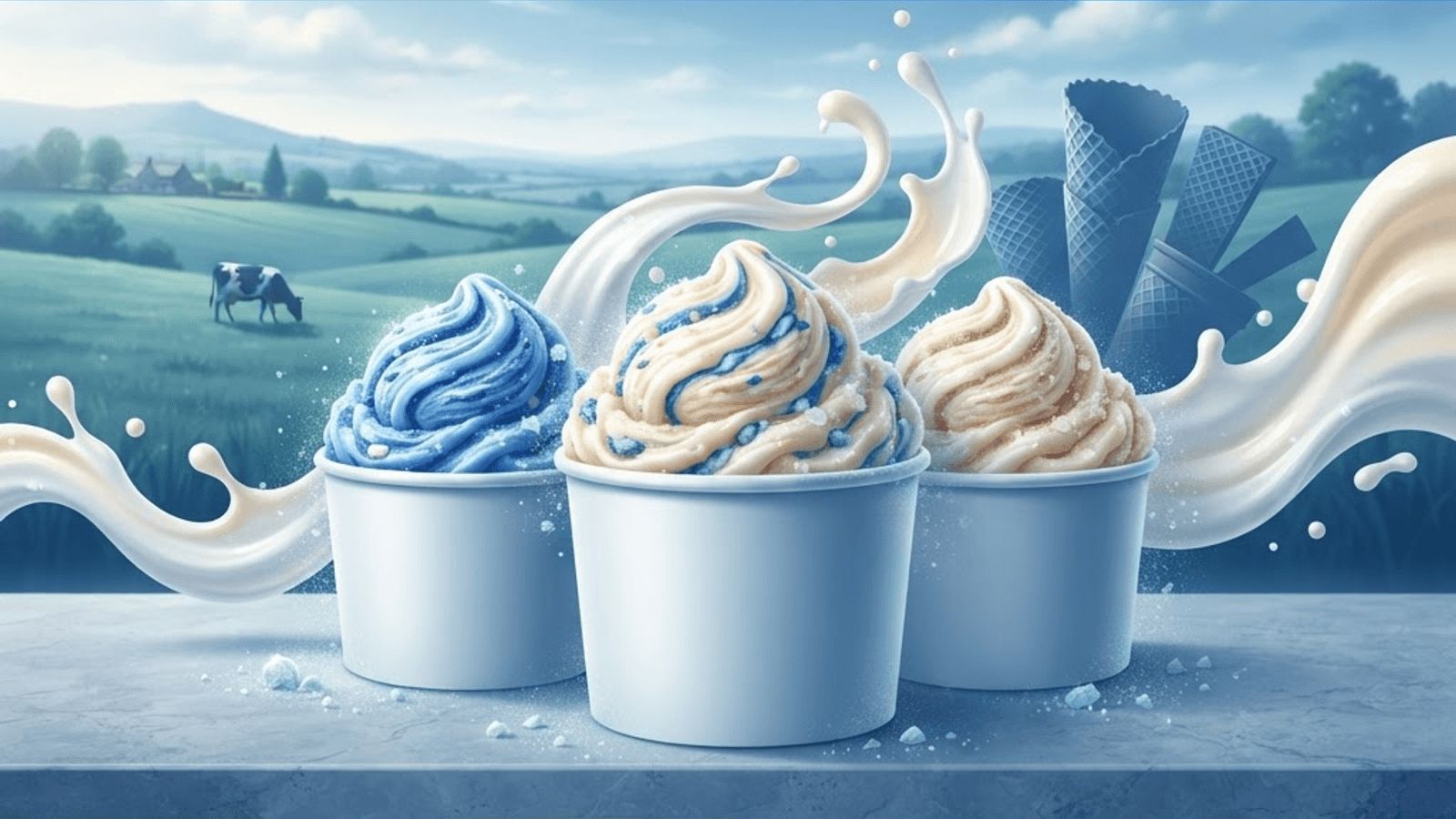
Why Carmarthenshire Makes Exceptional Ice Cream
Ice cream is a dairy product, and dairy quality is determined by pasture. Carmarthenshire's mild, wet climate and river valley grassland produce grazing conditions that dairy farmers elsewhere in Britain would envy, supporting herds that spend most of the year outdoors on grass. The milk that results has higher fat content and a richer flavour profile than intensively produced equivalents, and that difference is immediately noticeable in ice cream, where dairy is the dominant ingredient rather than one component among many.
This explains why so many Carmarthenshire ice cream brands are farm-based. A dairy farm that processes its own milk into ice cream captures far more value per litre than selling to a processor, and the shortest possible supply chain means the product is made from milk collected hours earlier. Several of the county's best-known brands started exactly this way, as diversification projects that outgrew the farm shop.
What Distinguishes Real Ice Cream
Composition is the first test. Genuine dairy ice cream contains milk, cream, sugar, egg yolks in custard-based recipes, and flavouring. Products relying on vegetable fat, powdered milk substitutes, artificial stabilisers and long ingredient lists are legally something else, and taste like it. The best local producers keep ingredient lists short enough to read aloud.
Overrun, the amount of air whipped into the mix, is the technical factor customers notice without knowing its name. Cheap ice cream can be more than half air, which is why it feels light, melts quickly and tastes thin. Artisan producers use far less air, producing a denser product that feels richer and holds its structure. A tub that feels heavy for its size is usually a good sign.
Fat content and freezing method complete the picture. Higher butterfat produces a smoother texture because it inhibits ice crystal formation, and fast freezing at low temperature keeps crystals small. Slowly frozen or repeatedly thawed ice cream develops the grainy texture that ruins an otherwise good product.
The Ten Ice Cream Brands Worth Trying
Tywi Valley Dairy Ice Cream represents the established farm dairies producing ice cream from their own herd. Their vanilla, made with real pods and a high proportion of egg yolk, is the benchmark against which everything else in the county is judged.
Carmarthen Farmhouse Creamery exemplifies the traditional farm producers with a broad flavour range sold through farm shops, delicatessens and a farm-gate parlour that draws visitors specifically.
Coastal Cwtch Ice Cream stands for the seaside-focused brands supplying kiosks and cafes along the Carmarthen Bay coast, with the classic flavours that dominate summer trade done properly rather than cheaply.
Llanelli Gelato Works covers the Italian-technique producers making gelato rather than traditional ice cream. Lower fat, lower air, served warmer, with intensely concentrated flavour, this is a genuinely different product and an excellent one.
Sir Gar Organic Dairy reflects the certified organic producers whose herds graze pasture managed without synthetic inputs, appealing to customers who prioritise farming practice alongside taste.
Amman Valley Artisan Scoops represents the small-batch producers experimenting with unusual flavours: honey and lavender, salted caramel with Welsh sea salt, blackcurrant leaf and seasonal fruit from local growers.
Pendine Beach Ices stands for the mobile and parlour operators serving the beaches and holiday areas, whose business is defined by the summer season and by getting the fundamentals right at volume.
Cross Hands Dairy Free Desserts covers the specialists producing genuinely good non-dairy frozen desserts from oat, coconut and cashew bases, a category that has improved beyond recognition in recent years.
Gwendraeth Sorbet Company reflects the fruit sorbet and water ice specialists using Welsh soft fruit, offering intensity and freshness that dairy products cannot match.
Llandeilo Ice Cream Parlour represents the destination parlours that make on the premises and serve elaborate sundaes, drawing visitors who make a trip of it rather than buying on impulse.
Trends in the Frozen Dessert Market
Provenance labelling has become genuinely important. Consumers want to know which farm the milk came from, and Carmarthenshire producers who can name a single herd have a marketing advantage that national brands cannot replicate at any price.
Non-dairy alternatives have improved dramatically. Early plant-based frozen desserts were poor imitations; current oat and coconut-based products stand on their own merits, and several county producers now sell them as a genuine range rather than a token option.
Reduced sugar formulation has proved technically difficult but progress is real. Sugar affects freezing point and texture as well as sweetness, so reducing it requires reformulation rather than simple substitution. Producers achieving it without compromising texture have earned genuine credit.
Packaging sustainability has moved quickly. Recyclable and compostable tubs, reduced plastic and locally printed labelling have become standard among producers whose customers choose them partly on environmental grounds.
Seasonality has become a feature rather than a constraint. Producers releasing limited flavours built around Welsh strawberries in July, blackberries in September or spiced flavours in autumn create genuine anticipation and reduce dependence on the same core range year-round.
How to Choose Well
Read the ingredient list before the flavour name. Milk and cream should appear first. If vegetable fat, glucose syrup or a long list of numbered additives dominates, the product will taste correspondingly manufactured regardless of the packaging.
Test with plain vanilla. It is the flavour with nowhere to hide. Good vanilla ice cream tastes of dairy and real vanilla, has a pale cream colour rather than bright yellow or stark white, and coats the mouth without feeling greasy or waxy.
Buy from farm shops and parlours where turnover is high. Ice cream that has sat in a freezer for months, particularly one that has been opened and closed repeatedly, deteriorates in texture even when the recipe is excellent.
Supporting the Local Dairy Economy
Buying Carmarthenshire ice cream is one of the more direct ways to support the county's dairy farming. Farm-processed ice cream returns several times more value per litre of milk than commodity sales, and that margin is often what keeps a mid-sized family dairy viable. The fact that the product also happens to be better than most alternatives makes it an unusually easy choice, and with this many good producers across the county, there is little reason to buy anything else.
Want your brand featured in front of decision-makers? Publish a guest post or get a link insertion in our guides through AAMAX's guest post and link insertion service.
Helpful Links
 SponsoredAAMAX — Full-Service Digital Agency
Write for Us
Share your expertise with our readers. We welcome guest contributions from industry specialists.
Pitch your idea