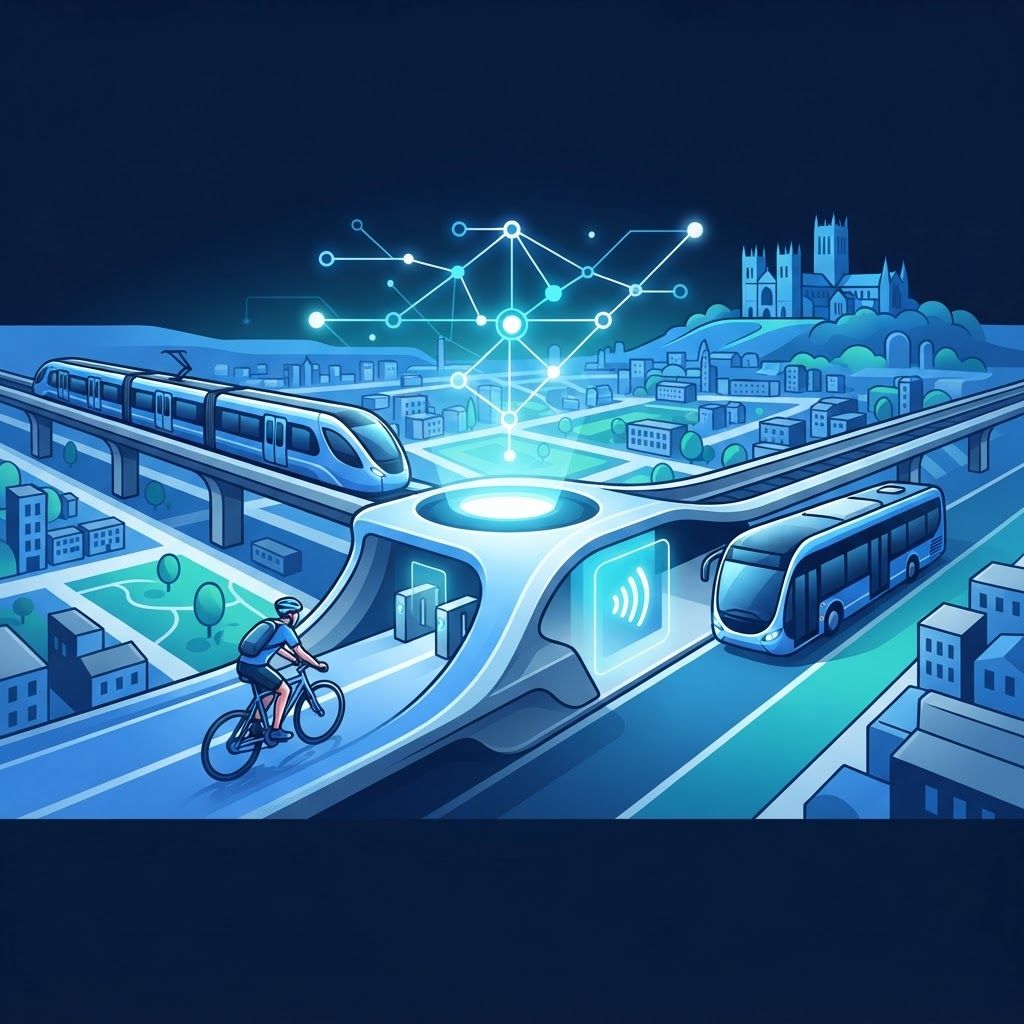
Public Transport in a Constrained Town
Guildford's transport situation is defined by a paradox. It has excellent rail connectivity and a dense bus network, yet it suffers persistent road congestion. The reason is geography: the town sits in a gap in the North Downs where the River Wey, the railway, the A3 and the historic road network all funnel through a narrow corridor. There is simply no room to widen the centre, which is why public transport, walking and cycling carry so much of the town's movement and why improving them is central to local transport policy.
The result is a town where using public transport is often genuinely faster than driving, particularly for journeys to London, to the hospital and to the university during term time.
The Top 10 Public Transit Services in Guildford
1. South Western Railway Services from Guildford Station
The backbone of Guildford's public transport is rail. South Western Railway runs frequent services to London Waterloo, with fast trains taking around thirty-five minutes, plus services to Woking, Godalming, Haslemere and Portsmouth. High frequency, contactless and smartcard ticketing and the station's central location make rail the default for longer journeys.
2. Great Western Railway North Downs Line
GWR's Reading to Gatwick Airport route through Guildford is one of the town's most useful and least appreciated services. It provides a direct train to Gatwick without going via London, connections to the Great Western network at Reading, and access to Dorking, Redhill and the Mole Valley.
3. Guildford Bus Station and Town Bus Network
The bus station beside the Friary Centre is the hub of the local network, with services to the university, hospital, retail parks and residential estates. Its proximity to the railway station makes bus and rail interchange straightforward, and frequencies on core corridors are high enough during the day that timetables become largely irrelevant.
4. Stagecoach South Local Services
As the largest operator locally, Stagecoach runs the majority of town and interurban routes, connecting Guildford with Aldershot, Farnham, Woking, Cranleigh and villages across the borough. Contactless payment with daily capping, app-based live tracking and ongoing fleet renewal have improved the experience considerably in recent years.
5. Arriva and Independent Bus Operators
Arriva and independent operators including Compass Travel provide additional routes, particularly towards north Surrey and into rural areas. Independents matter disproportionately in the villages, where they operate many of the services that keep residents without cars connected to the town.
6. University of Surrey Campus Shuttles
Shuttle services linking Stag Hill, Manor Park and the town centre carry very large volumes during term time. Because so many student journeys are short and repetitive, these shuttles remove a significant number of car trips from constrained local roads, and their frequency directly shapes how students experience the town.
7. Park and Ride Services
Guildford operates park and ride sites on the approaches to town, with frequent bus links into the centre. During Christmas shopping season and on busy Saturdays, they are considerably faster and cheaper than searching for central parking, and they form a key part of the borough's strategy for managing town centre traffic.
8. Community Transport and Dial-a-Ride
Community transport organisations provide door-to-door services for residents who cannot use conventional buses, using accessible vehicles and trained drivers. For older people and those with disabilities in rural parts of the borough, these services are the difference between independence and isolation.
9. Demand-Responsive Transport Schemes
Surrey has been developing app and phone-booked minibus services in areas where fixed routes are not viable. Passengers request a journey and the vehicle routes dynamically to collect multiple users. This model is expanding across rural England and offers a realistic way to maintain rural connectivity as costs rise.
10. Active Travel Links and Cycle Infrastructure
Walking and cycling complete the network. The Wey Navigation towpath, National Cycle Network routes and improving town centre cycle provision make short journeys practical without a vehicle. Cycle parking at the railway station supports combined bike and rail commuting, which is one of the most time-efficient ways to travel from Guildford's outer neighbourhoods to London.
Tickets, Costs and Practical Advice
Contactless payment works across rail and the main bus operators, and daily capping means you rarely benefit from calculating fares in advance for local travel. For regular London commuting, compare traditional season tickets against flexible season products if you travel two or three days a week. Multi-operator bus tickets are worth checking when journeys span companies. Students should always evaluate term passes, and railcard eligibility should be checked by everyone under thirty, over sixty, travelling as a couple or with children.
Two practical habits help in Guildford specifically. Check for engineering works before weekend rail travel, because the town's junction status means it is affected by works on several routes. And allow extra time when travelling through the centre by bus at peak hours, since the gyratory system can add unpredictable delay.
Trends and Future Improvements
Decarbonisation is driving investment in electric buses and studies into electrifying the North Downs Line. Bus priority measures and improvements to the station and bus station interchange remain the most significant local infrastructure debates, since reliability rather than frequency is the main barrier to greater bus use. Demand patterns have changed permanently since the growth of hybrid working, with midweek peaks now far stronger than Mondays and Fridays, prompting operators to rethink timetables. Integrated ticketing across modes is progressing, and further alignment would make multi-leg journeys within Surrey considerably simpler.
Final Thoughts
Guildford's public transport is better than its congestion reputation suggests. Four rail routes, a well-used bus network, park and ride, community transport and improving active travel links mean most journeys in and around the town can be made without a car. Use rail for anything beyond the borough, buses and shuttles for local trips, and walking or cycling for short distances, and you will usually arrive faster and cheaper than driving.
Want your brand featured in front of decision-makers? Publish a guest post or get a link insertion in our guides through AAMAX's guest post and link insertion service.
Helpful Links
 SponsoredAAMAX — Full-Service Digital Agency
Write for Us
Share your expertise with our readers. We welcome guest contributions from industry specialists.
Pitch your idea