Electronics Manufacturing in the Borough
Bury's engineering heritage has translated well into electronics. The borough hosts contract manufacturers, assembly specialists, design consultancies and testing houses serving customers in industrial control, medical devices, transport, instrumentation and consumer products. Proximity to Manchester's technology sector and the region's universities supports a steady flow of technical talent.
Most local electronics activity is business-to-business rather than consumer-facing. These companies build products designed by others, or provide the specific capability, such as conformal coating or environmental testing, that a client's own facility lacks. The result is a supply network more extensive than the borough's visible high-street presence suggests.
Core Capabilities
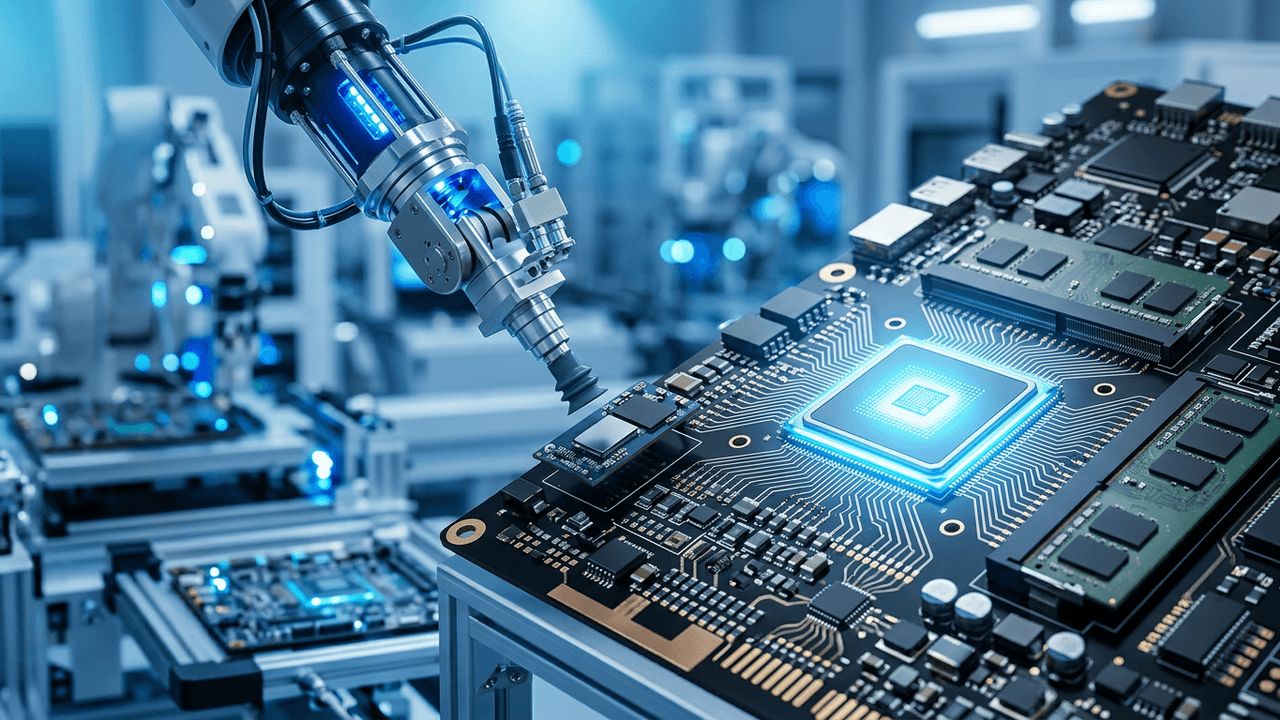
Printed circuit board assembly is the foundation. Surface mount technology lines place components at high speed with automated optical inspection verifying placement, while through-hole and hand assembly handle connectors, transformers and components unsuited to reflow processes.
Box build and system integration take assembled boards and combine them with enclosures, wiring, displays and mechanical components into finished products. This higher-value activity requires broader capability and closer collaboration with the customer's design team.
Cable and harness assembly, though less glamorous, is essential to industrial and transport applications. Crimping, over-moulding, labelling and continuity testing to defined standards determine reliability in demanding environments.
Design and test services complete the picture, covering schematic capture, PCB layout, firmware development, compliance pre-testing and environmental qualification.
The Top 10 Electronics Manufacturers in Bury
1. Irwell Electronics Assembly operates surface mount lines for low and medium volume production. Its strength lies in prototype-to-production continuity, allowing customers to scale without changing supplier or requalifying processes.
2. Bury Circuit Technologies focuses on complex multilayer board assembly, including fine-pitch and BGA components. X-ray inspection capability supports work where solder joints cannot be visually verified.
3. Northgate Control Systems designs and builds industrial control panels and automation assemblies. Programmable logic controller integration, wiring to recognised standards and certification documentation are core deliverables.
4. Radcliffe Cable Assemblies manufactures wiring looms and harnesses for transport, machinery and instrumentation clients, with automated crimping, testing and full traceability of components used.
5. Elton Embedded Design provides electronic design services including hardware architecture, firmware and prototyping. It frequently partners with local assembly houses to deliver complete design-and-build packages.
6. Whitefield Medical Electronics manufactures under quality systems appropriate to medical devices, with documented processes, controlled environments and traceability suited to regulated markets.
7. Tottington Test and Compliance offers electromagnetic compatibility pre-testing, safety testing and environmental qualification, helping manufacturers identify problems before formal certification submission.
8. Prestwich Enclosure Engineering produces sheet metal and machined enclosures, panels and chassis for electronic equipment, including finishing, printing and mechanical assembly.
9. Ramsbottom Power Electronics specialises in power supply, converter and battery management assemblies, an area demanding particular attention to thermal design and safety compliance.
10. Chesham Electronics Repair and Refurbishment supports legacy equipment through component-level repair, obsolescence management and reverse engineering, extending the life of industrial assets where replacement is impractical.
Selecting a Manufacturing Partner
Match volume to capability. High-volume manufacturers are optimised for long runs and often unsuited to prototype work, while prototype specialists may lack capacity for scale-up. Being honest about projected quantities avoids mismatched relationships.
Assess quality systems. Certification to recognised quality management standards, and sector-specific approvals where relevant, indicates audited process control. Ask about inspection methods, first-article procedures and how non-conformances are handled.
Discuss component sourcing openly. Supply chain shortages have made procurement strategy critical, and manufacturers with strong distributor relationships and obsolescence monitoring provide real protection against production stoppages.
Challenges Facing the Sector
Component availability remains the most persistent difficulty. Lead times for some semiconductors have extended dramatically, requiring design flexibility and alternative part qualification. Manufacturers that maintain approved alternatives for critical components deliver more reliably.
Skills shortage is the second constraint. Experienced technicians and engineers are in short supply nationally, and local firms have invested in apprenticeships and internal training to build capability rather than compete for scarce recruits.
Trends in Electronics Manufacturing
Miniaturisation continues to raise assembly precision requirements, pushing investment in placement accuracy and inspection technology. Connectivity is being embedded into products that previously had none, expanding demand for wireless module integration and associated compliance work.
Sustainability considerations are becoming procurement criteria, including repairability, energy efficiency and material declarations. Design for disassembly is starting to influence product architecture, particularly for customers selling into markets with extended producer responsibility rules.
Final Thoughts
Electronics manufacturing in Bury provides genuine technical capability across assembly, design, testing and integration. For product companies, working with a local manufacturer offers accessibility, faster iteration and closer quality oversight than distant alternatives. Selecting a partner whose volume profile, quality systems and sector experience match your requirements is the key determinant of success.
From Prototype to Production
The path from working prototype to reliable volume product is where many projects falter. Hand-built boards tolerate variation that automated assembly will not, and designs frequently need adjustment for manufacturability: component spacing, panelisation, test point access and thermal considerations all matter.
Engaging a manufacturer during design rather than after it typically saves both cost and time. Design for manufacture reviews identify problems while changes remain inexpensive, and early discussion of component availability avoids specifying parts with long lead times or looming obsolescence.
Test strategy deserves equal attention. Deciding what will be tested, at which stage, and to what criteria should happen before production begins, since retrofitting test access into a finished design is rarely straightforward.
Want your brand featured in front of decision-makers? Publish a guest post or get a link insertion in our guides through AAMAX's guest post and link insertion service.
Helpful Links
 SponsoredAAMAX — Full-Service Digital Agency
Write for Us
Share your expertise with our readers. We welcome guest contributions from industry specialists.
Pitch your idea