Public Transport in a Compact Port Town
Dover is a town where public transport works better than many visitors expect. Its compact centre, its railway station within walking distance of the seafront, and a bus network that reaches both the docks and the surrounding villages mean that living or visiting without a car is entirely practical. Add high-speed rail to London and ferry services to France, and the town becomes one of the better-connected small places in southern England.
The system is not without gaps. Evening and Sunday frequencies are thinner, the hills make some walking connections harder than the map suggests, and the distance between the station and the ferry terminals catches travellers out. Understanding the network properly is the key to using it well.
The Top 10 Public Transit Services in Dover
1. Southeastern Highspeed Rail Services. The single most transformative service for Dover. High-speed trains running via Ashford International to London St Pancras bring the capital within roughly seventy minutes, making commuting realistic and day trips easy in both directions. The Javelin trains are comfortable, quiet and well suited to working en route.
2. Southeastern Classic Rail Services. The conventional routes to London Victoria via Canterbury East and Faversham, and the coastal line north to Deal, Sandwich and Ramsgate, provide essential connectivity at generally lower fares than the high-speed option. The coastal route is also genuinely scenic.
3. Stagecoach South East Bus Network. The dominant bus operator in east Kent and the backbone of local mobility. Services connect the town centre, Dover Priory station, the Eastern Docks, the residential areas of Buckland, Tower Hamlets and Whitfield, and the outlying villages. Contactless payment, daily fare caps and a live-tracking app make it straightforward to use.
4. The Dover Town Bus Interchange. The central interchange functions as the hub where local and regional routes meet, providing the connection point between the station, the seafront and services to Deal, Folkestone and Canterbury. Its role in making multi-leg journeys workable is easy to overlook but significant.
5. Cross-Channel Ferry Services. P&O Ferries, DFDS and Irish Ferries operate frequent sailings to Calais and Dunkirk, and foot passengers can use them, making the ferries a genuine part of the public transport network rather than purely a freight and car service. For Dover residents, a day trip to France is a practical public transport journey.
6. National Express Coach Services. Long-distance coaches link Dover to London Victoria and onward across Britain, providing an affordable alternative to rail, particularly for travellers with time flexibility or heading to destinations without direct rail links.
7. Community Transport and Dial-a-Ride Schemes. Supported by Kent County Council and local voluntary organisations, these services serve rural villages and residents with mobility difficulties where commercial routes are not viable. They are booked in advance and are essential infrastructure for parts of the Dover district.
8. School and College Transport Services. Dedicated services carry students to the grammar and secondary schools across the district. These contract services significantly shape peak-hour road conditions and provide reliable access to education across a wide catchment.
9. Port Shuttle and Cruise Terminal Transfers. Shuttle services operate between the town, the station and the Western Docks cruise terminals during ship calls, alongside coach transfers to London. These are indispensable for cruise passengers travelling without a car.
10. Active Travel Infrastructure. Walking and cycling routes, including the seafront promenade, the connections toward the White Cliffs and National Cycle Network links along the coast, function as part of the transport system. Investment in cycle parking and improved crossings has made active travel a more viable option for short journeys within the town.
Making the Network Work Together
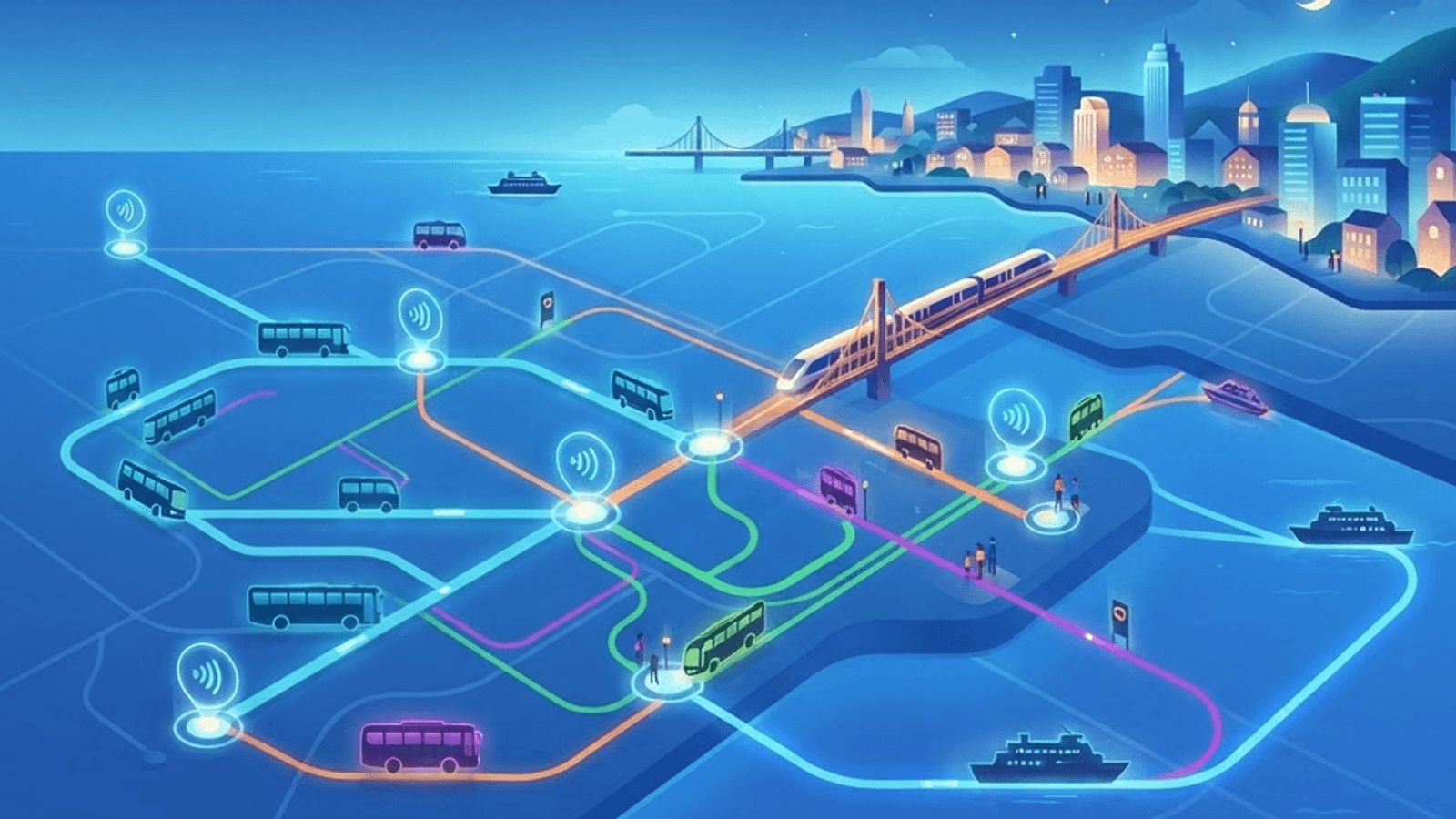
The key to using Dover's transport well is understanding the interchange points. Dover Priory station connects to the bus network for onward travel to the docks and villages. Ashford International is the gateway to Eurostar and to routes across the wider region. The town bus interchange links local and regional services.
Through-ticketing between rail operators is standard, and contactless payment on buses with daily capping means you rarely need to calculate the cheapest ticket in advance. For regular travel, weekly and monthly products deliver meaningful savings.
Practical Advice for Visitors
Allow more time than the timetable suggests when connecting to a ferry, since port processing for foot passengers takes longer than expected and the terminals are not adjacent to the station. Check Sunday and evening timetables before planning a late return, as frequencies drop considerably.
Dover's topography is steep in places, and a route that looks short on a map may involve a significant climb, particularly toward the castle and the western heights. Factor this in when planning walking connections, especially with luggage.
Download the relevant operator apps before arriving for live running information, which is genuinely useful during winter weather and engineering periods.
Accessibility
Accessibility has improved but remains uneven. Most buses in the Stagecoach fleet are low-floor and wheelchair accessible. Step-free access at stations varies, and travellers with mobility needs should check specific station facilities and consider booking passenger assistance in advance, which rail operators provide free of charge.
Community transport fills gaps for those unable to use mainstream services, and Dover District Council provides information on eligibility and booking.
Trends and Future Development
Several developments are shaping the system. Bus fleet electrification is progressing across Kent, supported by depot infrastructure investment. Fare capping schemes have made bus travel more affordable for frequent users. Real-time passenger information has expanded to more stops and into apps.
There is also increasing policy focus on integration, encouraging better coordination between rail, bus and active travel rather than treating them as separate systems. For Dover specifically, improving the link between the railway station and the port remains an obvious opportunity.
Sustainability considerations are driving interest in rail-and-sail travel to Europe, positioning Dover as a low-carbon gateway rather than merely a road corridor.
Conclusion
Dover's public transport is more capable than its size suggests. Southeastern's high-speed service is the headline asset, Stagecoach provides genuinely useful local coverage, and the ferries extend the network across an international border. Plan around timetables rather than assuming turn-up-and-go frequency, allow extra time for port connections, and the town is entirely navigable without a car.
Want your brand featured in front of decision-makers? Publish a guest post or get a link insertion in our guides through AAMAX's guest post and link insertion service.
Helpful Links
 SponsoredAAMAX — Full-Service Digital Agency
Write for Us
Share your expertise with our readers. We welcome guest contributions from industry specialists.
Pitch your idea