

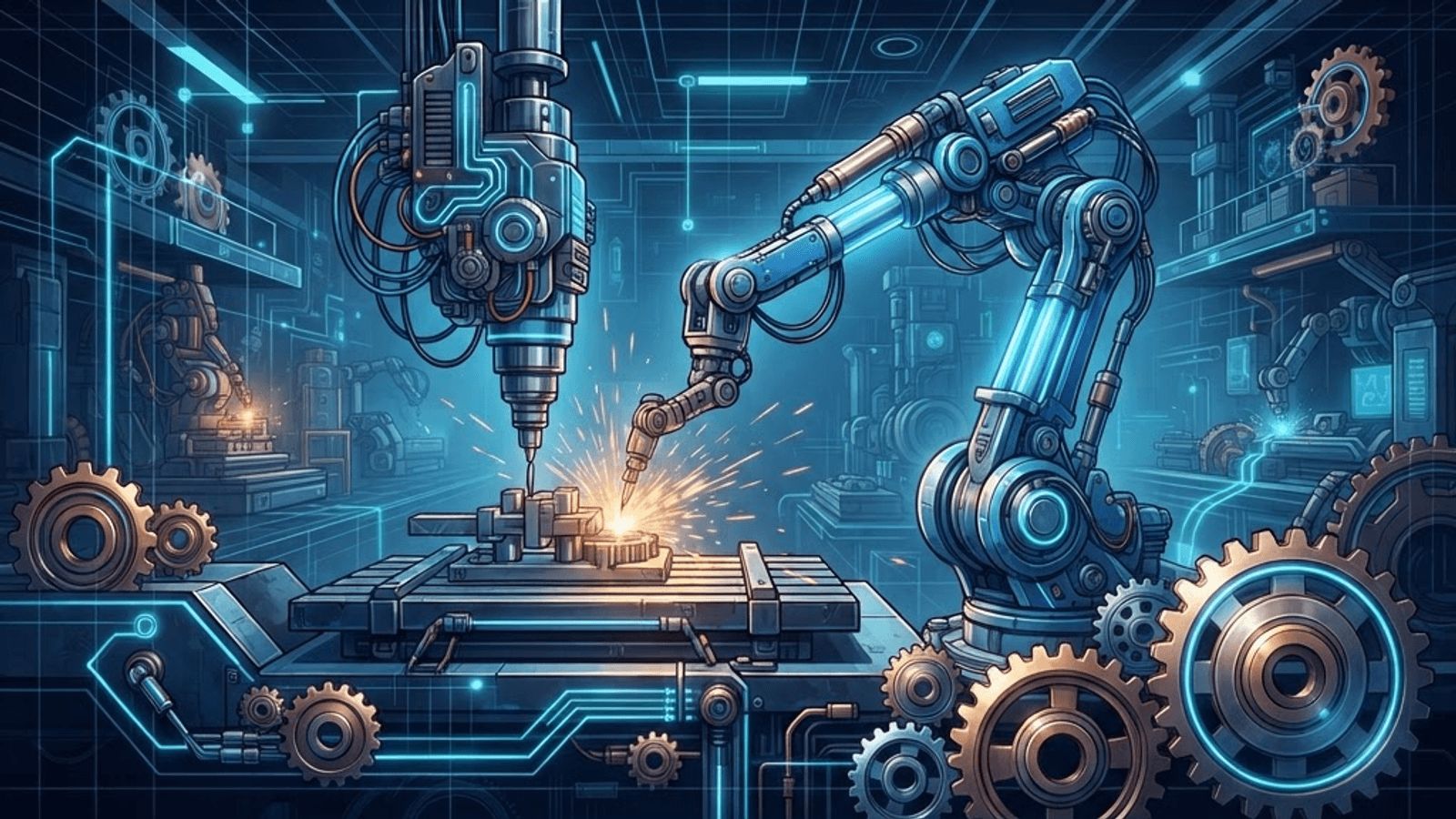
Engineering and Machinery in the Chichester District
West Sussex has a solid and often underappreciated engineering base. The Chichester district combines a significant agricultural and horticultural economy, a busy marine sector around the harbour, aerospace and motorsport engineering heritage, and food production and packing operations on the coastal plain. Each of these generates demand for machinery, whether standard equipment, modified systems or entirely bespoke solutions.
The local machinery sector is therefore oriented towards specialist and custom work rather than mass production. Companies here typically operate as design-and-build engineering partners, taking a customer's process problem and delivering a machine or system that solves it. That model suits the region's mix of medium-sized manufacturers, growers and marine operators who need equipment adapted to particular circumstances.
The Types of Machinery Produced and Serviced
Agricultural and horticultural machinery is prominent given the district's extensive glasshouse and field production. Planting, irrigation, grading, washing and packing equipment all feature, along with the automation increasingly used to manage labour constraints. Growers in the coastal plain area operate some of the most technically advanced protected cropping facilities in the country, requiring sophisticated climate control, nutrient dosing and materials handling systems.
Food processing and packing machinery follows naturally, covering conveying, weighing, filling, sealing, labelling and palletising. Hygiene-focused design, stainless steel fabrication and washdown-rated components are standard requirements.
Marine engineering supports the harbour and wider Solent boating economy with winches, lifting systems, boat handling equipment, hydraulics and drive systems, all designed for saltwater durability.
General industrial automation covers bespoke assembly jigs, test rigs, robotic cells, materials handling and special purpose machines built for a single customer's process. Alongside new build, a substantial service economy exists in maintenance, refurbishment, upgrade and spare part manufacture.
Machinery and Engineering Businesses Serving Chichester
Precision engineering and CNC machining companies across West Sussex produce turned and milled components to tight tolerance, supporting machinery builders and end users alike.
Bespoke special purpose machinery builders in the region design, manufacture, install and commission custom production equipment for manufacturers across the South Coast.
Agricultural machinery dealers and engineers serving the Chichester plain supply, service and modify tractors, sprayers, harvesters and horticultural equipment, with field service capability essential during peak seasons.
Horticultural systems specialists in West Sussex install and maintain glasshouse climate control, irrigation, dosing and crop handling machinery for the district's substantial growing operations.
Food processing equipment suppliers and fabricators on the South Coast build stainless steel conveying, washing and packing systems to hygienic design standards.
Marine engineering and hydraulics businesses around Chichester Harbour manufacture and service lifting, steering and propulsion systems for leisure and commercial craft.
Industrial automation and robotics integrators in the region deliver robotic handling, vision inspection and control system projects, often retrofitting automation into existing production lines.
Sheet metal fabrication and welding specialists across Sussex produce guarding, frames, enclosures and structural elements for machinery projects.
Hydraulic and pneumatic systems suppliers serving West Sussex design circuits, manufacture hose assemblies and service power units for industrial and agricultural machinery.
Machinery maintenance and refurbishment contractors in the area extend asset life through overhaul, control system modernisation and safety upgrades, often at a fraction of replacement cost.
Why Bespoke Machinery Makes Commercial Sense
Off-the-shelf equipment is cheaper per unit but frequently requires the process to bend around the machine. Bespoke machinery reverses that relationship. For businesses with a genuinely distinctive product or process, a purpose-built solution can deliver throughput, quality consistency and labour savings that standard equipment cannot approach.
The decision hinges on volume and process stability. Where a process is settled and will run for years, custom machinery amortises well. Where processes change frequently, flexible modular systems or standard equipment with custom tooling often serve better.
Local manufacture brings a further advantage: proximity for commissioning, training, support and modification. A machine builder twenty minutes away can respond to a breakdown in hours rather than days, which for a food producer or grower in peak season is decisive.
Compliance and Safety
Machinery supplied in the United Kingdom must meet applicable safety requirements, with conformity assessment, technical documentation and marking obligations falling on the manufacturer. Risk assessment, guarding design, emergency stop circuits, safety-rated control systems and clear instructions are all part of a compliant build.
Employers operating machinery carry their own duties, including inspection regimes, statutory examination of lifting equipment and pressure systems, and ensuring operators are trained. Reputable machinery suppliers support customers with this rather than leaving it to them.
Technology Shaping the Sector
Several developments are changing what local machinery builders offer. Condition monitoring and remote diagnostics allow faults to be predicted rather than discovered, reducing downtime. Collaborative robots have made automation viable at far smaller scale than traditional industrial robots. Additive manufacturing is used increasingly for tooling, fixtures and obsolete spare parts. Energy efficiency has become a design priority as electricity costs bite.
Skills remain the constraint. Demand for machinists, welders, controls engineers and maintenance technicians exceeds supply across the South, and local employers are investing heavily in apprenticeships to address it.
Working With a Machinery Supplier
Define the problem rather than prescribing the solution. The best outcomes come from explaining throughput requirements, product variation, available space, utilities and budget, then allowing the engineering team to propose approaches. Expect a staged process of concept, detailed design, build, factory acceptance testing and site commissioning, with clear acceptance criteria at each point. Chichester's engineering community is well equipped to deliver exactly this.
Want your brand featured in front of decision-makers? Publish a guest post or get a link insertion in our guides through AAMAX's guest post and link insertion service.
Helpful Links
 SponsoredAAMAX — Full-Service Digital Agency
Write for Us
Share your expertise with our readers. We welcome guest contributions from industry specialists.
Pitch your idea

