

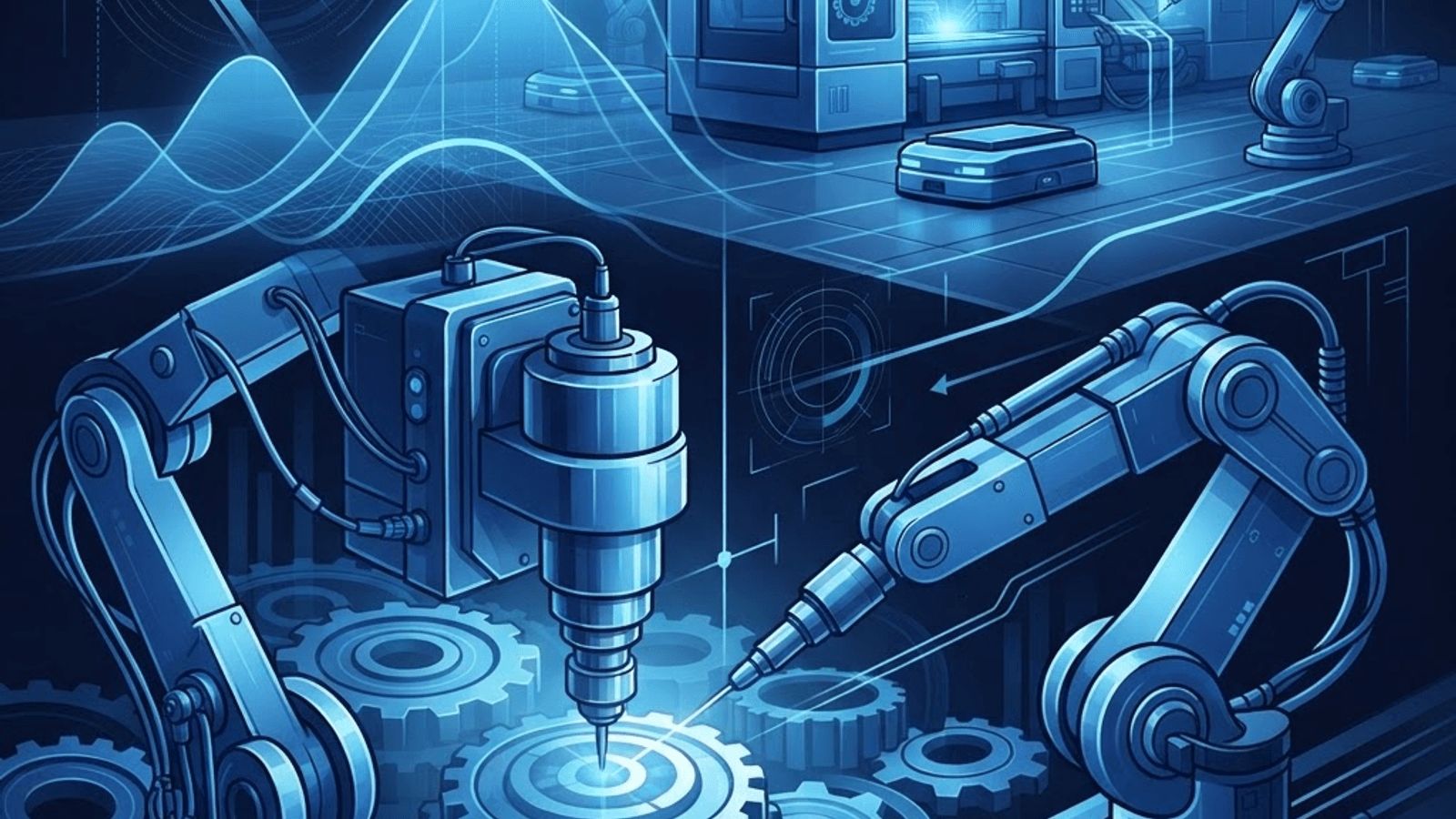
Machinery Manufacturing in the Thames Valley
Machinery manufacturing rarely attracts public attention, yet it underpins almost every other industry. The packaging line that fills a product, the conveyor that moves it, the test rig that validates it and the automated cell that assembles it all originate with machinery manufacturers. Bracknell Forest supports a capable community of these businesses, built on the borough's engineering heritage and its position within the Thames Valley industrial corridor.
Local machinery manufacturers tend to focus on bespoke and semi-bespoke equipment rather than catalogue products. Customers come with a specific process problem, and the manufacturer designs, builds, commissions and supports a machine to solve it. That model demands mechanical design, electrical engineering, control software and fabrication capability under one roof.
What Machinery Manufacturers Actually Deliver
A typical project begins with process analysis. Engineers study the task to be automated, its cycle time requirements, the variability of incoming materials and the space available. Concept design follows, usually with three-dimensional models that let the customer visualise the machine before fabrication begins.
Detailed design covers mechanical structures, drive systems, pneumatics, sensors, guarding and control architecture. Manufacturing then brings together machined parts, fabricated frames, bought-in components and electrical assembly. Commissioning validates performance against the agreed specification, and training ensures the customer's team can operate and maintain the equipment confidently.
Top 10 Best Machinery Manufacturers in Bracknell Forest
1. Forest Automation Engineering designs and builds automated assembly and handling systems. Its integrated approach to mechanical design and control software allows it to deliver complete working cells rather than components requiring third-party integration.
2. Bracknell Machine Tools manufactures and refurbishes machine tools and precision equipment. Rebuild services extend the life of valuable capital assets, which appeals to manufacturers seeking capability without full replacement cost.
3. Crowthorne Conveyor Systems produces material handling equipment including belt and roller conveyors, transfer units and sortation systems. Layout planning support helps customers make the most of constrained floor space.
4. Sandhurst Packaging Machinery supplies filling, capping, labelling and end-of-line packaging equipment. Changeover speed and cleanability are central design priorities, particularly for customers handling multiple product formats.
5. Warfield Special Purpose Machines builds one-off machines for processes that have no off-the-shelf solution. These projects often involve unusual materials or demanding tolerances and rely heavily on experienced design judgement.
6. Binfield Hydraulics and Pneumatics engineers fluid power systems and the machinery that uses them, from power packs to actuating assemblies. Correct sizing and contamination control are essential to reliability, and the company emphasises both.
7. Thames Valley Test Rigs designs equipment for product testing and validation, including endurance rigs, environmental chambers and functional test stations. Accurate instrumentation and repeatable data capture define the quality of its work.
8. Easthampstead Fabrication and Machinery combines heavy fabrication with machining to produce robust frames, guarding and structural machine elements. Its capability supports both its own projects and other manufacturers' builds.
9. Bullbrook Robotics Integration implements robotic cells for welding, palletising, machine tending and inspection. Beyond robot supply, it handles tooling design, safety systems and programming so customers receive a production-ready solution.
10. Great Hollands Maintenance Engineering supports installed machinery with servicing, spares, upgrades and breakdown response. Reliable aftercare often matters as much as the original build, and this focus makes it a valued partner locally.
Automation Trends Shaping the Sector
Several developments are influencing machinery design. Collaborative robots allow automation in spaces where full guarding is impractical, opening opportunities for smaller manufacturers. Condition monitoring sensors feed data that supports predictive maintenance rather than fixed servicing schedules. Modular machine architecture lets customers expand capacity incrementally instead of replacing entire lines.
Energy efficiency has also become a design criterion in its own right. Servo drives, regenerative braking and intelligent standby modes reduce running costs meaningfully over a machine's operational life, which can extend well beyond a decade.
Safety and Compliance
Machinery supplied in the UK must meet established safety requirements covering risk assessment, guarding, emergency stop provision and documentation. Reputable manufacturers conduct formal risk assessments during design rather than adding protection afterwards, producing safer and more usable machines.
Documentation matters too. Operating manuals, maintenance schedules, electrical drawings and spare parts lists determine how easily a customer can support equipment years later. Manufacturers that take documentation seriously save their clients substantial cost over time.
Cost, Lead Time and Lifetime Value
Bespoke machinery represents significant capital expenditure, and evaluating it purely on purchase price is a common mistake. Availability, throughput, maintenance requirements, spare parts cost and energy consumption together determine true value. A machine that costs more initially but runs reliably for fifteen years usually outperforms a cheaper alternative needing constant attention.
Lead times deserve careful attention as well. Component availability, design complexity and commissioning requirements all affect delivery. Realistic scheduling and honest communication about risks are hallmarks of a dependable manufacturer.
Selecting the Right Machinery Partner
Look for demonstrated experience in similar applications and ask to speak with existing customers where possible. Assess in-house capability across mechanical, electrical and software disciplines, since fragmented responsibility often causes integration problems. Discuss aftercare arrangements before purchase, including response times and spares availability.
Finally, involve your operators and maintenance staff in the specification process. Machines designed with input from the people who will use them daily tend to deliver better real-world performance.
Conclusion
Machinery manufacturers in Bracknell Forest offer a strong blend of design capability, fabrication skill and control engineering. For businesses across the Thames Valley seeking to automate processes, improve throughput or solve specific production challenges, the borough provides access to engineering partners capable of delivering equipment that performs reliably for many years.
Want your brand featured in front of decision-makers? Publish a guest post or get a link insertion in our guides through AAMAX's guest post and link insertion service.
Helpful Links
 SponsoredAAMAX — Full-Service Digital Agency
Write for Us
Share your expertise with our readers. We welcome guest contributions from industry specialists.
Pitch your idea

