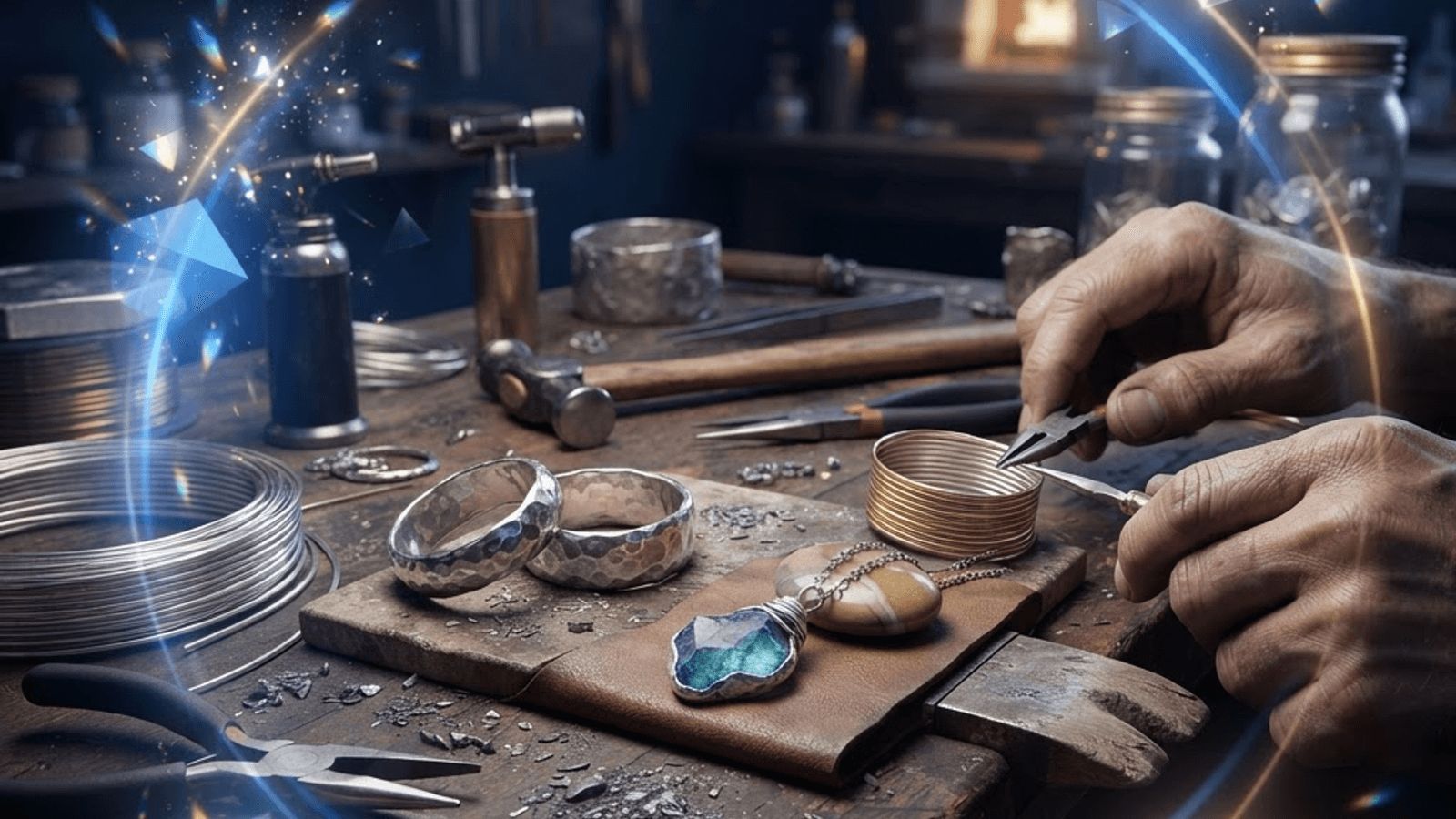
Jewellery Making in East Lothian
Scotland has a deep and genuinely distinguished jewellery tradition, from ancient Celtic metalwork through Victorian agate and pebble jewellery to the contemporary studio movement that flourished around Edinburgh in recent decades. East Lothian benefits from proximity to that Edinburgh design community while offering makers something the city cannot: space, light and a landscape that provides constant material inspiration.
That landscape shows clearly in the work. The county's coastline, with the volcanic cone of North Berwick Law, the Bass Rock rising from the Firth of Forth, sweeping sands and constantly shifting sea light, recurs throughout local jewellery design. So does the agricultural interior, the Lammermuir Hills and the county's historic architecture. Rather than generic Scottish motifs, the strongest East Lothian jewellery interprets specific local places.
Understanding Jewellery Quality
Precious metal in the United Kingdom is regulated through hallmarking. Articles of gold, silver, platinum and palladium above defined weight thresholds must be assayed and hallmarked before being sold as precious metal. A full hallmark identifies the sponsor or maker, the metal fineness, and the assay office. Learning to read a hallmark tells you a great deal about a piece, and a good jeweller will happily explain the marks on anything they sell.
Gold purity is expressed in carats, with nine, fourteen and eighteen carat being most common in British jewellery. Higher carat means more gold and a richer colour but softer metal. Sterling silver is the standard silver alloy. Platinum is denser, more durable and considerably more expensive, and is often chosen for settings holding valuable stones.
For gemstones, the familiar assessment criteria of cut, colour, clarity and carat weight apply to diamonds, while coloured stones are judged largely on colour quality and origin. Independent certification from a recognised laboratory is worth having for significant stones.
Ten Leading Jewellery Brands and Studios in East Lothian
1. North Berwick Coastal Silver produces contemporary silver jewellery inspired by the Firth of Forth coastline, using textures drawn from sand ripples, sea glass and rock formations in wearable everyday pieces.
2. Lammermuir Contemporary Goldsmiths works in gold and platinum on commissioned and small batch pieces, with a design language of clean lines and restrained detail suited to modern engagement and wedding jewellery.
3. Haddington Heritage Jewellers serves the traditional market with classic engagement rings, wedding bands, eternity rings and gift jewellery, alongside valuation, repair and remodelling services.
4. Dunbar Sea Glass and Beach Finds Jewellery sets naturally tumbled sea glass, beach pebbles and found materials in silver, producing genuinely unique pieces with a direct connection to the county's shoreline.
5. East Lothian Celtic and Scottish Design interprets traditional Scottish and Celtic motifs including knotwork and thistle designs in contemporary proportions, avoiding the heaviness that can make traditional designs feel dated.
6. Gullane Fine Gemstone Specialists focuses on coloured stones and diamonds, sourcing individual stones for bespoke commissions and advising clients on quality, certification and setting options.
7. Musselburgh Bespoke Commission Workshop specialises in one off pieces designed with the client from initial sketch through wax or computer aided design model to finished jewellery, including remodelling inherited pieces.
8. Firth Ethical and Recycled Jewellery works exclusively with recycled precious metals and traceable stones, including laboratory grown diamonds, appealing to clients who want beautiful jewellery without supply chain concerns.
9. Aberlady Enamel and Mixed Media Studio uses vitreous enamel, oxidised silver and mixed metals to produce colourful, distinctly artistic pieces that sit closer to wearable art than conventional jewellery.
10. Pencaitland Jewellery Repair and Restoration provides resizing, stone replacement, claw rebuilding, rhodium plating, pearl restringing and restoration of antique pieces, keeping treasured jewellery wearable across generations.
Commissioning Bespoke Jewellery
Commissioning is more accessible than many people assume and often costs less than expected, particularly when remodelling existing gold or using inherited stones. The process usually begins with a consultation covering design ideas, budget, metal choice and stone preferences. The maker then produces sketches or a digital model, and once approved, creates a wax or printed prototype before casting and finishing.
Allow reasonable time. A straightforward piece might take a few weeks, while a complex commission with a sourced stone can take considerably longer. Rushing a commission for a specific date is a common source of disappointment, so start early.
Remodelling deserves particular mention. Many people inherit jewellery that is never worn because it does not suit contemporary taste. A skilled goldsmith can reuse the stones and metal to create something genuinely wearable while preserving the sentimental connection, which is often more meaningful than buying new.
Ethical Sourcing and Sustainability
Jewellery supply chains have attracted justified scrutiny. Gold mining can cause severe environmental damage and, in artisanal contexts, involves serious mercury exposure and labour concerns. Diamond and coloured stone sourcing has its own history of difficulty.
The industry has responded in several ways. Recycled precious metal, which is chemically identical to newly mined metal, avoids extraction impact entirely and is now widely used. Fairtrade and fairmined gold supports better conditions for small scale miners. Laboratory grown diamonds offer full traceability at lower cost. Traceable coloured stones from identified mines are increasingly available. Asking a jeweller directly about sourcing is entirely normal now, and those who have made the effort are usually pleased to explain.
Caring for Jewellery
Remove rings before manual work, swimming and applying cosmetics or perfume. Store pieces separately so harder stones do not scratch softer ones. Clean gold and most gemstones with warm water, mild soap and a soft brush, but avoid this with pearls, opals and emeralds, which require specialist care. Have claw settings checked periodically, since a loose claw is the most common cause of stone loss, and insure valuable pieces with an up to date valuation.
Final Thoughts
Jewellery in East Lothian combines authentic Scottish craft tradition with a contemporary design sensibility shaped by the county's coastline and countryside. Buy hallmarked pieces from makers who can explain their sourcing, consider commissioning or remodelling rather than buying off the shelf, and maintain what you own so it can be passed on.
Want your brand featured in front of decision-makers? Publish a guest post or get a link insertion in our guides through AAMAX's guest post and link insertion service.
Helpful Links
 SponsoredAAMAX — Full-Service Digital Agency
Write for Us
Share your expertise with our readers. We welcome guest contributions from industry specialists.
Pitch your idea