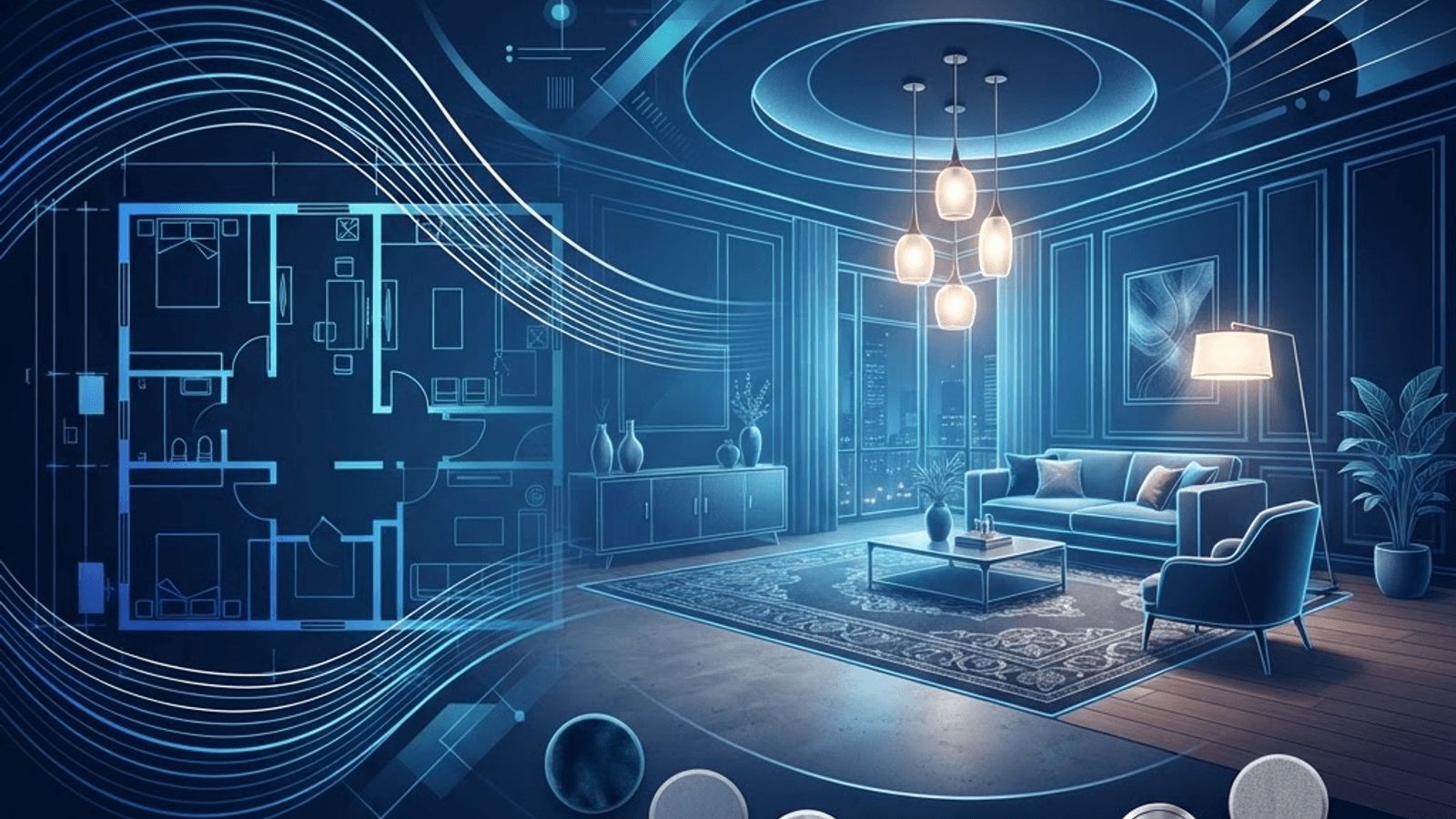
Interior Design in a Varied Borough
Few areas offer interior designers the range of building types found in Test Valley. Within a short drive you can find thatched cottages with low ceilings and irregular walls, Georgian townhouses in Romsey and Stockbridge, Victorian villas, twentieth century family housing, substantial converted agricultural buildings and brand new homes built to contemporary energy standards. Each demands a different approach.
Historic property brings constraints. Listed building consent may govern what can be altered, breathable materials are often necessary to avoid moisture problems in solid wall construction, and heating and lighting must be planned around structural realities. Designers working regularly with these buildings develop knowledge that generalists lack.
New build presents the opposite challenge. Spaces are blank, well insulated and regular, but frequently lack character and can feel generic. The design task is adding warmth, texture and individuality without fighting the architecture.
How Interior Design Services Are Structured
Understanding the service tiers helps set expectations. A design consultation is typically a single visit producing recommendations on layout, colour, lighting and furnishing that the client implements themselves. It is the most affordable entry point and suits confident homeowners.
Concept design produces mood boards, colour schemes, material samples and furniture specifications, giving the client a complete plan to execute at their own pace. This suits people who want professional direction but will manage purchasing and trades themselves.
Full design and project management extends to sourcing, ordering, scheduling trades, supervising installation and final styling. It costs considerably more but removes the coordination burden, which on a whole-house project is substantial.
Fee structures vary. Some designers charge hourly, some a fixed project fee, some a percentage of the project value, and some work on a cost-plus basis where they take a margin on procured goods. Trade discounts on furniture and materials can offset a meaningful portion of design fees, so compare total project cost rather than the fee alone.
The Ten Leading Interior Design Firms
Test Valley Interior Design Studio offers the borough's most complete service, from single room consultations through to full-house design and project management. Its portfolio spans period restoration and contemporary work, and its project management discipline on larger schemes is a notable strength.
Andover Home Interiors focuses on accessible, practical design for family homes, working with realistic budgets and prioritising durability alongside appearance. Its kitchen and living space reconfigurations frequently unlock layout improvements homeowners had not considered.
Romsey Period Property Interiors specialises in listed and historic buildings, with detailed knowledge of appropriate materials, breathable finishes, period-correct detailing and the consent process. Its work balances conservation sensitivity with genuinely comfortable modern living.
Abbey Contemporary Design works primarily with new build and modern extension projects, bringing warmth and individuality to spaces that can otherwise feel anonymous. Its use of texture, considered lighting layers and joinery detail is particularly effective.
Valley Kitchen and Bathroom Design concentrates on the two rooms with the greatest impact on both daily life and property value. Its approach begins with how the household actually uses the space rather than with product selection, which produces markedly better functional outcomes.
Chilworth Luxury Interiors serves the premium end with bespoke joinery, commissioned furniture, art curation and high-specification finishes. Projects are typically whole-house and managed end to end over extended timeframes.
Stockbridge Country House Design creates interiors for rural properties and barn conversions, working with natural materials, layered textiles and a palette drawn from the surrounding landscape. Its schemes feel rooted rather than imported.
Anton Commercial Interiors designs workspace, hospitality and retail environments across the borough, balancing brand expression with the practical demands of commercial use including durability, accessibility and regulatory compliance.
North Baddesley Sustainable Interiors focuses on environmentally responsible design, specifying reclaimed materials, low-emission finishes, natural fibres and furniture from makers with credible sustainability practices. Its approach favours longevity over fashion.
Wellow Design Consultancy operates a consultation-led model, providing detailed design plans and specifications for clients who implement the work themselves. For budget-conscious homeowners who are confident with execution, this delivers professional thinking at a fraction of full-service cost.
Design Trends with Staying Power
The shift towards natural materials and craft has been sustained rather than faddish. Solid timber, stone, wool, linen and handmade ceramics have displaced the high-gloss, synthetic look that dominated a decade ago, and in Test Valley's rural and period properties this reads as entirely appropriate rather than trend-driven.
Lighting design has become far more sophisticated. Layered schemes combining ambient, task and accent lighting, with dimming and warm colour temperatures, transform how a room feels at different times of day. It remains the most underspecified element in most domestic projects.
Flexible spaces have become essential as home working embedded itself. Rooms that serve multiple functions, with joinery that conceals work equipment when not in use, are now a standard brief rather than an unusual request.
Colour has returned after years of grey dominance. Deeper, more saturated palettes, particularly greens, terracottas and warm neutrals, suit period property considerably better than the cool greys that preceded them.
How to Brief a Designer Well
Be honest about budget from the outset. Designers cannot produce an appropriate scheme without knowing the financial framework, and withholding the figure wastes everyone's time. A realistic budget discussed early produces better results than an inflated one revised downward later.
Collect images of interiors you like and, just as usefully, ones you dislike. Negative examples are often more informative because they reveal boundaries a client would not otherwise articulate.
Describe how you actually live rather than how you would like to appear. Whether you eat at a table or on the sofa, how many people the house holds at Christmas, whether you have dogs and where they sleep all shape good design more than any style reference.
Agree scope, fees, timescales and what happens to any procurement discounts in writing before work begins.
Final Thoughts
Interior design is often perceived as decoration, but its real value lies in spatial planning, lighting and specification decisions that are difficult and expensive to change later. In a borough with this much architectural variety, working with a designer who understands your particular building type matters considerably. Even a single consultation before a renovation can prevent costly mistakes and produce a home that works better for decades.
Want your brand featured in front of decision-makers? Publish a guest post or get a link insertion in our guides through AAMAX's guest post and link insertion service.
Helpful Links
 SponsoredAAMAX — Full-Service Digital Agency
Write for Us
Share your expertise with our readers. We welcome guest contributions from industry specialists.
Pitch your idea