Interior Design in a Town of Contrasts
Newcastle-under-Lyme presents interior designers with an unusually varied brief. The borough contains Georgian and Victorian buildings around the historic core, substantial Edwardian and interwar family homes in areas such as the Westlands and Clayton, dense terraced streets in Cross Heath and Chesterton, village properties towards Madeley and Audley, and a growing stock of modern estate housing on the fringes. Each of these demands a different approach.
Period property brings both opportunity and constraint: original cornicing, fireplaces, sash windows and generous ceiling heights are genuine assets, but solid walls, limited insulation, awkward service routing and, in some cases, conservation area or listed status impose real limits. Modern housing offers a blank canvas but often suffers from standardised proportions, limited natural light and open-plan layouts that lack definition. A designer who understands both sides of that spectrum is far more useful than one who works only in a single idiom.
What Interior Designers Actually Do
There is a persistent misconception that interior design is about choosing cushions. In practice, a full design service begins with spatial planning: understanding how a household or business actually uses a space and reconfiguring it accordingly. That may involve moving or removing walls, relocating doorways, redesigning circulation routes or rethinking where services such as plumbing and electrics need to run.
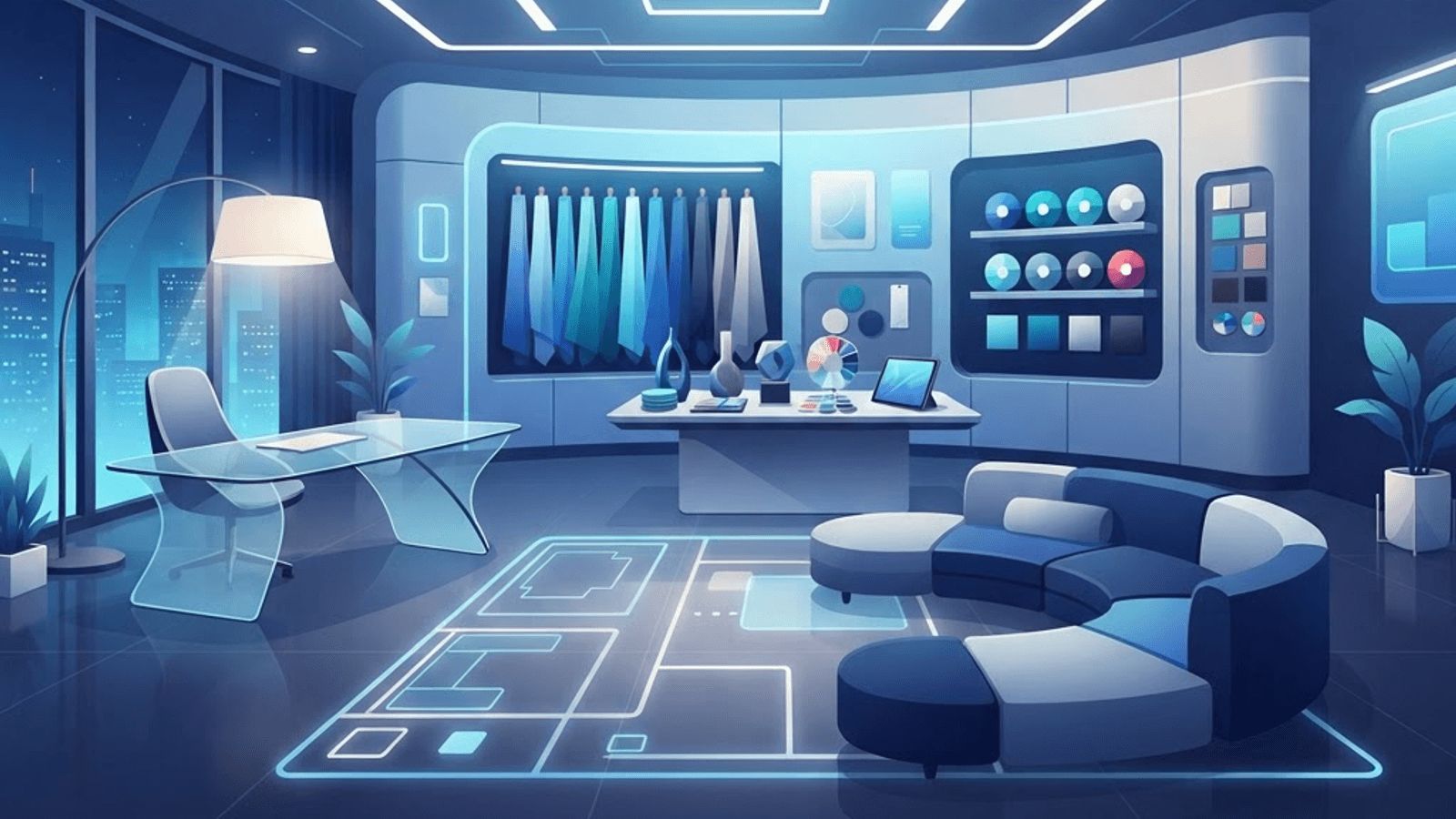
From there, the designer develops a concept covering materials, finishes, colour, lighting and joinery, usually communicated through mood boards, sample palettes and increasingly through three-dimensional visualisations. Detailed technical drawings follow, including electrical plans, lighting layouts and bespoke joinery specifications, which contractors work from directly.
Many firms also provide project management, coordinating trades, managing procurement schedules and controlling the programme. For clients who lack the time or experience to run a renovation, this element frequently delivers more value than the aesthetic work, because it prevents the cost overruns and sequencing errors that plague self-managed projects.
Ten Interior Design and Fit-Out Firms Serving the Borough
1. Independent Residential Design Studios
A number of independent designers operate across Staffordshire and Cheshire, offering full residential design from concept through to installation. These studios typically suit whole-house renovations and significant extensions where a coherent design vision across multiple rooms is required.
2. Kitchen Design Specialists
Kitchen studios serving Newcastle-under-Lyme combine detailed spatial planning with cabinetry design, appliance specification and installation management. Because kitchens absorb a disproportionate share of most renovation budgets and are the room buyers scrutinise most closely, specialist expertise here delivers measurable value.
3. Bathroom Design and Installation Firms
Bathroom specialists handle the technical complexity of wet areas, including tanking, ventilation, drainage falls and waterproofing detail, alongside the visual design. Poor execution in a bathroom causes expensive long-term damage, which makes the technical competence of the installer as important as the design.
4. Commercial Fit-Out Contractors
Several contractors in North Staffordshire focus on office, retail and hospitality interiors, handling partitioning, ceilings, lighting, data infrastructure and compliance with building regulations and accessibility requirements. These firms work to commercial programmes and understand the cost pressures of fitting out leased space.
5. Heritage and Period Property Specialists
Designers with conservation experience are essential for listed buildings and properties in conservation areas. They understand breathable materials, appropriate lime-based finishes, sympathetic glazing solutions and the consent processes involved, which prevents both regulatory problems and long-term fabric damage.
6. Home Staging and Styling Consultants
Styling-focused practitioners provide lighter-touch services: colour consultation, furniture layout, soft furnishings and accessory selection. This suits clients who are broadly happy with their layout but want a professional eye on presentation, and it is considerably more affordable than a full design service.
7. Bespoke Joinery Workshops
Local joinery workshops design and manufacture fitted wardrobes, alcove shelving, media units, bookcases and window seats. In period properties with irregular dimensions, bespoke joinery is frequently the only way to use awkward spaces efficiently, and well-made fitted furniture adds genuine value.
8. Lighting Design Consultants
Lighting is the most consistently underestimated element of interior design. Specialists develop layered schemes combining ambient, task and accent lighting with appropriate colour temperatures and dimming control, transforming how a space feels at different times of day.
9. Flooring and Surface Specialists
Firms specialising in engineered timber, natural stone, porcelain, luxury vinyl and carpet provide technical guidance on substrate preparation, underfloor heating compatibility, acoustic performance and long-term wear, all of which affect durability far more than appearance alone.
10. Garden and Outdoor Living Designers
Landscape and outdoor living designers extend interior thinking into gardens, terraces and garden rooms. With outdoor space increasingly treated as an additional living area, coordinated indoor and outdoor design has become a standard part of larger residential projects.
Design Trends Influencing Local Projects
Energy efficiency has become inseparable from interior work. Clients increasingly combine renovation with insulation upgrades, improved glazing, heat pump installation and mechanical ventilation, particularly in older solid-wall properties where poorly planned airtightness improvements can cause condensation problems. Good designers now coordinate closely with building performance in mind.
Aesthetically, there has been a decisive move away from stark minimalism towards warmer, more textured interiors: natural timber, clay and earth tones, tactile fabrics, and considered use of colour. Broken-plan layouts, which retain openness while creating defined zones through level changes, partial walls and joinery, have largely replaced wholly open-plan thinking.
Home working continues to shape residential briefs, with dedicated study space, acoustic separation and considered video-call backgrounds appearing routinely in specifications. Sustainability also features more prominently, with clients asking about material provenance, reclaimed elements, low-VOC finishes and repairability rather than disposability.
Choosing the Right Designer
Review portfolios for relevance rather than beauty. A designer whose published work is entirely contemporary new-build may not be the right choice for a Victorian terrace with structural quirks. Ask to see a project of comparable scale, budget and building type.
Clarify the service scope precisely. Establish whether the fee covers concept only, full technical drawings, procurement and project management, and how the designer is remunerated, whether by fixed fee, hourly rate, percentage of project cost, or through supplier margins. Understanding this prevents later disputes.
Agree a realistic budget early and insist on a contingency, typically ten to fifteen per cent for renovation work, because older buildings reliably conceal surprises. Check relevant insurance, request references from recent clients and confirm who is responsible for obtaining any building regulations approval or planning consent.
Final Thoughts
Newcastle-under-Lyme's mixed building stock makes it a rewarding place to invest in good interior design. Whether you are opening up a terraced house, sensitively updating a period family home or fitting out commercial premises, the right designer brings not just aesthetic judgement but spatial intelligence, technical coordination and cost control. That combination is what separates a renovation that genuinely improves daily life from one that merely changes the decoration.
Want your brand featured in front of decision-makers? Publish a guest post or get a link insertion in our guides through AAMAX's guest post and link insertion service.
Helpful Links
 SponsoredAAMAX — Full-Service Digital Agency
Write for Us
Share your expertise with our readers. We welcome guest contributions from industry specialists.
Pitch your idea