A District With Distinctive Design Challenges
Interior design in Epping Forest is shaped by the extraordinary variety of its housing stock. Within a few miles you will find grand Victorian villas in Loughton, timber-framed cottages in the northern villages, substantial modern detached homes in Chigwell, listed buildings around Waltham Abbey, agricultural barn conversions, and contemporary apartments near the stations.
Each of these presents a different problem. A listed cottage restricts what can be altered and requires materials sympathetic to the original fabric. A barn conversion offers enormous volume but struggles with zoning, acoustics and heating. A Victorian villa often needs reconfiguration to suit contemporary living without destroying proportion and detail. A new build offers a blank canvas but frequently lacks character that must be introduced deliberately.
The designers who thrive locally are those comfortable across this range, or who specialise deeply in one part of it.
What Interior Designers Actually Do
There is persistent confusion between interior design and interior decoration. Decoration concerns finishes, furniture, colour and styling. Design encompasses that but also spatial planning, structural reconfiguration, lighting schemes, joinery specification, services coordination and project management.
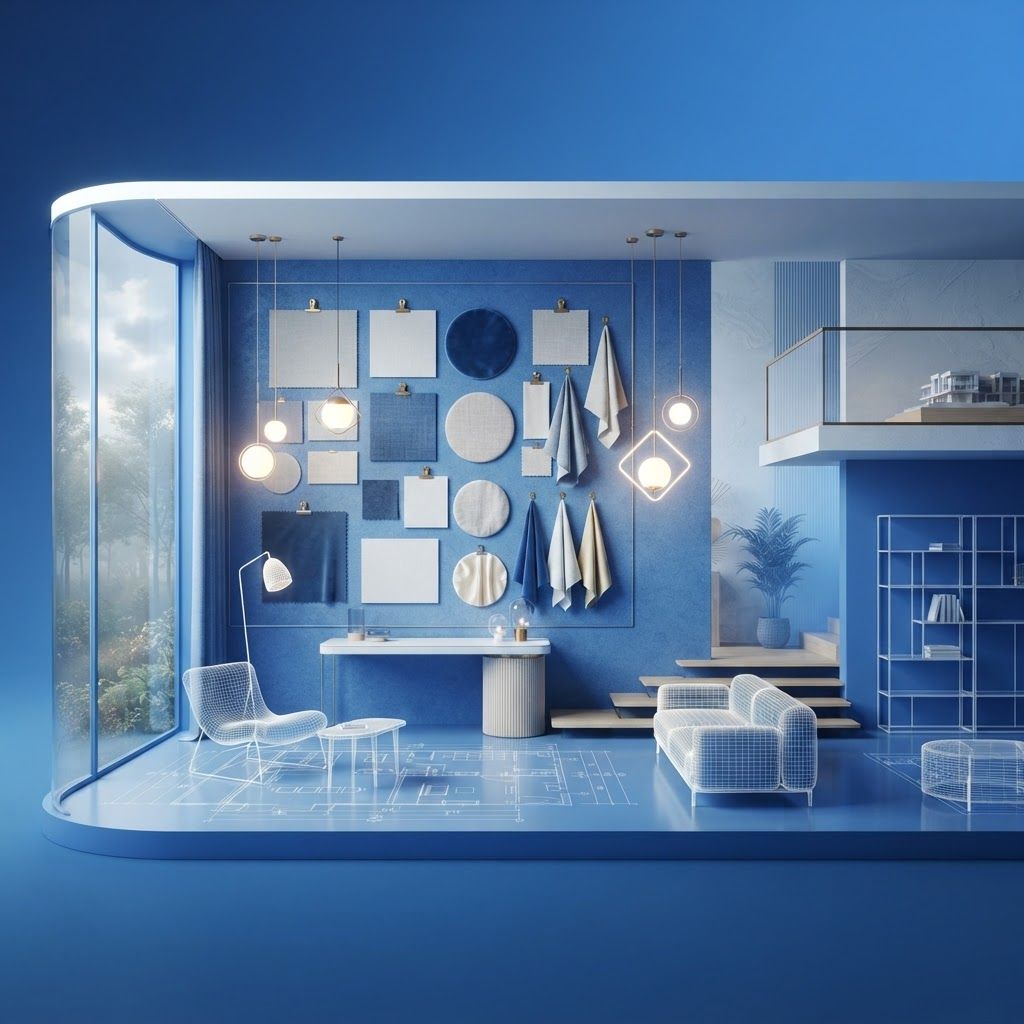
A full design service typically runs through several stages. Initial consultation and brief development establish how the household actually lives and what the budget realistically permits. Concept design produces mood boards, spatial layouts and material direction. Detailed design generates the drawings, specifications and schedules that contractors build from. Procurement handles ordering and logistics. Project delivery involves site visits, contractor liaison and problem resolution, followed by final styling and handover.
Many designers offer scaled-down versions of this. An hourly consultation, a room-by-room package, or a specification-only service can suit smaller projects or clients who want to manage delivery themselves.
Ten Interior Design Firms Serving the District
1. Forest Interior Studio provides full residential design from concept through delivery, with particular strength in whole-house projects and a network of trusted local contractors and joiners.
2. Epping Design House specialises in period property, balancing restoration of original features with the practical requirements of contemporary family living.
3. Loughton Interiors focuses on kitchens, bathrooms and bespoke joinery, working closely with cabinetmakers to produce fitted solutions for awkward period layouts.
4. Chigwell Luxury Interiors operates at the high end, delivering complete turnkey schemes for large homes with bespoke furniture, specialist finishes and integrated technology.
5. Essex Barn Conversion Design concentrates on agricultural conversions, solving the specific problems of large volumes, mezzanine planning, acoustic control and thermal performance.
6. Roding Valley Design Consultancy offers a flexible service ranging from hourly advice to full project management, appealing to clients with defined budgets who want professional input without a full retainer.
7. Theydon Home Design is a small studio known for a restrained, natural-material aesthetic that suits the district's woodland setting, with emphasis on light, texture and durability.
8. Waltham Abbey Heritage Interiors specialises in listed buildings and conservation area property, with experience navigating listed building consent and working with appropriate traditional materials.
9. North Weald Contemporary Design works primarily on modern and new build homes, introducing character and warmth to spaces that can otherwise feel generic.
10. Buckhurst Hill Colour and Space provides consultation-led services focused on colour schemes, lighting design and furniture layout, a valuable option for clients not undertaking structural work.
Current Trends in Residential Interiors
Natural and tactile materials have firmly displaced the high-gloss minimalism of a decade ago. Timber, stone, lime plaster, wool and linen dominate, with an emphasis on materials that age well rather than looking perpetually new.
Broken plan has largely replaced fully open plan. Households discovered during extended home working that entirely open spaces are impractical for simultaneous work, study and family life. Designers now create zones using level changes, partial walls, glazed screens and joinery.
Dedicated home working space has become a standard requirement rather than a luxury, and designing it properly, with good light, acoustic separation and integrated storage, is now a core part of most residential briefs.
Layered lighting is perhaps the single biggest improvement most homes could make. Relying on a central pendant produces flat, unflattering spaces. Combining ambient, task and accent lighting on separate circuits transforms how a room feels.
Sustainability influences specification increasingly, with clients asking about reclaimed materials, low-VOC finishes, responsibly sourced timber and furniture built to last rather than replaced every few years.
Working Well With a Designer
Be honest about budget from the outset. Designers cannot produce appropriate schemes without knowing the constraint, and withholding the number wastes everyone's time. A good designer will tell you frankly if the brief and budget do not align.
Gather visual references before the first meeting. Images of interiors you like, and equally importantly ones you dislike, communicate far more efficiently than adjectives.
Describe how you actually live rather than how you aspire to. Designers need to know about pets, children, how often you entertain, whether you cook seriously, and what irritates you about your current home.
Clarify the fee structure. Designers charge variously by fixed fee, hourly rate, percentage of project cost, or a combination, and may take trade discounts on procurement. Understand exactly what you are paying and what is included.
Allow realistic timescales. Bespoke joinery, imported furniture and specialist finishes all carry lead times, and compressing a programme usually costs money or quality.
Conclusion
Epping Forest offers access to designers covering every part of the residential spectrum, from heritage restoration to contemporary new build. Given the value of property in the district and the cost of getting a renovation wrong, professional design input is frequently a saving rather than an expense. Choose a designer whose completed work you genuinely admire, communicate openly, and the result will justify the investment.
Want your brand featured in front of decision-makers? Publish a guest post or get a link insertion in our guides through AAMAX's guest post and link insertion service.
Helpful Links
 SponsoredAAMAX — Full-Service Digital Agency
Write for Us
Share your expertise with our readers. We welcome guest contributions from industry specialists.
Pitch your idea