Budget Accommodation in a Walking District
East Hampshire is not a backpacker destination in the conventional sense, and it does not have the density of hostels found in major cities or the Lake District. What it does have is a genuine and growing need for affordable accommodation, driven by the South Downs Way, which passes through the district and attracts thousands of walkers and cyclists each year attempting the full hundred-mile route or sections of it.
Those travellers need beds that cost a fraction of a country house hotel, with drying facilities, secure bike storage, early breakfasts and somewhere to wash kit. Alongside them, the district's budget accommodation serves school and youth groups, Duke of Edinburgh expeditions, contractors working on local projects, families on tight budgets and solo travellers exploring the National Park.
The result is a budget sector that looks different from an urban hostel market. Independent bunkhouses, camping barns, group accommodation centres and pub rooms fill the gap where dedicated backpacker hostels would exist in a city.
The Ten Types of Budget Accommodation
YHA properties form the backbone of affordable accommodation across the South Downs and wider Hampshire and Sussex region. The Youth Hostels Association operates properties positioned along long-distance routes, offering dormitory beds, private rooms, self-catering kitchens and meals. Membership reduces rates, and the organisation's standards around cleanliness, safety and safeguarding are consistent and reliable.
Independent hostels and bunkhouses, often listed through the Independent Hostels network, are run by individual owners and tend to have more character than institutional properties. Many across Hampshire and the South Downs occupy converted farm buildings, providing exactly the practical facilities that walkers need.
Camping barns and bothy-style accommodation offer the most basic and cheapest option: a weatherproof building with sleeping platforms, basic cooking facilities and washing provision. Guests bring sleeping bags and expect simplicity. For groups walking the South Downs Way on a tight budget, these are ideal.
Group accommodation and activity centres serve schools, scouts, youth organisations and Duke of Edinburgh groups, offering exclusive-use bunkrooms, catering options and activity programmes. These centres across Hampshire hold the safeguarding accreditation and risk management frameworks that organised youth groups require.
Pub rooms and inns with budget accommodation occupy a middle ground that suits many travellers. A simple double or twin above a village pub, with breakfast and an evening meal downstairs, often costs less than a chain hotel and delivers considerably more character and local atmosphere.
Budget hotel chains including Travelodge and Premier Inn operate in and around the district's larger towns and on the main road corridors. For predictable quality at a controlled price, particularly for families or business travellers, these remain hard to beat, and advance booking produces very low rates.
Campsites with camping pods and glamping bridge camping and indoor accommodation. Insulated pods with beds and electricity provide shelter and comfort at prices well below hotels, and the district's campsites are well positioned for Downs access.
Farm stays and simple B&Bs in villages across East Hampshire offer single or twin rooms at modest rates, often with home-cooked breakfasts and hosts who know the local footpaths intimately. For solo walkers, these frequently offer the best value and the warmest welcome in the district.
Shared accommodation platforms including hostel booking sites and room-sharing services list private rooms in local homes at budget rates. In a district with limited formal hostel stock, this fills a genuine gap.
Campsites and backpacker camping remain the cheapest option, with certified locations and small farm sites across the district charging modest nightly rates. Some landowners along the South Downs Way offer basic pitches specifically for walkers.
What to Look for in Budget Accommodation
For walkers and cyclists, practical facilities matter more than aesthetics. A proper drying room transforms a multi-day walk in wet weather. Secure, covered bike storage is essential for cyclists carrying expensive machines. A functional self-catering kitchen dramatically reduces the cost of a trip. Laundry facilities make longer routes feasible with less luggage.
Check what bedding arrangements apply. Some hostels include linen; bunkhouses and camping barns often require your own sleeping bag. Confirm whether towels are provided, as they rarely are at the budget end.
Safety and standards deserve attention. Reputable properties hold fire risk assessments, public liability insurance and, where they accommodate young people, appropriate safeguarding policies and DBS-checked staff. Properties accredited through Visit England's hostel scheme or the YHA's own standards provide independent verification.
Consider location relative to the route rather than to a town. A hostel two miles off the South Downs Way adds four miles to a day's walking, which matters considerably at the end of a long stage. Conversely, accommodation in Petersfield or Alton offers shops, pubs and rail access that remote locations do not.
Practical Advice for Booking
Book well ahead for the main walking season. The South Downs Way is busiest from late spring through early autumn, and the limited budget accommodation along the route fills quickly, particularly at weekends and around bank holidays.
Consider midweek stays, where rates are lower and availability better. Shoulder seasons in April, May, September and October offer excellent walking conditions with far less competition for beds.
Look into group bookings if travelling with others, as exclusive use of a bunkhouse often costs less per person than individual dormitory beds and gives you the whole building.
Check cancellation terms, since weather-dependent trips frequently change. Flexible rates cost slightly more but are often worth it for multi-day outdoor plans.
Trends in Budget Accommodation
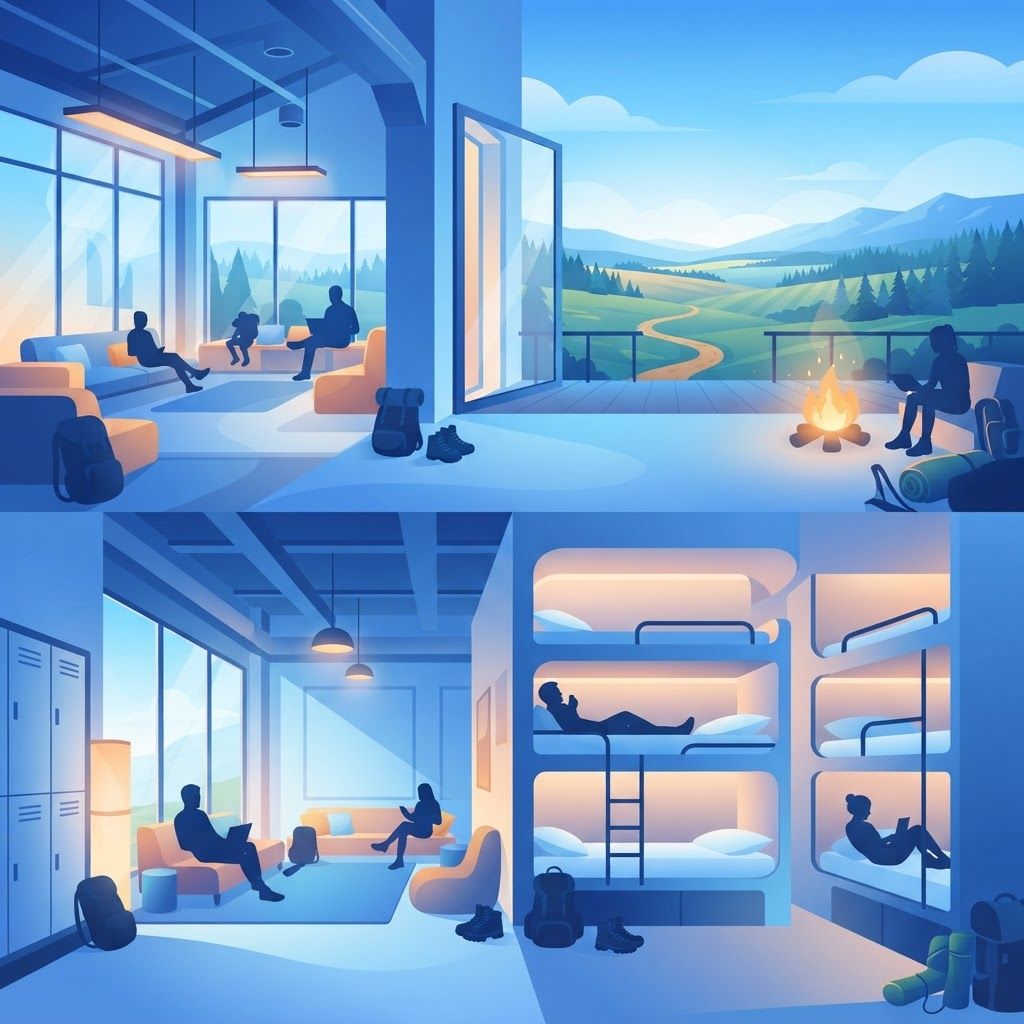
Standards have risen substantially. Modern hostels offer pod-style bunks with privacy curtains, individual reading lights, power sockets and lockers, closing much of the comfort gap with budget hotels while retaining the price advantage and the social element.
Private rooms now represent a growing share of hostel bookings, as couples, older travellers and families use hostels for their kitchens, communal spaces and location rather than for dormitory sleeping.
Sustainability aligns naturally with this sector. Low-impact accommodation, car-free access via rail to Petersfield and Liphook, and local sourcing are increasingly promoted, and they genuinely suit the National Park setting.
Final Thoughts
East Hampshire's budget accommodation is modest in scale but well matched to what the district actually needs. For walkers on the South Downs Way, cyclists exploring the chalk ridge, groups undertaking expeditions and travellers who would rather spend money on experiences than on rooms, the combination of bunkhouses, camping barns, pub rooms and simple B&Bs provides genuine value. Book early, choose for location and facilities rather than photographs, and the district opens up at a fraction of the cost.
Want your brand featured in front of decision-makers? Publish a guest post or get a link insertion in our guides through AAMAX's guest post and link insertion service.
Helpful Links
 SponsoredAAMAX — Full-Service Digital Agency
Write for Us
Share your expertise with our readers. We welcome guest contributions from industry specialists.
Pitch your idea