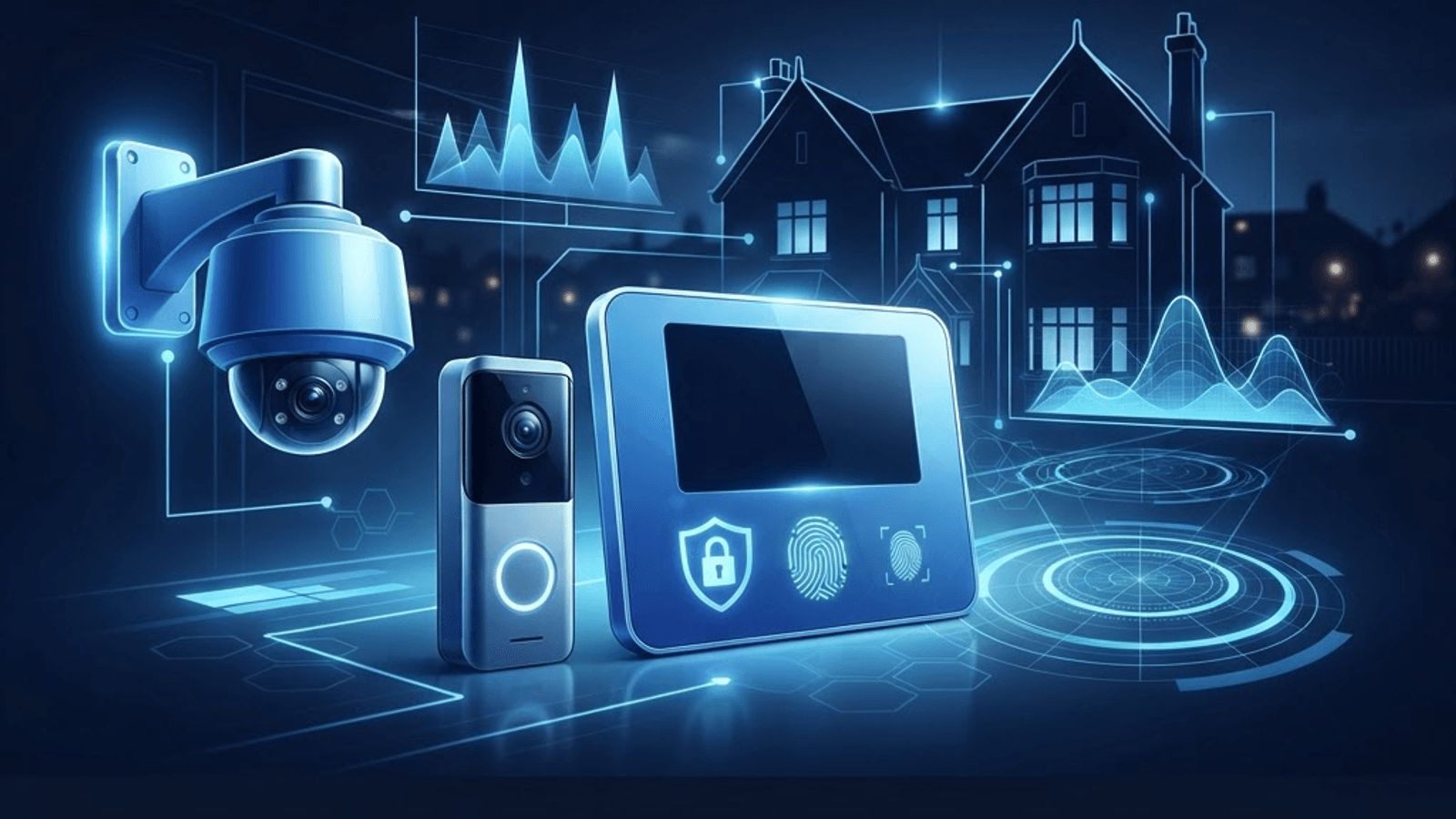
Rethinking What Home Security Means
Home security used to mean a bell box on the wall and a five-lever mortice lock on the front door. Today it encompasses video doorbells, wireless sensors, smart locks, remote monitoring, professional alarm response and integration with lighting and heating. The technology has improved dramatically while becoming considerably more affordable, which has broadened adoption well beyond high-value properties.
Slough's profile makes the subject relevant. It is a densely populated town with substantial commuter absence during working hours, extensive rented accommodation, good transport links in every direction, and a large commercial estate. Properties standing empty on predictable schedules are inherently more exposed, and layered security addresses that reality more effectively than any single device.
The Layered Security Principle
Effective protection works in depth rather than relying on one measure. The outer layer is deterrence: visible cameras, lighting, gravel, well-maintained boundaries and the general impression of an attentive household. The second layer is physical resistance: quality locks, reinforced door frames, laminated glazing and secured outbuildings. The third is detection: alarm sensors, door and window contacts, and cameras that record. The fourth is response: monitoring, notification and, where appropriate, professional keyholding.
Most burglaries are opportunistic and time-sensitive. Each additional layer increases the effort and risk involved, and the cumulative effect is far greater than any individual component. A monitored alarm with poor door security, or excellent locks with no detection, both leave obvious gaps.
Standards and Credentials That Matter
For alarm systems, look for companies certified by the NSI or SSAIB, the two recognised inspectorates in the UK security industry. Certification is often a requirement if your insurer stipulates a professionally installed and maintained system. Locks should meet the relevant British Standard, typically BS 3621 for mortice locks and TS007 three-star standards for euro cylinders resistant to snapping.
For camera systems, installers should understand data protection obligations, since domestic cameras capturing areas beyond your property boundary bring responsibilities regarding signage, retention and access requests.
1. Slough Security Systems
A certified alarm installer covering design, installation, maintenance and monitoring, Slough Security Systems specifies systems based on a property survey rather than a standard package. Work includes wired and wireless intruder alarms, panic facilities, remote app control and connection to alarm receiving centres. Maintenance contracts keep certification valid for insurance purposes.
2. Berkshire CCTV Installations
Camera systems succeed or fail on design. Berkshire CCTV Installations plans coverage around actual approach routes and vulnerable points rather than simply mounting cameras at corners, considering lens choice, mounting height, lighting conditions and recording retention. It advises on privacy compliance where views extend beyond the boundary and provides systems with reliable remote access.
3. Langley Locksmiths & Door Security
Physical security remains the foundation, and this locksmith focuses on it exclusively. Services include cylinder upgrades to anti-snap standards, multipoint lock repair, door frame reinforcement, window lock fitting, and emergency lock-out assistance. It carries out security surveys identifying the specific weaknesses of each door and window type, which is more useful than generic advice.
4. Cippenham Smart Home Security
For households already invested in connected technology, integration matters. Cippenham Smart Home Security installs video doorbells, smart locks with time-limited access codes, connected sensors, automated lighting scenes and integration hubs, unifying control in a single interface. It also advises on network security, since poorly configured devices can themselves become a vulnerability.
5. Thames Valley Monitored Alarms
An unmonitored alarm relies on neighbours to respond. Thames Valley Monitored Alarms connects systems to a professional receiving centre with verification procedures, escalation protocols and optional keyholder attendance. For properties left empty for extended periods, or where occupants travel frequently, this response capability is the element that converts detection into intervention.
6. Upton Gates & Perimeter Security
Perimeter control offers both convenience and deterrence. Upton Gates & Perimeter Security installs automated gates, intercom and video entry systems, boundary fencing, driveway sensors and access control. Safety compliance on automated gates, including force limitation and obstacle detection, is handled properly, which is an area where cheap installations frequently fall short of legal requirements.
7. Wexham Security Lighting
Lighting is among the most cost-effective deterrents available. This specialist designs schemes using motion-activated and dusk-to-dawn fittings positioned to eliminate concealment without creating nuisance glare for neighbours. Modern LED fittings with adjustable sensitivity and warm colour temperature achieve security benefit while remaining visually acceptable.
8. Stoke Poges Road Alarm Services
Not every requirement is a new installation. This local business services and repairs existing alarm systems, replaces failing sensors and batteries, reprogrammes panels after ownership changes, and takes over maintenance for systems installed by companies that have since ceased trading. That takeover capability solves a genuinely common problem.
9. Colnbrook Commercial Security Solutions
Businesses require a different specification: graded intruder systems, access control with audit trails, integrated CCTV, key management and often integration with fire alarm systems. Colnbrook Commercial Security Solutions designs to insurer requirements and provides the documentation needed for compliance and claims. Its work spans warehouses, offices and retail premises.
10. Slough Property Protection Group
This provider addresses vacant and vulnerable property: temporary alarm systems, security screens for void properties, site cameras during renovation, and protective measures for homes undergoing extended building work. Insurance conditions frequently tighten when a property is unoccupied, and these measures help owners remain compliant during transitional periods.
Technology Trends Worth Understanding
Camera analytics have improved substantially, with reliable distinction between people, vehicles and animals now reducing false notifications to manageable levels. This matters because alert fatigue is the primary reason people stop paying attention to their own security systems.
Wireless systems have matured to the point where they rival wired installations in reliability while installing far less intrusively, which suits both rented properties and finished homes where cable routing is difficult. Battery life measured in years rather than months has removed the main historical objection.
Smart locks have progressed from novelty to practical utility, particularly for households managing access for cleaners, tradespeople or family members. The key considerations are mechanical quality of the underlying lock, fail-safe behaviour when power fails, and the security of the associated app and account.
Practical Steps Every Household Can Take
Several measures cost little and deliver disproportionate benefit. Upgrade euro cylinder locks to anti-snap versions, as cylinder snapping remains a common entry method on uPVC doors. Secure side and rear access, which is where most forced entry occurs, since front doors are too visible. Fit locks to accessible windows and use them.
Secure sheds and garages properly, as they often contain the tools that facilitate entry to the house itself. Avoid leaving keys visible near letterboxes or in obvious hiding places. Use timers on lighting during absences, and ask a neighbour to collect post and move bins so a property does not advertise emptiness. Photograph and record serial numbers of valuables to support recovery and claims.
Choosing a Security Provider
Ask for a survey rather than a quotation over the phone, since appropriate specification depends on the property's layout and approach routes. Confirm inspectorate certification if your insurer requires it, and ask what maintenance is included and what it costs annually. For monitored systems, understand the escalation process precisely: who is contacted, in what order, and what happens if nobody answers.
Clarify ownership of equipment and whether the system can be maintained by another company later, as proprietary lock-in reduces your options significantly over time.
Final Thoughts
Security is most effective when it is layered, proportionate and actually used. The ten companies profiled here cover alarms, CCTV, locks, smart integration, monitoring, perimeter control, lighting, servicing, commercial systems and vacant property protection. For Slough homeowners the strongest approach combines good physical security, sensible detection and a credible response arrangement, delivered by a certified installer who surveyed the property before recommending anything.
Want your brand featured in front of decision-makers? Publish a guest post or get a link insertion in our guides through AAMAX's guest post and link insertion service.
Helpful Links
 SponsoredAAMAX — Full-Service Digital Agency
Write for Us
Share your expertise with our readers. We welcome guest contributions from industry specialists.
Pitch your idea