Feeding Kent: The Food Wholesale Sector in Swale
Food wholesaling is a demanding business that combines the complexity of perishable logistics with stringent legal food safety obligations and thin operating margins. In Swale, the sector benefits from an unusually favourable position. Kent's status as the Garden of England places some of Britain's most productive fruit, vegetable and salad growing land within a short drive. The borough's own agricultural land, orchards and marshland grazing contribute directly. Motorway access supports distribution across Kent and into London, while the Channel ports bring continental produce within easy reach.
The customer base is correspondingly broad: independent restaurants, pubs and cafés, hotels and event caterers, schools, colleges and nurseries, hospitals and care homes, convenience stores and farm shops, food manufacturers requiring ingredients, and workplace catering operations. Each has distinct requirements in pack size, delivery frequency, price sensitivity and documentation.
The Categories of Food Wholesale Supply
Fresh produce. Fruit, vegetables, salads and herbs, requiring daily or near-daily replenishment, careful temperature and humidity management, and rapid handling to preserve shelf life. Swale wholesalers benefit particularly here from proximity to Kent growers.
Meat, poultry and game. Whole carcasses, primals, portioned cuts and prepared products, demanding strict temperature control, robust traceability to holding of origin, and often butchery capability to customer specification.
Fish and seafood. Fresh and frozen, whole and filleted, with the shortest shelf life of any category and the most demanding chill requirements. Coastal access and proximity to landing ports supports this trade locally.
Dairy and chilled. Milk, cream, butter, cheese, yoghurt, eggs, chilled desserts and prepared chilled foods, requiring consistent cold chain and careful date rotation.
Frozen foods. Vegetables, chips and potato products, meat and fish, desserts, bakery and prepared meals, requiring deep frozen storage and transport with continuous temperature monitoring.
Ambient groceries. Canned and jarred goods, dry stores, rice, pasta, flour, oils, sauces, seasonings, condiments and baking ingredients, with longer shelf life but substantial storage volume requirements.
Beverages. Soft drinks, juices, hot beverages, mixers and, where licensed, beers, wines and spirits.
Bakery. Fresh bread and morning goods, frozen bake-off products and ambient bakery items.
Catering disposables and cleaning. Packaging, food service disposables, hygiene chemicals, cloths and janitorial supplies, frequently supplied alongside food for delivery efficiency.
Food Safety: The Absolute Requirement
Food wholesaling is governed by comprehensive food safety law, and any credible supplier will demonstrate systematic compliance. Food business registration with the local authority is mandatory. Food safety management procedures based on hazard analysis and critical control point principles are a legal requirement, identifying hazards, establishing critical control points, setting critical limits, monitoring, taking corrective action and maintaining records.
Food hygiene rating scores from local authority inspection provide a public indicator, and buyers should expect wholesalers to hold high ratings. For larger operations supplying retail or manufacturing customers, third-party certification is generally expected. BRCGS Storage and Distribution certification is the most widely recognised standard for food wholesalers, covering hygiene, temperature control, contamination prevention, stock rotation, traceability and product security. Alternative recognised schemes serve similar functions.
Traceability obligations require that businesses can identify their immediate suppliers and immediate customers for all food, enabling rapid withdrawal or recall when problems arise. Wholesalers should be able to demonstrate that they can trace a batch in both directions within hours, not days, and should conduct periodic mock recall exercises to prove the system works.
Allergen management has become a central compliance area. The fourteen major allergens must be identified and communicated accurately, with rigorous controls preventing cross-contamination and mislabelling. Wholesalers must supply accurate allergen information for all products, and any repacking or portioning operation requires particularly careful segregation and cleaning controls.
Cold Chain Integrity
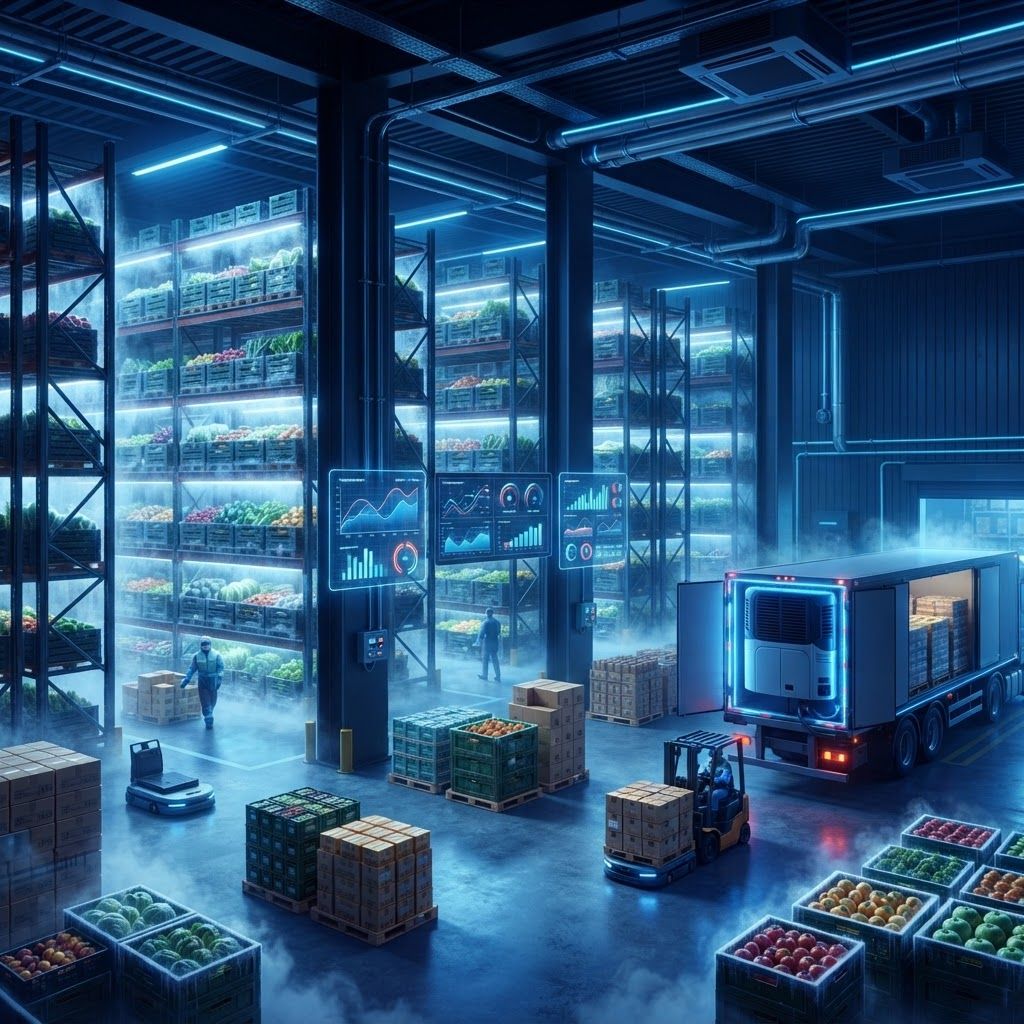
Temperature control is where food wholesale quality is most easily lost and most consequential. Chilled foods generally require storage at or below eight degrees Celsius, with many products specified tighter, while frozen foods require minus eighteen degrees Celsius or below. Maintaining these temperatures continuously from supplier through storage, picking, loading, transport and delivery is genuinely difficult.
Indicators of strong cold chain management include continuous temperature monitoring and data logging in storage and vehicles, alarm systems with out-of-hours response, calibrated temperature probes with documented calibration, temperature recording at goods receipt and at delivery, multi-temperature vehicles allowing chilled, frozen and ambient goods to travel together at correct temperatures, minimal dwell time at ambient during picking and loading, and documented procedures for temperature excursion investigation.
Buyers can assess this practically by asking to see temperature records, checking delivery vehicle temperatures on arrival, and observing whether drivers close doors promptly and handle goods without leaving them standing.
Local Sourcing and the Kent Advantage
One of the genuine strengths available to Swale food wholesalers is access to Kent's exceptional agricultural output. The county produces significant volumes of apples, pears, cherries, plums, soft fruit including strawberries and raspberries, salad crops, brassicas, potatoes, cereals and hops. Marshland grazing supports quality lamb and beef, and the coast provides fish and shellfish.
Wholesalers who build genuine grower relationships offer real advantages: shorter time from harvest to plate improving quality and shelf life, seasonal availability information that helps chefs plan menus, provenance stories that support menu marketing, reduced transport emissions, and often better value in season.
For caterers and retailers, asking a wholesaler specifically about local sourcing capability is worthwhile. The best will name growers, explain seasonality honestly, and distinguish between genuinely local produce and product merely distributed from a local depot.
Sustainability and Waste Reduction
Food waste is both an environmental and commercial problem, and wholesalers are central to reducing it. Accurate ordering support, forecasting assistance, appropriate pack sizes and flexible order quantities all help customers order closer to actual need. Shelf life management and clear date coding reduce losses. Redistribution partnerships with food surplus charities divert edible surplus from waste.
Packaging reduction efforts include returnable crates and trays, reduced secondary packaging, recycled content and recyclable materials, and elimination of unnecessary plastic wrapping on produce. Transport efficiency through route optimisation, consolidated deliveries, backhauling and increasingly electric or low-emission vehicles reduces emissions per delivery.
Energy use in refrigerated warehousing is substantial, and investment in efficient refrigeration, natural refrigerants with low global warming potential, insulation, door management and heat recovery makes a meaningful difference.
How to Choose a Food Wholesaler
Begin with fit to your operation. A high-volume contract caterer, a fine-dining restaurant and a convenience store need quite different suppliers in range, pack size, price point and delivery frequency. Clarify minimum order values, delivery days and cut-off times, since these determine whether the supplier can actually serve your kitchen rhythm.
Verify food safety credentials by requesting current certification, hygiene rating, and a copy of the food safety management summary. Ask about recall procedures and whether mock recalls are conducted.
Assess product quality directly through trial orders across your key lines, evaluating not just the goods but consistency across several deliveries. Check that the produce delivered matches the specification and grade ordered.
Examine service reliability including order accuracy rates, on-time delivery performance, substitution policy when items are unavailable, and how credits and shortages are handled. Poor substitution practice causes real operational disruption in kitchens.
Consider commercial terms including pricing structure, whether prices are fixed for a period or move with market, credit terms, and transparency around delivery charges. In fresh produce especially, understanding whether you are buying at market price or a fixed contract price matters greatly.
Conclusion
Swale's food wholesalers benefit from an enviable position within one of Britain's most productive agricultural regions, combined with excellent logistics connections. The best operators pair rigorous food safety and cold chain discipline with genuine local sourcing relationships, reliable service and practical support for customers managing cost and waste. For any food business in Kent, choosing a wholesaler on food safety credentials, service consistency and sourcing quality will pay back far beyond any price advantage.
Want your brand featured in front of decision-makers? Publish a guest post or get a link insertion in our guides through AAMAX's guest post and link insertion service.
Helpful Links
 SponsoredAAMAX — Full-Service Digital Agency
Write for Us
Share your expertise with our readers. We welcome guest contributions from industry specialists.
Pitch your idea