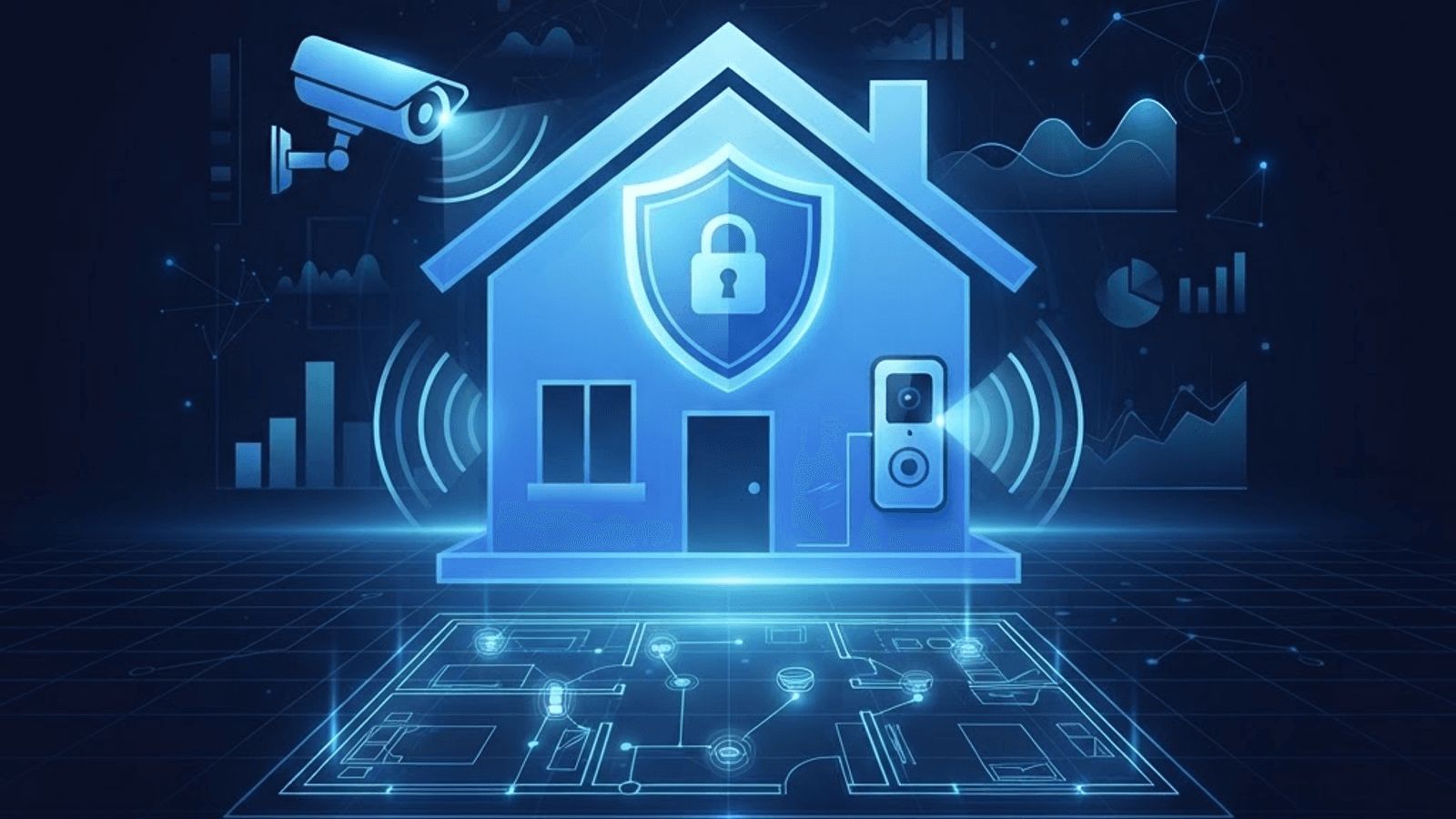
Rethinking Home Security
Home security has changed more in the past decade than in the previous fifty years. Where once the choice was between a bell-only alarm and nothing, households now select from monitored alarm systems, high-definition cameras with intelligent detection, video doorbells, smart locks, connected sensors and integrated platforms that combine all of them.
The abundance of options has created confusion. Expensive technology poorly deployed provides less protection than modest, well-considered measures. Understanding what actually deters and detects intrusion is more useful than comparing product specifications.
In Ipswich, as across most UK towns, the majority of burglaries are opportunistic rather than planned. Insecure doors and windows, vulnerable rear access, poor lighting and obvious absence are the conditions offenders look for. Addressing these fundamentals delivers disproportionate benefit.
The Layers of Effective Security
Physical security is the foundation. Doors should have a multipoint locking mechanism with a cylinder meeting anti-snap standards, since cylinder snapping remains a common attack method on UPVC doors. Windows should have functioning locks, and vulnerable ground floor and flat-roof-accessible windows deserve particular attention. Side gates, sheds and garages are frequently the weakest point and often contain tools that assist entry to the house itself.
Lighting is a significant deterrent. Well-lit approaches and side passages remove the concealment offenders rely on. Dusk-to-dawn low-level lighting is generally more effective than motion-triggered floodlights, which neighbours learn to ignore.
Detection through an intruder alarm provides warning and, if monitored, a response. Visible signs of an alarm system are themselves a deterrent.
Surveillance through CCTV and video doorbells provides both deterrence and evidential value, and increasingly serves everyday convenience functions such as parcel delivery monitoring.
Finally, good habits matter: locking up consistently, not leaving keys near the letterbox, managing social media disclosure of absence, and using timers to create occupancy signals.
Ten Home Security Companies Serving Ipswich
ADT operates in the Ipswich area providing professionally monitored alarm systems with alarm receiving centre response, backed by a long-established national infrastructure.
Verisure offers monitored security combining intruder detection with verification technology, aiming to reduce false alarms and speed genuine response.
Ipswich Security Systems provides locally installed and maintained alarm and CCTV systems for domestic and small business clients across the town.
Suffolk Alarm Company covers the county with intruder alarm design, installation and servicing, including upgrades to existing legacy systems.
Orwell Security Solutions serves Ipswich and surrounding villages with CCTV, alarms, access control and security lighting.
Anglia Fire and Security combines intruder security with fire detection, serving both homes and commercial premises with integrated systems and maintenance contracts.
East Anglian CCTV specialises in camera systems including high-resolution IP installations, remote viewing configuration and analytics-based detection.
Premier Locksmiths Ipswich focuses on physical security including anti-snap cylinder upgrades, multipoint lock repair, safe installation and emergency lockout response.
Waterfront Access Control works with apartment blocks and commercial buildings in central Ipswich on door entry systems, intercoms and electronic access management.
Suffolk Smart Home Security integrates connected security devices including smart locks, sensors, cameras and automation into unified platforms with app-based control.
Standards That Affect Insurance
Insurers frequently reference specific standards. For door and window locks, BS 3621 for mortice locks and TS 007 or Sold Secure Diamond ratings for door cylinders are commonly specified. Doors meeting PAS 24 and windows to equivalent standards provide enhanced attack resistance.
For alarm systems, grading under the relevant European standards determines the level of protection, with domestic systems typically at grade two. Installation by a company accredited by the National Security Inspectorate or the Security Systems and Alarms Inspection Board is often required for an insurer to recognise the system and apply a premium discount.
Police response to alarm activations is only available for systems meeting specific requirements including accredited installation and confirmed activation technology. Self-installed systems do not qualify.
Homeowners should check their policy wording before investing, as installing a system that does not meet the specified requirements yields no insurance benefit.
CCTV and Data Protection
Domestic CCTV capturing only the owner's property falls outside data protection legislation. However, where cameras capture areas beyond the boundary, including pavements, roads or neighbouring gardens, data protection obligations apply.
This means using the system responsibly, positioning cameras to minimise capture of others' property, informing people that recording takes place where appropriate, retaining footage only as long as necessary and responding to requests from individuals for footage of themselves.
Video doorbells that record audio raise additional considerations, as audio capture extends further than most users expect and is more intrusive than image capture.
Neighbour disputes over camera positioning are increasingly common, and a brief conversation before installation usually prevents them.
Smart Security: Benefits and Cautions
Connected devices offer genuine advantages including remote monitoring, instant alerts, integration with lighting and heating, and keyless access for trusted visitors.
They also introduce new risks. Devices with default passwords, outdated firmware or poor manufacturer security practices can be compromised. Sensible precautions include changing default credentials, enabling two-factor authentication, keeping firmware updated, placing devices on a separate network segment where possible and choosing manufacturers with a demonstrated commitment to long-term security updates.
Reliance on internet connectivity is another consideration. Systems that cease functioning entirely when broadband fails offer less resilience than those with cellular backup.
Final Thoughts
The most effective home security in Ipswich starts with solid physical measures, adds well-specified detection, and uses technology to support rather than replace the basics. Choosing an accredited installer, verifying insurance requirements beforehand and maintaining the system properly turns a collection of devices into genuine protection.
Want your brand featured in front of decision-makers? Publish a guest post or get a link insertion in our guides through AAMAX's guest post and link insertion service.
Helpful Links
 SponsoredAAMAX — Full-Service Digital Agency
Write for Us
Share your expertise with our readers. We welcome guest contributions from industry specialists.
Pitch your idea