Hardware Engineering in a Knowledge District
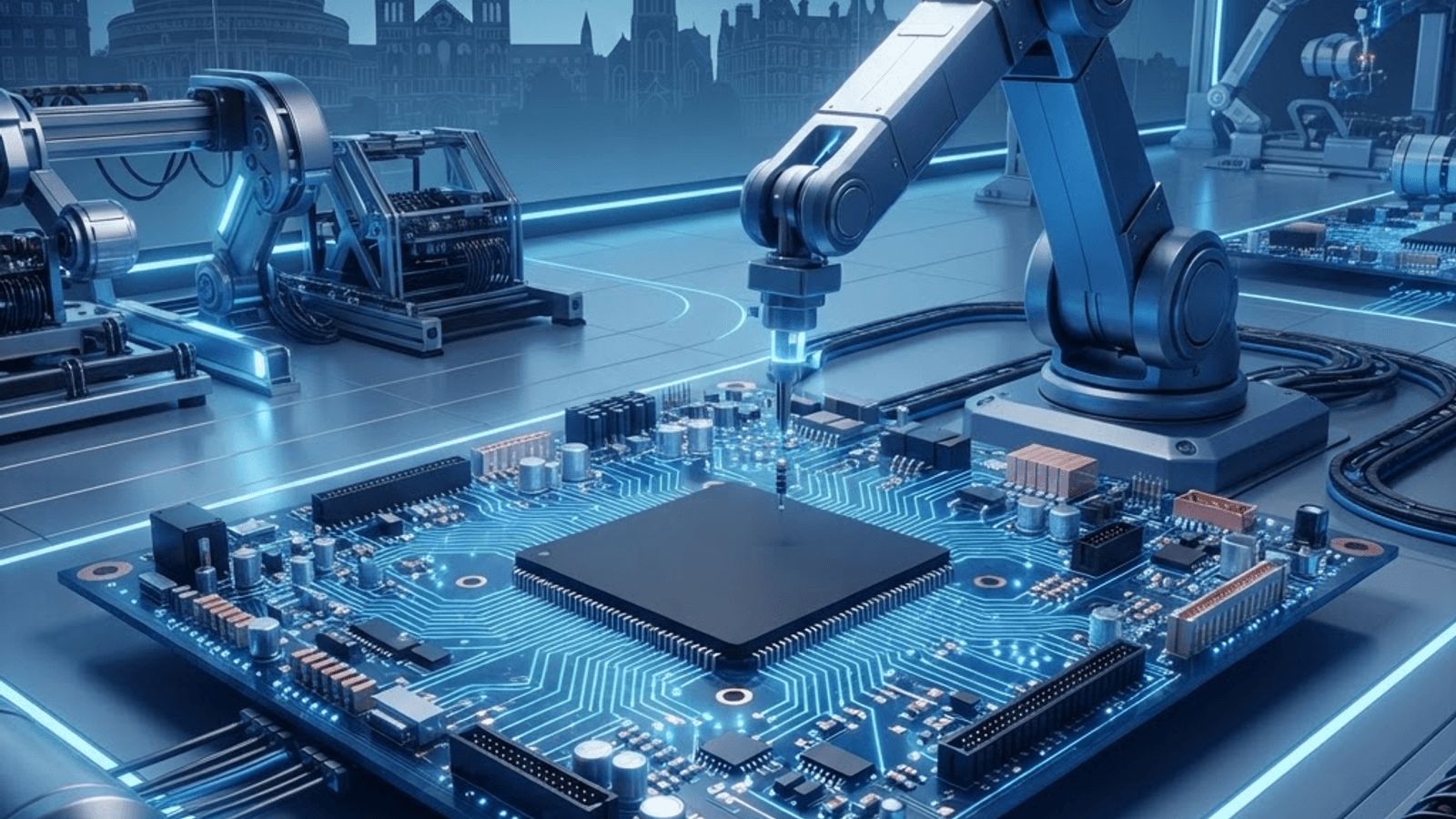
Kensington and Chelsea is not a manufacturing district in the traditional sense, but it plays a significant role in hardware innovation. The presence of Imperial College London generates research in materials, robotics, bioengineering and electronics, while the borough's design community and proximity to major research institutions support the early stages of product development where concepts are defined and prototyped.
The pattern is common in high-value economies: design, engineering, testing and commercialisation happen in expensive urban centres, while volume production takes place elsewhere. Understanding this division helps businesses plan realistically, because the skills needed to design an excellent product differ substantially from those needed to manufacture it reliably at scale.
The Hardware Development Process
Hardware projects follow a considerably more structured path than software. Concept development establishes requirements, constraints and the fundamental technical approach. Industrial design addresses form, ergonomics, materials and user interaction, while mechanical and electronic engineering translate that vision into workable systems.
Prototyping proceeds through stages. Early proof-of-concept models demonstrate core function using readily available components. Engineering prototypes validate the intended design with representative parts. Pre-production units verify that the design can actually be manufactured consistently.
Certification and compliance testing follow, covering electromagnetic compatibility, electrical safety, radio approvals where relevant, and sector-specific requirements for medical or industrial applications. These processes take months and carry significant cost, which first-time hardware businesses frequently underestimate.
Finally, production requires supply chain management, tooling investment, quality control systems and logistics planning. Each stage compounds the cost of design errors, which is why thorough validation before tooling commitment is essential.
The Top 10 Hardware Manufacturers and Design Firms
1. Dyson. A British engineering company renowned for motor technology, air treatment and domestic appliances, with substantial research investment and a distinctive integrated design and engineering culture.
2. Cambridge Consultants. A product development firm combining deep scientific research with commercial engineering across medical devices, industrial systems and connected products.
3. PA Consulting Product Design. Offering end-to-end product development including regulated medical and scientific instruments, with strong systems engineering capability.
4. Bowers and Wilkins. A British audio manufacturer known for acoustic engineering excellence and premium loudspeaker design, with products widely specified in high-end residential installations across the borough.
5. Naim Audio. Specialising in high-fidelity amplification and streaming hardware, Naim combines electronic engineering with British manufacturing and a strong reputation among audio enthusiasts.
6. Renishaw. A precision measurement and additive manufacturing company producing metrology equipment and industrial systems used across aerospace, healthcare and manufacturing.
7. Oxford Instruments. Developing advanced scientific instrumentation for research and industry, including imaging, analysis and cryogenic systems used in laboratories worldwide.
8. Blond. A London industrial design studio working across consumer products, furniture and technology hardware with strong material and manufacturing knowledge.
9. Map Project Office. An industrial design consultancy known for thoughtful product design across consumer electronics, healthcare and technology sectors.
10. Raspberry Pi. A British computing hardware organisation whose single-board computers have become foundational to education, prototyping and embedded product development.
Trends in Hardware Development
Connectivity has become near-universal. Products that once operated standalone now include wireless communication, companion applications and cloud services, which introduces software maintenance obligations lasting years after a device is sold. Security update provision has moved from good practice towards regulatory requirement in several markets.
Sustainability requirements are reshaping design decisions. Repairability, material selection, energy efficiency, recyclability and packaging all face increasing scrutiny from both regulators and customers. Right-to-repair legislation has particularly influenced how products are assembled and how spare parts are supplied.
Supply chain resilience gained prominence after recent global disruptions. Designers now consider component availability, second-source options and geographic concentration risk from the outset rather than treating procurement as a later concern.
Advanced manufacturing techniques, particularly additive manufacturing, have compressed prototyping timelines and enabled production of geometries that traditional methods cannot achieve. For low-volume, high-value products, these methods are increasingly viable for final production rather than prototyping alone.
Advice for Hardware Ventures
Validate demand before committing to tooling. Hardware mistakes are expensive and slow to correct, so early customer engagement, pre-orders or pilot deployments provide essential evidence before major capital commitment.
Budget generously for iteration. Experienced hardware teams expect several design revisions between first prototype and production readiness. Plans assuming first-time success almost always run over on both cost and schedule.
Engage manufacturing expertise early. Design decisions made without understanding production constraints frequently require expensive rework. A manufacturing partner consulted during design will identify problems that would otherwise emerge at tooling stage.
Plan certification timelines into the schedule from the beginning, and confirm which approvals apply in each target market. Finally, consider the full product lifecycle including spares, repairs, firmware updates and end-of-life handling, as these commitments affect both cost structure and customer satisfaction.
Final Thoughts
Hardware development demands patience, capital and multidisciplinary expertise, but it produces products with defensibility that software rarely matches. The organisations above span consumer audio, scientific instrumentation, precision engineering and industrial design. For ventures emerging from West London's research environment, partnering with experienced product development firms substantially improves the odds of reaching production successfully.
Want your brand featured in front of decision-makers? Publish a guest post or get a link insertion in our guides through AAMAX's guest post and link insertion service.
Helpful Links
 SponsoredAAMAX — Full-Service Digital Agency
Write for Us
Share your expertise with our readers. We welcome guest contributions from industry specialists.
Pitch your idea