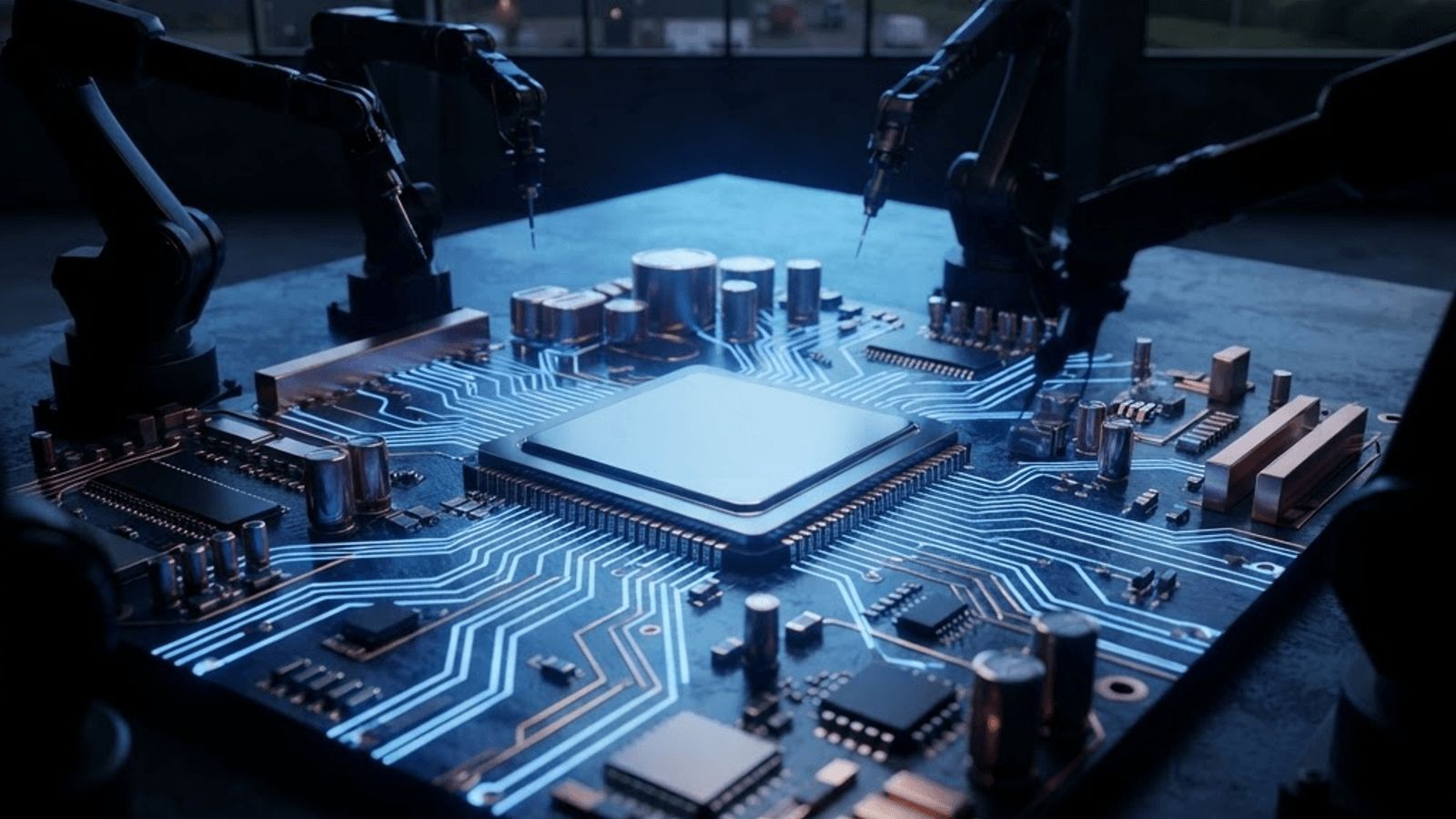
Manufacturing in Dumfries and Galloway
Manufacturing has a long history in Dumfries and Galloway, and while the sector has changed considerably, it remains a significant source of skilled employment. The region's manufacturers tend to occupy specialist niches rather than competing on volume, producing engineered components, electronic assemblies, control equipment, and machinery for agriculture, energy, food processing, and industrial markets.
This specialisation is a rational response to geography. Competing on high-volume commodity production against large-scale operations elsewhere is difficult, but producing technically demanding, lower-volume products where engineering capability and reliability matter more than unit cost is an area where regional manufacturers compete effectively.
What Hardware Manufacturing Involves
Design and engineering translates a concept into a manufacturable product, covering mechanical design, electronics, materials selection, and design for manufacture. Products designed without manufacturing input frequently prove expensive or impossible to produce at reasonable cost.
Prototyping and validation produces early versions for testing, increasingly using additive manufacturing alongside conventional machining to shorten iteration cycles.
Production covers machining, fabrication, assembly, and finishing. Capabilities vary widely between manufacturers, and matching your requirements to a supplier's actual equipment and expertise is essential.
Electronics manufacturing includes circuit board assembly, testing, and enclosure integration, often requiring specialist equipment and controlled environments.
Quality assurance encompasses inspection, testing, certification, and traceability. For products entering regulated markets, documented quality systems are a prerequisite rather than a differentiator.
Supply chain management and logistics complete the picture, particularly important given the region's distance from major ports and distribution hubs.
Ten Hardware Manufacturers in the Region
Solway Precision Engineering specialises in machined components and assemblies for industrial and energy applications, operating modern computer-controlled machining capability with documented quality processes.
Galloway Electronics Manufacturing provides circuit board assembly, testing, and product integration, serving clients who need electronics produced to consistent standards in moderate volumes.
Nithsdale Fabrication Works focuses on metal fabrication, including sheet metal work, welding, and structural components for agricultural and industrial equipment.
Annandale Control Systems manufactures control panels, instrumentation enclosures, and automation hardware for process industries, combining electrical assembly with mechanical integration.
Stewartry Product Development offers design and prototyping services alongside low-volume manufacturing, suiting clients taking a product from concept through to initial production.
Criffel Industrial Components produces specialist components for machinery and equipment manufacturers, with strength in materials selection and treatments for demanding operating environments.
Machars Agricultural Engineering manufactures and adapts equipment for farming operations, including bespoke modifications that mainstream manufacturers do not offer.
Kirkcudbright Precision Tooling supplies tooling, jigs, and fixtures to other manufacturers, an essential supporting capability within the regional industrial network.
Wigtown Assembly Services provides contract assembly and packing, offering flexible capacity to manufacturers managing variable demand without expanding their own facilities.
Moffat Renewable Hardware completes the list with components and assemblies for the renewable energy sector, including mounting systems, enclosures, and maintenance equipment.
Trends in Hardware Manufacturing
Automation continues to spread into smaller operations, with collaborative robots and automated inspection becoming affordable at volumes that previously could not justify them. This improves consistency and helps address skills shortages.
Additive manufacturing has moved beyond prototyping into production of certain components, particularly complex low-volume parts and tooling, reducing lead times considerably.
Supply chain resilience has become a priority following several years of disruption. Manufacturers and their customers are placing greater value on shorter, more visible supply chains, which has improved the competitive position of regional suppliers.
Sustainability requirements are increasing, covering material selection, energy use, waste reduction, and end-of-life considerations. Customers increasingly request environmental data as part of procurement.
Digital integration is also advancing, with production data, quality records, and traceability information captured electronically rather than on paper, supporting both efficiency and compliance.
Selecting a Manufacturing Partner
Match capability to requirement precisely. Ask what equipment a manufacturer operates, what tolerances it routinely achieves, and what volumes represent its comfortable operating range.
Review quality systems and certifications relevant to your market. Request examples of inspection documentation and ask how non-conformances are handled.
Discuss design input early. Manufacturers involved during design frequently identify changes that reduce cost substantially without affecting function.
Understand lead times realistically, including material procurement, which often dominates the schedule. Ask about capacity and how the manufacturer handles demand fluctuations.
Finally, consider the relationship over time. Manufacturing partnerships work best when both parties invest in understanding each other's processes, and frequent supplier switching tends to erase the efficiency gains that accumulate through familiarity.
Skills and Workforce Considerations
One factor shaping the future of hardware manufacturing in Dumfries and Galloway is the availability of skilled people. Machinists, electronics technicians, welders, quality inspectors, and production engineers are all in demand, and the region competes for these skills with employers across central Scotland and northern England. The manufacturers that have coped best are those investing in structured apprenticeships and working with local colleges to build progression routes that keep young people in the area.
There is also a growing emphasis on cross-training. In lower-volume, higher-variety production, staff who can move between machining, assembly, and inspection give a business far more flexibility than narrowly specialised roles allow. Several regional manufacturers have restructured around this principle, and it has proved a practical response to both recruitment pressure and fluctuating order books.
For customers, workforce stability is worth examining. A manufacturer with long-serving staff and an active training programme is more likely to deliver consistent quality over a multi-year supply relationship than one dependent on temporary labour or a single key individual.
Final Thoughts
Hardware manufacturing in Dumfries and Galloway demonstrates that regional producers can compete effectively by specialising in technically demanding work rather than pursuing volume. The ten manufacturers profiled here cover precision machining, electronics, fabrication, control systems, tooling, and assembly. For organisations developing physical products, a capable manufacturing partner within reasonable travelling distance offers advantages in communication and responsiveness that distant suppliers rarely match.
Want your brand featured in front of decision-makers? Publish a guest post or get a link insertion in our guides through AAMAX's guest post and link insertion service.
Helpful Links
 SponsoredAAMAX — Full-Service Digital Agency
Write for Us
Share your expertise with our readers. We welcome guest contributions from industry specialists.
Pitch your idea