Golf in the Barnsley Landscape
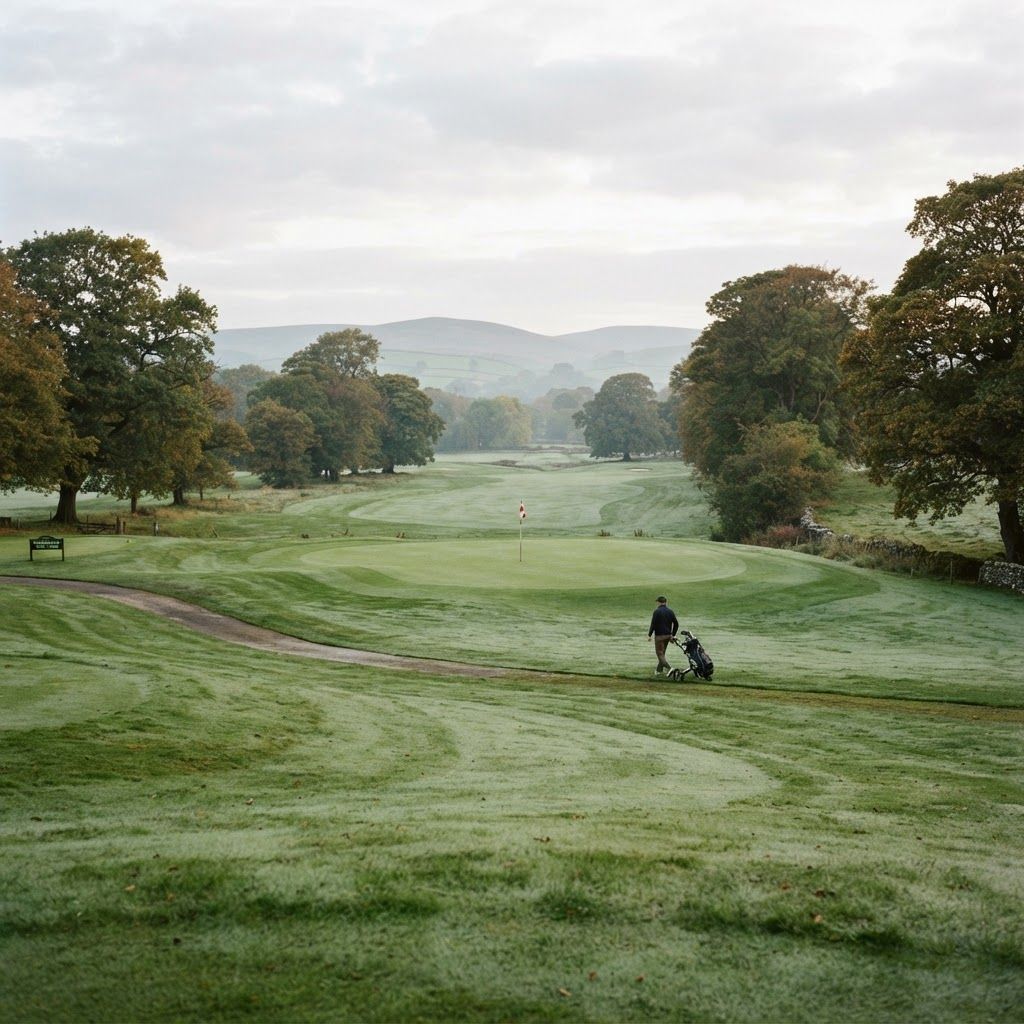
Barnsley occupies an unusually favourable position for golf. To the east, the terrain flattens into the Dearne Valley, producing gentler parkland layouts on richer soil. To the west, the ground rises steadily toward the Pennine foothills around Penistone and the Peak District boundary, giving courses elevation, exposure, dramatic views and the firmer, faster-draining ground associated with moorland-edge golf. Within a fifteen-mile radius, a golfer can play courses of genuinely different character without ever travelling far.
The borough's industrial history also shaped its courses. Several were established as colliery or works clubs, giving them a democratic membership tradition that persists in relatively accessible joining fees and welcoming visitor policies. Others occupy former estate parkland, inheriting mature specimen trees, established woodland and undulating ground that a purpose-built modern course could not replicate.
Ten Courses Worth Playing In and Around Barnsley
Barnsley Golf Club at Wakefield Road is the borough's most established municipal-origin course and remains one of its most played. The layout runs across gently rolling parkland with mature tree lines defining many holes, and the greens are consistently well presented. It suits a wide range of handicaps, with enough length to test lower handicappers while remaining playable for improvers, and its accessibility has made it a common introduction to the game for local players.
Silkstone Golf Club occupies elevated ground west of the town and is widely regarded as one of the more scenic courses in the area. The elevation delivers extensive views across the Pennine foothills, and the exposure means wind is a genuine strategic factor rather than an occasional inconvenience. Undulating fairways and well-defended greens reward accurate iron play over raw distance.
Wortley Golf Club sits just south of the borough boundary and offers one of the region's most attractive mature parkland experiences. Established in the late nineteenth century, the course winds through established woodland with tight tree-lined corridors demanding controlled ball flight. Its heritage clubhouse and traditional atmosphere appeal strongly to golfers who value the older character of the game.
Sandhill Golf Club near Little Houghton takes a more modern approach, with a longer layout, generous fairways, substantial water features and large contoured greens. The design philosophy is distinctly contemporary, offering multiple routes to the green and rewarding strategic decision-making. Its pay-and-play accessibility makes it popular with visiting groups and society bookings.
Tankersley Park Golf Club occupies elevated parkland on the borough's southern edge, combining good drainage with panoramic views. The course plays firm through much of the year, which makes it a reliable winter option when lower-lying layouts become soft. Mature trees and changes in elevation create genuine variety across the eighteen holes.
Hillsborough and Grenoside area courses extend the options southward, with layouts running along the wooded slopes between Barnsley and northern Sheffield. These courses tend to feature significant elevation change, requiring careful club selection where uphill and downhill approaches distort apparent distance.
Penistone and District Golf Facilities serve the western borough where the landscape shifts toward genuine upland character. Exposure and firmer turf produce a links-adjacent playing experience quite unlike parkland golf, with running approach shots and low ball flight becoming essential skills in windy conditions.
Dearne Valley Golf Centre caters to the practice and development end of the market with driving range facilities, short courses and coaching provision alongside playable holes. Facilities like this carry much of the responsibility for bringing new golfers into the sport, offering low-commitment entry before players progress to full-length courses.
Hoyland and Elsecar Golf Amenities provide accessible golf across the southern borough, with shorter layouts and relaxed visitor policies. These courses fill an important niche for time-limited players, juniors and those returning to the game after a break.
Wombwell Hillies Golf Course completes the list as a compact, community-focused facility. Its shorter format makes it well suited to family golf, junior development and quick rounds, and it demonstrates how modest facilities sustain participation in areas where full membership costs would be prohibitive.
What Distinguishes a Good Course From a Great One
Experienced golfers assessing courses around Barnsley tend to focus on a few markers. Greenkeeping quality is the most immediate: consistent green speed, true roll, well-defined bunker edges and healthy fairway turf indicate proper investment in maintenance. Drainage is equally important in a region with substantial rainfall, and courses that remain playable through winter without extensive temporary greens hold a real advantage.
Design variety matters too. A strong layout offers a mix of hole lengths and shapes, requiring different clubs and shot shapes rather than repeating the same challenge. Risk-reward holes, where an aggressive line offers advantage at genuine cost, distinguish thoughtfully designed courses from merely long ones.
Beyond the course itself, practice facilities, coaching availability, clubhouse quality and the character of the membership all shape the overall experience. Many golfers ultimately choose a club for its atmosphere as much as its holes.
Trends Shaping Local Golf
Participation patterns have changed noticeably. Flexible membership categories, including off-peak, junior, intermediate and points-based schemes, have replaced the traditional single full-membership model at many clubs, reflecting golfers' desire for cost proportional to actual play. Shorter formats have grown too, with nine-hole rounds and six-hole competitions gaining acceptance among time-limited players.
Technology has become embedded in the local game. Launch monitor fitting sessions, GPS distance measurement, simulator bays for winter practice and online tee booking are now expected rather than novel. Several clubs have invested in indoor teaching facilities specifically to sustain revenue and engagement through the wettest months.
Environmental management has risen in prominence. Courses increasingly manage rough areas as wildflower and wildlife habitat, reduce irrigation demand through drought-tolerant grass species, and reduce chemical inputs. These practices improve ecological value while cutting maintenance costs, and they often enhance the visual character of a course by introducing seasonal colour and texture.
Inclusivity initiatives have also expanded, with growth in women's and girls' sections, disability golf provision and relaxed dress codes intended to reduce perceived barriers. Clubs that have embraced these changes have generally reported stronger membership retention than those maintaining more traditional restrictions.
Planning Your Round
Visitors should check whether a course operates as members-only with limited visitor slots or fully open pay-and-play, as policies vary considerably. Booking ahead is advisable for weekend tee times, particularly on the more popular parkland layouts. Society and group organisers will find several clubs in the area offering packages combining golf with catering, which represents good value for larger parties.
Seasonally, the elevated western courses often present better than lower-lying eastern layouts through winter due to superior drainage, while the parkland courses reach their best condition through late spring and summer when tree canopy and fairway turf are at their strongest. Wind is a persistent factor on the higher ground and should be factored into club selection expectations.
Conclusion
The golfing options around Barnsley are more varied than the borough's reputation might suggest, spanning mature woodland parkland, elevated moorland-edge layouts, modern strategic designs and accessible short-format facilities. Whether the priority is a serious test of ball-striking, panoramic views, affordable regular play or a route into the game for a beginner, the local landscape has something appropriate. Matching the course type to your game and to the time of year will consistently produce the most enjoyable round.
Want your brand featured in front of decision-makers? Publish a guest post or get a link insertion in our guides through AAMAX's guest post and link insertion service.
Helpful Links
 SponsoredAAMAX — Full-Service Digital Agency
Write for Us
Share your expertise with our readers. We welcome guest contributions from industry specialists.
Pitch your idea