

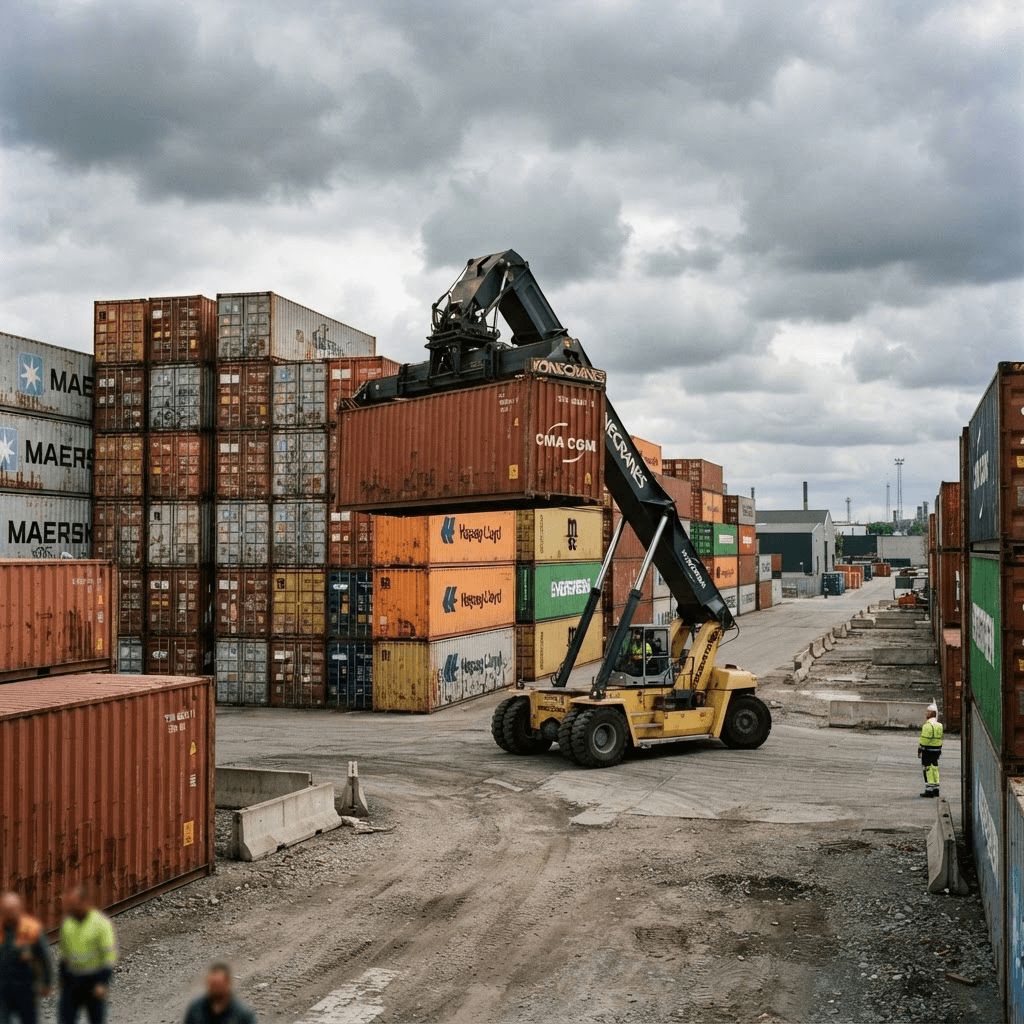
Shipping From an Inland Town
Barnsley has no quayside, yet it is a surprisingly effective place from which to run an international shipping operation. The reason is proximity. The Humber estuary ports of Immingham, Grimsby and Hull are within comfortable reach, Teesport and Liverpool are accessible for transatlantic and Irish Sea routes, and Felixstowe and Southampton remain viable for deep-sea container services when sailing schedules justify the longer drayage. That choice of gateways gives local exporters and importers genuine leverage when comparing sailing frequency and freight rates.
The borough's industrial base makes this connectivity meaningful. Manufacturers of engineering components, glass, plastics, food products and consumer goods all ship internationally from South Yorkshire, and a supporting ecosystem of forwarders, hauliers and customs specialists has grown up to serve them.
Understanding Your Shipping Options
Sea freight divides broadly into full container load and less than container load. A full container load, typically a 20-foot or 40-foot box, gives you exclusive use, faster port handling and lower risk of damage from co-loaded cargo. Less than container load consolidates your goods with other shippers' consignments, which is far cheaper for small volumes but adds handling steps and transit time.
Beyond standard dry containers, specialist equipment includes high cube containers for volumetric cargo, reefers for temperature-controlled goods, open tops and flat racks for oversized items, and tank containers for liquids. Break bulk and roll-on roll-off shipping serve machinery, vehicles and project cargo that will not fit conventional boxes. For urgent consignments, air freight and sea-air combinations offer speed at a premium.
Ten Shipping and Freight Forwarding Providers Serving Barnsley
1. Kuehne and Nagel. One of the world's largest logistics groups, with a substantial UK presence including Yorkshire operations. Its strengths are global sea and air freight networks, sophisticated visibility platforms and deep customs expertise, making it a natural choice for businesses shipping regularly to multiple continents.
2. DHL Global Forwarding. DHL combines worldwide reach with strong technology and integrated customs brokerage. For Barnsley exporters, its value lies in consolidated sailing options, reliable documentation handling and the ability to combine sea, air and road under a single account.
3. DSV. Following significant consolidation in the forwarding sector, DSV operates an extensive UK network with competitive groupage services to Europe and beyond. Businesses shipping palletised export loads to European customers often find its road and sea groupage particularly cost-effective.
4. Maersk and integrated carrier logistics arms. Shipping lines have moved into end-to-end logistics, offering inland haulage, customs clearance and warehousing alongside ocean carriage. Dealing with a carrier-integrated provider can simplify accountability, since one organisation controls both the vessel and much of the land leg.
5. Regional Yorkshire freight forwarders. Independent forwarders based in South and West Yorkshire serve Barnsley businesses with a level of personal attention that global providers rarely match. Their advantages are direct access to experienced operators, flexibility on unusual cargo and strong relationships with Humber port agents.
6. Customs brokerage specialists. Since UK import and export procedures changed, dedicated customs brokers have become essential partners. They handle commodity code classification, customs declarations, duty deferment, preferential origin claims and inward processing relief, work that carries real financial consequences if done incorrectly.
7. Container haulage and drayage operators. Moving containers between Barnsley and the Humber ports requires skid trailers, tilt equipment and drivers experienced in port procedures. Reliable drayage prevents demurrage and detention charges, which can escalate quickly when a container sits uncollected.
8. Project cargo and heavy lift specialists. The region's engineering companies periodically ship items that defy standard containerisation. Project forwarders arrange route surveys, lifting plans, specialist vessels or flat racks, marine insurance and port craneage, coordinating what is effectively a bespoke engineering exercise.
9. E-commerce international parcel and small consignment shippers. Online sellers shipping worldwide need duty and tax calculation at checkout, harmonised code assignment, delivered duty paid options and straightforward returns. Providers focusing on cross-border e-commerce build these capabilities into their platforms.
10. Warehousing and bonded storage providers. Customs warehousing allows importers to defer duty until goods are released to the UK market, improving cash flow substantially. Providers offering bonded facilities within reach of Barnsley are valuable for businesses importing in bulk and selling gradually.
Documentation and Compliance Essentials
Shipping errors are usually documentation errors. Core paperwork includes the commercial invoice, packing list, bill of lading or sea waybill, certificate of origin where preferential tariffs apply and, for controlled goods, export licences. Incoterms selection determines who bears cost and risk at each stage, and misunderstanding the difference between terms such as FOB, CIF and DAP is a common and expensive mistake.
Accurate commodity classification matters enormously, since a wrong code can mean overpaid duty, underpaid duty with penalties, or a shipment detained at the border. Dangerous goods add further requirements, including proper classification, packaging, marking and declarations under international maritime regulations.
Insurance, Risk and Cost Control
Carrier liability under international conventions is limited and rarely covers the true value of goods. Marine cargo insurance, ideally on an all-risks basis, is therefore an essential rather than optional purchase. Ensure the sum insured reflects the commercial value plus freight and duty, and understand exclusions relating to inadequate packing.
On cost, plan against total landed cost rather than headline freight rate. Port charges, terminal handling, documentation fees, customs entry fees, duty, VAT, drayage and any demurrage all contribute. Freight rates fluctuate significantly with global capacity, fuel prices and seasonal peaks, so longer-term contracts can provide stability when spot markets are volatile.
Trends Shaping International Shipping
Digitalisation is transforming a traditionally paper-heavy sector, with electronic bills of lading, online rate booking and shipment tracking portals now widely expected. Decarbonisation is reshaping the industry too, as carriers invest in dual-fuel vessels, slow steaming and alternative fuels while shippers begin reporting cargo emissions.
Supply chain resilience has also risen up the agenda. Recent disruption to major trade routes has encouraged businesses to diversify gateways, hold safety stock closer to market and build relationships with more than one forwarder. For Barnsley companies, the ability to switch between Humber, north west and southern ports is a practical form of resilience.
Choosing Your Shipping Partner
Assess candidates on the trade lanes you actually use, not their global brochure. Ask about sailing frequency, typical transit reliability, customs capability, cargo insurance arrangements, communication protocols when something goes wrong and whether you will have a named contact. Request references from businesses of similar size and sector. With the Humber ports on the doorstep and a mature forwarding market in Yorkshire, Barnsley shippers are well positioned to negotiate from a position of strength.
Want your brand featured in front of decision-makers? Publish a guest post or get a link insertion in our guides through AAMAX's guest post and link insertion service.
Helpful Links
 SponsoredAAMAX — Full-Service Digital Agency
Write for Us
Share your expertise with our readers. We welcome guest contributions from industry specialists.
Pitch your idea

