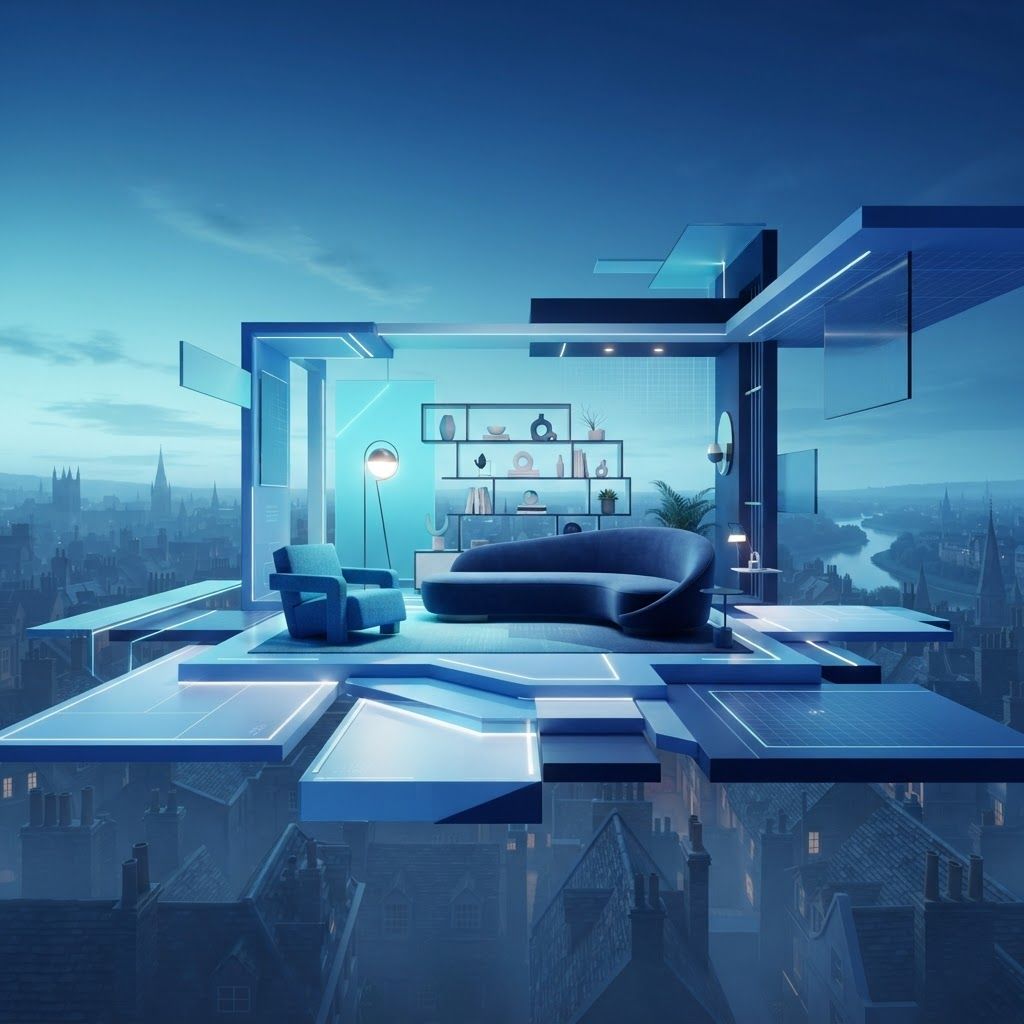
Furnishing Homes in East Hertfordshire
The housing stock across East Hertfordshire is unusually varied. Grade-listed timber-framed cottages sit alongside Victorian terraces, mid-century semis and substantial new-build developments. Each presents different furnishing challenges, from awkward low ceilings and uneven floors in older properties to open-plan spaces requiring zoning in newer ones. Successful furniture retailers here understand this diversity and advise accordingly.
Buying patterns reflect the district's demographics. There is strong demand for durable family furniture, home office solutions that suit hybrid working, and garden furniture given the generous outdoor space many local properties enjoy. Sustainability considerations have also risen sharply, with buyers asking about timber sourcing, foam content and end-of-life recyclability.
The Ten Furniture Retailers and Brands Serving the District
1. John Lewis — A reliable anchor for quality furniture with strong guarantees and genuinely useful design services. Its sofa and bed ranges cover a wide price spectrum, and home design appointments help customers plan whole rooms rather than buying pieces in isolation.
2. DFS — Dominant in upholstery, DFS offers extensive sofa choice with British manufacturing on many ranges. Its strength is customisation, allowing customers to specify fabric, configuration and firmness, along with flexible finance that spreads larger purchases.
3. Furniture Village — Covering living, dining and bedroom furniture across a broad price range, this retailer suits customers furnishing multiple rooms at once. Its showroom-based approach lets buyers assess build quality and comfort directly before committing.
4. Oak Furnitureland — Specialising in solid hardwood rather than veneer, the brand appeals to buyers prioritising longevity. Solid oak dining tables, sideboards and bedroom furniture suit the district's many period properties where substantial timber pieces look appropriate.
5. IKEA — Accessible to the district via nearby locations, IKEA remains unmatched for value, flat-pack convenience and clever small-space solutions. Its kitchen, storage and children's furniture systems are particularly strong, and its modular approach adapts well to irregular room shapes.
6. Loaf — For relaxed, comfort-led design with a distinctly British sensibility, Loaf has developed a loyal following. Its deep sofas and characterful beds suit informal family living, and its considered fabric palette works well in both period and contemporary interiors.
7. Neptune — Positioned at the premium end, Neptune offers coherent whole-home collections spanning furniture, kitchens, lighting and accessories. Its painted timber aesthetic suits East Hertfordshire's cottage and country house properties particularly well, and its design consultation service is thorough.
8. Independent Antique Dealers and Reclamation Yards — The district and surrounding Hertfordshire countryside support a network of antique dealers offering genuinely characterful pieces. Antique furniture is often better constructed than modern equivalents, holds value, and is inherently sustainable through reuse.
9. Local Bespoke Joinery Workshops — For fitted wardrobes, alcove shelving, window seats and made-to-measure kitchens, local joiners solve problems mass-produced furniture cannot. In period properties with no straight walls, bespoke work is frequently the only route to a proper fit and full use of available space.
10. Independent Home and Interiors Boutiques — Smaller interiors shops across Hertford, Bishop's Stortford and Sawbridgeworth curate furniture, lighting and accessories with a distinct point of view. They provide styling advice, source items to order, and help customers achieve a considered look rather than a catalogue-uniform one.
Choosing Furniture for Period and Modern Properties
Older East Hertfordshire homes require specific consideration. Doorways, staircases and landings in timber-framed and Victorian properties frequently cannot accommodate large fixed sofas, making modular or knock-down designs essential. Uneven floors mean freestanding pieces may need adjustment, and low ceilings favour lower-profile furniture that avoids visually compressing the room.
New-build properties present the opposite challenge: large open-plan spaces that feel undefined. Here, furniture placement does the work of walls, using sofa backs, rugs and shelving units to create distinct zones for cooking, dining and relaxing. Scale is critical, as undersized pieces look lost in generous rooms.
Materials, Construction and What Lasts
Understanding construction separates furniture that survives decades from furniture that sags within years. For sofas, hardwood frames with corner blocks and serpentine or webbed suspension outperform stapled softwood. High-resilience foam with feather or fibre wrapping holds shape better than low-density foam alone. For case goods, solid timber and quality plywood beat particleboard, and dovetailed or dowelled joints beat staples.
Fabric choice deserves attention too. Rub test ratings indicate durability, with higher figures suiting family use. Removable, washable covers extend practical life considerably, and performance fabrics resist stains without the heavy feel of earlier generations of treated textiles.
Sustainability in Furniture Buying
Furniture is among the heaviest household waste streams, which has made sustainability a genuine concern for local buyers. Certified sustainable timber, recycled metal components, water-based finishes and low-emission foams all reduce impact. Longevity matters most of all, since a well-made sofa kept for twenty years outperforms three cheaper replacements on every environmental measure.
Second-hand and antique furniture represents the lowest-impact option available, and East Hertfordshire's dealer network makes it accessible. Reupholstery is another strong choice, taking a structurally sound frame and giving it a completely new appearance for less than the cost of comparable new furniture.
Practical Planning Advice
Measure everything before ordering: the room, the intended position, and critically the access route including door widths, corner turns and stair headroom. Reputable retailers will ask about access, and the good ones will refuse an order they believe cannot be delivered successfully.
Order lead times for made-to-order upholstery frequently run to several weeks or longer, so plan around renovation schedules and moving dates. Request fabric samples and view them in the actual room under both daylight and artificial light, since colours shift considerably between conditions. Finally, check what delivery includes, particularly assembly, room-of-choice placement and removal of packaging and old furniture.
Summary
East Hertfordshire offers an unusually complete furniture market, from value flat-pack through to bespoke joinery and genuine antiques. Matching the retailer to the property type and being rigorous about measurement and construction quality will produce results that look right and last far longer than the average purchase.
Want your brand featured in front of decision-makers? Publish a guest post or get a link insertion in our guides through AAMAX's guest post and link insertion service.
Helpful Links
 SponsoredAAMAX — Full-Service Digital Agency
Write for Us
Share your expertise with our readers. We welcome guest contributions from industry specialists.
Pitch your idea