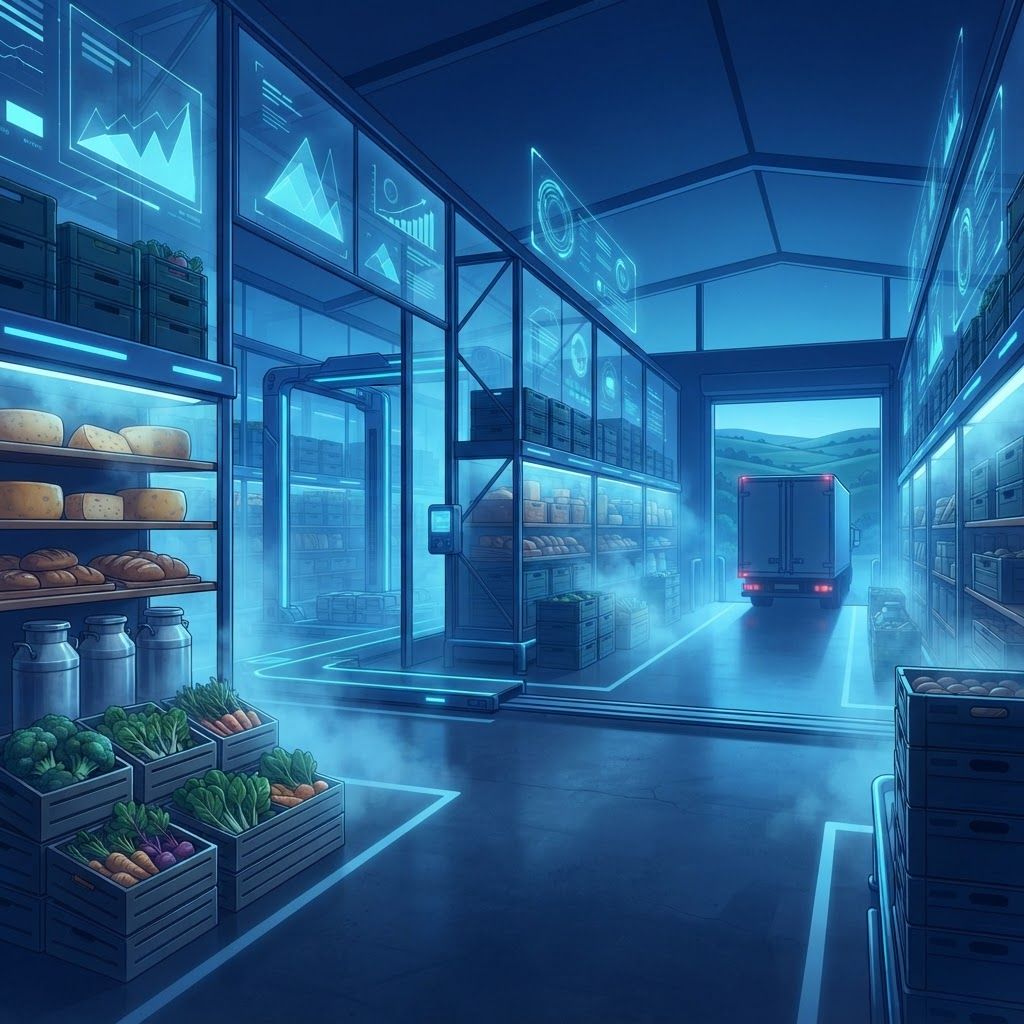
A County That Genuinely Produces Food
Carmarthenshire is one of the most agriculturally productive parts of Wales, and that shapes its food wholesale sector profoundly. Dairy farming dominates the river valleys, with milk from the Tywi, Cothi and Gwendraeth catchments feeding creameries and cheesemakers. Beef and lamb from the uplands supply butchers across South Wales. The Carmarthen area is famous for cured ham, and the coastal cockle beds of the Loughor estuary have been worked for centuries.
This means local wholesalers occupy an unusual position: they are not simply distributing national brands, but often acting as the commercial bridge between small local producers and the hospitality, retail and public sector buyers who want to serve regional food. A pub in Llandeilo wanting Welsh cheese, local beef and Carmarthen ham on its menu depends entirely on wholesalers who can aggregate those products into a single manageable delivery.
At the same time, the practical realities of catering demand breadth. Kitchens need cooking oil, tinned goods, dry stores, frozen products, disposables and cleaning chemicals alongside the artisan items. The strongest wholesalers combine both.
Types of Food Wholesaler
Broadline foodservice distributors supply the full spectrum — ambient, chilled, frozen, non-food and disposables — to caterers, allowing a kitchen to consolidate orders into fewer deliveries.
Fresh produce wholesalers handle fruit, vegetables, salads and herbs, often with daily or alternate-day delivery given short shelf life.
Meat and poultry wholesalers operate cutting plants and supply butchered products to specification, working under approved establishment requirements.
Dairy and chilled specialists distribute milk, cream, butter, yoghurt and cheese, including artisan Welsh varieties.
Fish and seafood merchants supply fresh and frozen fish, shellfish and locally gathered cockles and mussels.
Bakery distributors deliver bread, rolls, pastries and morning goods, frequently overnight for morning service.
Drinks wholesalers cover soft drinks, beers, wines, spirits and increasingly Welsh craft producers.
Cash and carry operators allow collection-based buying without minimum delivery values, useful for smaller cafés and mobile caterers.
Ten Leading Food Wholesalers in Carmarthenshire
1. Carmarthen Foodservice — A broadline distributor supplying pubs, restaurants, care homes and schools with ambient, chilled and frozen lines plus catering disposables. Its value lies in consolidating a full kitchen order into one delivery while still carrying a meaningful selection of Welsh products.
2. Tywi Valley Dairy Distribution — Milk, cream, butter, yoghurt and a strong Welsh cheese portfolio delivered on a chilled fleet. Works directly with local creameries, giving hospitality customers access to farmhouse cheeses that national suppliers rarely stock.
3. Llanelli Meat Wholesale — An approved cutting operation supplying Welsh beef, lamb, pork and poultry butchered to customer specification, with full traceability back to farm and options for dry-aged and mature cuts.
4. Cross Hands Fresh Produce — Fruit, vegetables, salads and herbs with frequent delivery schedules, sourcing seasonal Welsh produce where available and importing to fill gaps. Prepared and pre-cut lines help kitchens control labour costs.
5. Burry Port Seafood Merchants — Fresh fish, shellfish, and locally harvested cockles and mussels from the estuary beds, supplying restaurants, fishmongers and hotels with day-boat and seasonal catch alongside frozen staples.
6. Gwendraeth Bakery Supplies — Overnight delivery of bread, rolls, morning goods and patisserie to cafés, hotels and retailers, with both craft and volume products and options for part-baked lines that kitchens finish on site.
7. Ammanford Cash and Carry — A collection-based wholesaler with no minimum order, serving takeaways, mobile caterers, event traders and small convenience retailers. Broad ambient and frozen ranges with regular promotional pricing.
8. Dinefwr Artisan Food Distribution — A curator of small-batch Welsh producers: preserves, charcuterie, cheeses, baked goods and speciality drinks, supplying farm shops, delicatessens and visitor attractions that need genuinely regional stock.
9. Teifi Drinks Wholesale — Soft drinks, beers, ciders, wines and spirits with a growing Welsh craft brewery and distillery portfolio, plus glassware, dispense equipment support and cellar advice for licensed premises.
10. Cothi Frozen and Chilled Logistics — Frozen foods, ice cream and chilled ready-prepared items distributed on temperature-controlled vehicles, with monitored cold chain documentation for compliance-conscious customers.
Food Safety, Compliance and the Cold Chain
Food wholesaling is tightly regulated, and buyers share responsibility for due diligence. Any wholesaler handling food must be registered with the local authority, and those handling products of animal origin such as meat, dairy and fish require approved establishment status with an approval number.
A documented food safety management system based on hazard analysis and critical control point principles is a legal requirement. Many wholesalers go further with third-party certification, which is often a condition of supplying schools, hospitals or larger hospitality groups. Ask which standard applies and when the last audit took place.
Allergen management deserves particular attention. Wholesalers must provide accurate allergen information for the fourteen regulated allergens, and caterers rely on that data being correct. Specification sheets should be available for every product, and any recipe or supplier change should trigger updated documentation.
Cold chain integrity is where most practical failures occur. Chilled products generally require storage at eight degrees Celsius or below, with tighter limits for certain products, and frozen goods at minus eighteen. Check that delivery vehicles are refrigerated, that temperature is recorded at dispatch and delivery, and that your own receiving procedure includes probe checks. Refuse deliveries outside specification rather than accepting them and hoping.
Traceability is the final pillar. Wholesalers must be able to identify one step back and one step forward for every batch. That capability is what makes a recall containable rather than catastrophic.
Trends in Food Wholesale
Local sourcing has moved from marketing angle to genuine commercial driver. Public procurement in Wales increasingly weights local supply and social value, and consumers actively look for Welsh provenance on menus. Wholesalers who can name the farm behind a product hold a real advantage.
Cost pressure remains intense. Energy, labour and transport costs have reshaped pricing, and kitchens have responded by simplifying menus, using more of each carcass, and looking closely at portion control and waste. Wholesalers offering yield advice and menu costing support are genuinely useful partners rather than just suppliers.
Plant-based and free-from ranges have matured. Demand has stabilised into a steady core rather than the earlier spike, and quality has improved substantially, meaning caterers can offer credible options without compromising the rest of the menu.
Technology adoption is accelerating. Online ordering with live stock visibility, order cut-off automation and integration with kitchen stock systems reduce errors and administrative time. For a busy chef, being able to place an order at midnight from a phone is a meaningful improvement.
Buying Advice for Hospitality Operators
Consolidate thoughtfully. Fewer suppliers means simpler administration and better buying leverage, but total consolidation loses the artisan products that differentiate a menu. A common approach is one broadline supplier plus two or three specialists.
Negotiate on the lines you actually use most. Wholesalers price competitively on visible comparison items and recover margin elsewhere, so review your top twenty products by spend rather than the headline list.
Match delivery frequency to storage. Frequent deliveries reduce waste and free up cold storage but increase minimum-order friction. Calculate honestly rather than defaulting to weekly.
Insist on specification sheets and keep them filed. They are your evidence of due diligence during an inspection and your reference point when a product changes.
Finally, build the relationship. Wholesale in a rural county is a people business; the drivers, telesales staff and account managers who know your kitchen will find you stock in a shortage and flag substitutions before they become a service problem.
Final Thoughts
Carmarthenshire's food wholesalers combine broadline catering capability with unusually good access to genuine local produce — dairy, meat, seafood and artisan goods from within a few miles. For hospitality operators, retailers and public sector caterers, that creates an opportunity to build distinctive, regionally rooted offers while still controlling cost and compliance. Rigorous attention to cold chain, allergen data and traceability turns that opportunity into a dependable, safe supply chain.
Want your brand featured in front of decision-makers? Publish a guest post or get a link insertion in our guides through AAMAX's guest post and link insertion service.
Helpful Links
 SponsoredAAMAX — Full-Service Digital Agency
Write for Us
Share your expertise with our readers. We welcome guest contributions from industry specialists.
Pitch your idea