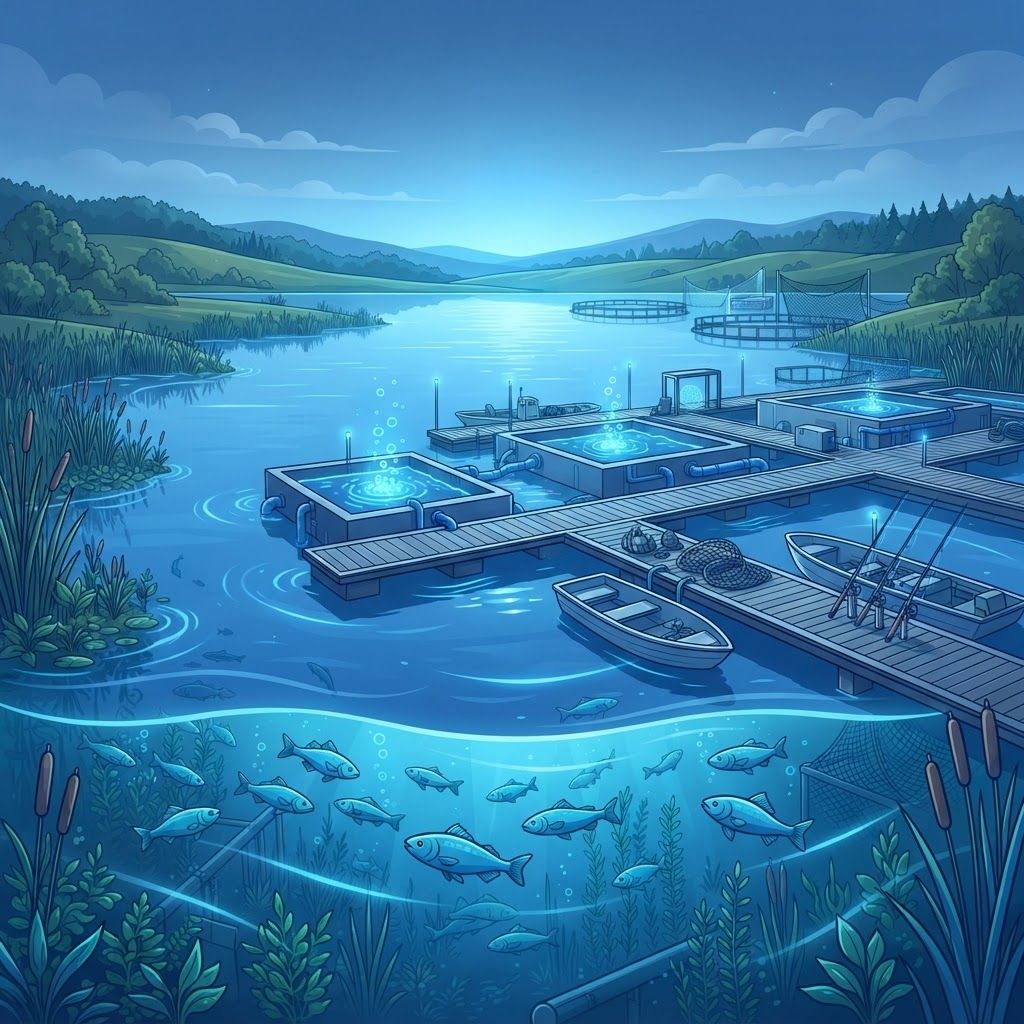
Inland Fisheries in a Waterway Landscape
South Cambridgeshire is landlocked, yet water shapes much of it. The River Cam and its tributaries, the Rhee and the Granta, thread through the district, joined by drains, brooks, restored gravel pits and countless farm reservoirs. That network supports a surprisingly active fishery sector focused on coarse angling, stillwater fishery management, aquaculture, aquatic habitat restoration and specialist ornamental fish production.
Angling remains one of the most popular participation activities in the region, and demand for well-managed day-ticket waters near Cambridge is consistently strong. At the same time, environmental priorities around river health, water abstraction and biodiversity have made professional fishery management more technical and more closely regulated than in previous decades.
What Fishery Companies Actually Do
Fishery management companies operate lakes and stretches of river, controlling stocking, water quality, bank maintenance, predator management and angler access. Fish farms breed and grow coarse or ornamental species for restocking and retail. Aquaculture units produce fish under controlled conditions, sometimes using recirculating systems. Consultancies undertake fish surveys, health screening, habitat assessment and licensing support. Habitat contractors deliver river restoration, gravel reinstatement, weed management, desilting and fish passage improvements.
Trends in the Fishery Sector
Water quality and climate resilience dominate. Warmer summers reduce dissolved oxygen and increase algal bloom risk, so fisheries increasingly install aeration, deepen margins, plant marginal vegetation and monitor water chemistry throughout the season. Drought and abstraction pressure have made water retention a central design concern for new stillwaters.
Biosecurity is the second focus. Movement of fish requires health screening and consents to prevent disease and parasite spread, and responsible operators quarantine incoming stock. Invasive species control, including signal crayfish and non-native plants, forms part of routine management. The third trend is experience-led angling, with fisheries investing in accessible platforms, on-site facilities, coaching and family-friendly waters rather than relying purely on fish size, which has broadened participation considerably.
Top 10 Best Fishery Companies in South Cambridgeshire
1. Granta Fisheries Management
Managers of several coarse fishing stillwaters offering mixed species angling for carp, bream, tench and roach. Their strengths are consistent water quality monitoring, well-maintained pegs and a stocking policy based on survey data rather than guesswork.
2. Cam Valley Fish Farm
A coarse fish producer breeding and growing carp, tench, roach, rudd and bream for restocking club and commercial waters. Health-screened stock, careful transport with oxygenation and advice on appropriate stocking densities define their service.
3. Sawston Angling Lakes
Operators of day-ticket and syndicate waters catering for pleasure and specimen anglers. Investment in disabled-access platforms, on-site parking and clear rules has made them popular with families and newcomers as well as experienced anglers.
4. Fenline Aquaculture Systems
Specialists in recirculating aquaculture and controlled-environment fish production, supplying stock and offering system design for growers. Water treatment, filtration and biosecurity expertise make them a technical partner as much as a producer.
5. Melbourn Fishery Consultancy
Providing fish population surveys, electrofishing, health screening, water testing and licensing support. Clubs and landowners use them to diagnose declining catches and to prepare evidence-based management plans before spending on stock.
6. Duxford Lake Restoration Services
Contractors delivering desilting, margin reprofiling, aeration installation, weed control and bank stabilisation. Many older gravel pit fisheries in the district require this kind of periodic renovation to stay productive and safe.
7. Histon Ornamental Fish Supplies
Producers and suppliers of koi, goldfish and pond plants for garden ponds and water features. Quarantine facilities, filtration advice and seasonal care guidance help customers avoid the disease and water quality problems that affect many domestic ponds.
8. Bourn River Habitat Projects
Focused on chalk stream and river restoration, delivering gravel reinstatement, flow deflectors, fencing, tree management and fish passage improvements. Their work supports wild brown trout and coarse fish populations while improving overall river ecology.
9. Shelford Angling Club Management
A membership-based organisation managing river and stillwater stretches with volunteer work parties, junior coaching and match programmes. Community engagement and affordable access are their defining contributions to local angling.
10. Papworth Fisheries and Leisure
Operators combining fishing lakes with camping, lodges and countryside leisure facilities. This diversified model spreads income across seasons and introduces angling to visitors who might otherwise never try it.
Managing a Fishery Successfully
Water first, fish second. Oxygen levels, temperature, pH, ammonia and nutrient loading determine whether stock thrives, and no amount of stocking compensates for poor water. Aeration, marginal planting and controlled silt levels usually deliver more improvement than adding fish.
Stock responsibly and legally, obtaining the required consents, using health-screened fish and avoiding overstocking, which stunts growth and stresses the system. Manage predation and disturbance sensibly, and keep detailed catch and mortality records so trends become visible early. Maintain safe banks, clear signage and appropriate insurance, since public access carries real responsibility.
Conservation and Angling Together
Well-run fisheries are frequently significant wildlife habitats, supporting dragonflies, water voles, kingfishers, amphibians and aquatic plants. Sensitive management, including leaving undisturbed margins, controlling invasive species and avoiding excessive stocking, allows angling and conservation to reinforce each other. Anglers are also often the first to notice pollution incidents, making them valuable observers of river health across the district.
Conclusion
Fishery companies in South Cambridgeshire cover stillwater management, coarse fish production, aquaculture systems, consultancy, lake restoration, ornamental supply, river habitat work and leisure fisheries. Whether you manage a club water, own a farm pond or simply want a good day's fishing, the district offers strong expertise close at hand. Prioritise water quality, responsible stocking and habitat value, and inland fisheries here will remain productive and ecologically rich.
Want your brand featured in front of decision-makers? Publish a guest post or get a link insertion in our guides through AAMAX's guest post and link insertion service.
Helpful Links
 SponsoredAAMAX — Full-Service Digital Agency
Write for Us
Share your expertise with our readers. We welcome guest contributions from industry specialists.
Pitch your idea