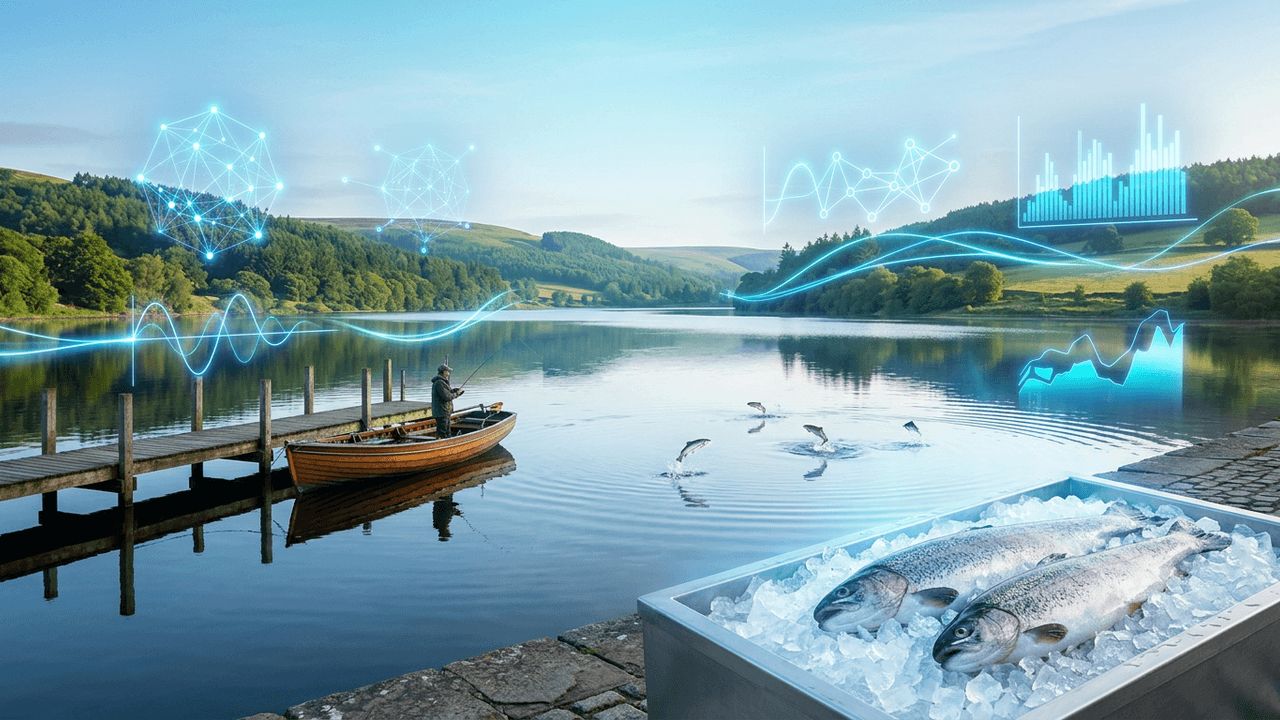
Fishing Heritage on the Foyle
Few industries are as closely tied to the identity of Derry as fishing. The River Foyle and Lough Foyle have supported salmon and eel fisheries for centuries, and the lough's shellfish beds have provided oysters and mussels for generations. The Foyle system remains one of the most significant salmon rivers in Ireland, and the management of its stocks is a subject of considerable local importance.
The modern sector is more varied than the historic image suggests. It includes inshore fishing, shellfish cultivation and harvesting, fish processing and distribution, recreational angling and fishery management, and aquaculture. Each operates under different regulation, and the overall picture is one of an industry that has adapted substantially in response to both conservation requirements and market change.
Regulation and Sustainability
Fishery management on the Foyle is distinctive because the catchment straddles the border, requiring cross-jurisdictional cooperation on stock assessment, licensing and enforcement. Salmon and sea trout stocks are managed through conservation limits, and commercial netting has been substantially reduced in favour of stock recovery, which reshaped the traditional industry significantly.
Shellfish production is governed by classified harvesting areas with water quality monitoring determining whether product can go directly to market or requires purification. This makes shellfish businesses unusually dependent on catchment water quality, giving them a direct commercial interest in agricultural and wastewater management upstream.
The Leading Fishery Companies in the District
1. Foyle Shellfish Company cultivates and harvests oysters and mussels from Lough Foyle beds, handling grading, purification and packing for domestic and export markets. Lough Foyle oysters have an established reputation, and the business emphasises consistent grading and careful handling to protect it.
2. Lough Foyle Fisheries operates inshore commercial fishing, landing a mixed catch and supplying local processors and wholesalers. Working inshore waters demands detailed local knowledge of grounds, tides and seasonal patterns accumulated over many years.
3. Northwest Fish Processing handles filleting, portioning, freezing and packing of fish and shellfish for retail and foodservice customers. Processing close to landing preserves quality, and the business provides the route to market that smaller fishing operations could not access individually.
4. Strabane Aquaculture operates land-based fish farming, producing stock for restocking programmes and for the table. Recirculating systems allow tight control of water quality and temperature, which improves growth rates and greatly reduces environmental discharge.
5. Derry Seafood Distribution supplies fresh and frozen seafood to restaurants, hotels and retailers across the district. Cold chain discipline and daily delivery are the core of the operation, since seafood quality deteriorates faster than any other fresh category.
6. Culmore Bay Oyster Growers focuses on premium oyster cultivation, managing bed rotation, grading and finishing to produce consistent shell shape and meat quality. Premium oysters serve both high-end domestic restaurants and export markets where presentation commands significant price differentials.
7. Foyle Angling and Fishery Management manages recreational fishery assets, providing angling access, guiding, habitat improvement and stock monitoring. Angling tourism brings visitors to rural areas outside the main tourist season, and this business contributes directly to that economy.
8. Sperrin River Fisheries works on upland river systems, combining fishery management with habitat restoration including bank stabilisation, spawning gravel improvement and barrier removal. Restoring access to headwater spawning grounds is among the most effective interventions available for salmonid recovery.
9. Lisnagelvin Fish Merchants operates as a traditional fish merchant, supplying fishmongers, market stalls and independent retailers. Its buyers' knowledge of species, seasonality and quality assessment is a skill built through long experience on the quayside.
10. Tyrone Border Smokehouse produces smoked fish products including smoked salmon and smoked trout using traditional smoking methods. Value-added processing significantly increases returns on raw fish and has created a locally distinctive product with genuine appeal to visitors and specialist retailers.
Challenges and Trends
Water quality is the central issue for shellfish producers. Agricultural runoff, wastewater discharge and heavy rainfall events all affect classification of harvesting areas, and closures directly interrupt income. The sector has therefore become an active participant in catchment management discussions rather than a passive observer.
Climate change is altering species distribution and water temperatures, with implications for both wild fisheries and aquaculture. Salmon stocks face pressures at sea that no local management can fully address, which has intensified focus on maximising freshwater survival through habitat quality.
On the market side, consumer interest in traceable, sustainably harvested seafood has grown, and businesses able to document provenance and harvesting method achieve better positioning. Value-added processing continues to expand as producers seek to capture more margin locally rather than exporting raw product.
The Future of Foyle Fisheries
The long-term prospects for the sector rest on stock recovery, water quality improvement and continued development of value-added products. Cross-border cooperation on the Foyle catchment remains essential, since fish and water quality recognise no jurisdictional boundary.
For consumers and businesses in Derry City and Strabane, buying local seafood supports an industry with genuine heritage and a real stake in environmental stewardship. Lough Foyle shellfish and locally smoked fish are products of quality that reflect this place specifically, and sustaining demand for them helps sustain the working waters they come from.
Want your brand featured in front of decision-makers? Publish a guest post or get a link insertion in our guides through AAMAX's guest post and link insertion service.
Helpful Links
 SponsoredAAMAX — Full-Service Digital Agency
Write for Us
Share your expertise with our readers. We welcome guest contributions from industry specialists.
Pitch your idea