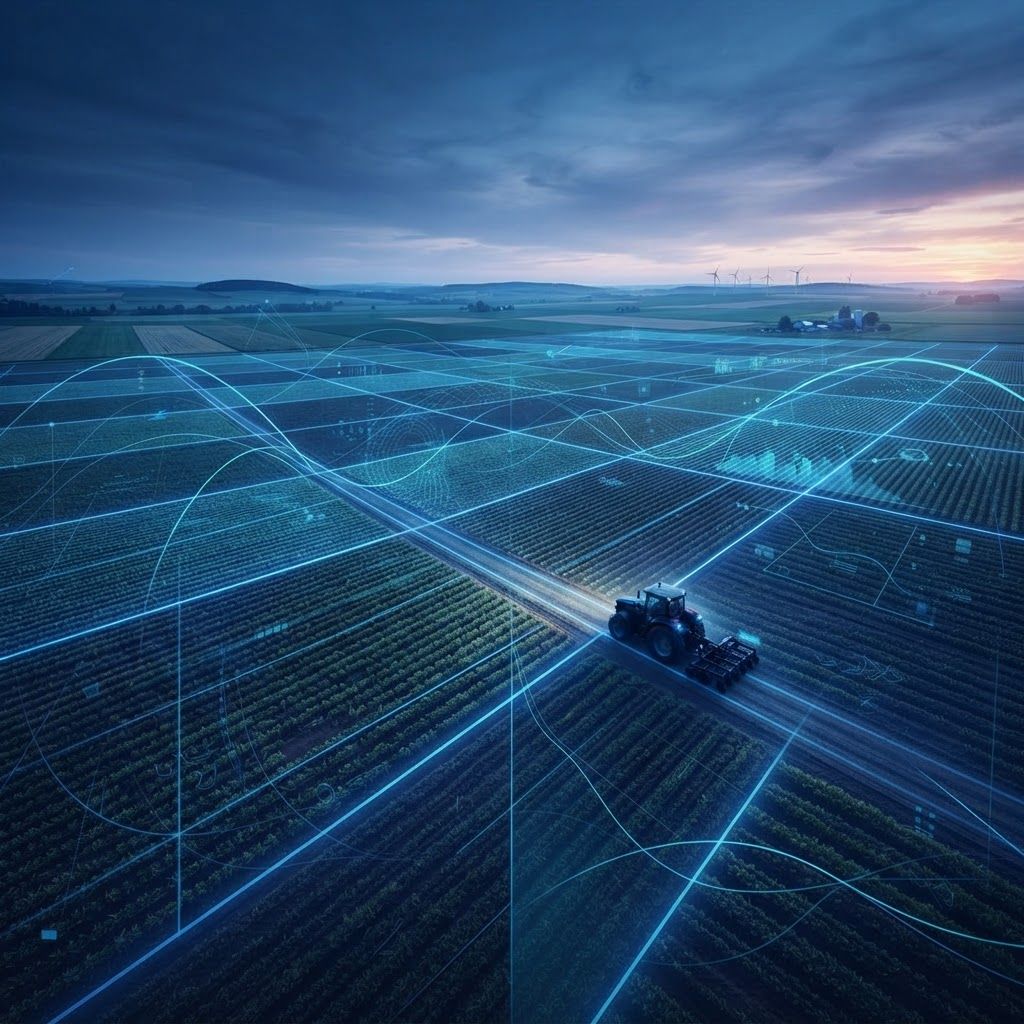
Farming on the Edge of the City
Though Trafford is best known for its urban and commercial character, the borough and its surrounding countryside support a resilient farming community. Mixed farms, livestock producers, and specialist growers work the land on the fringes of Greater Manchester, supplying local markets, food businesses, and increasingly discerning consumers who value provenance. Farming near a major city brings both opportunities and challenges, from direct access to customers to the pressures of land availability and urban encroachment.
The farming companies profiled here reflect the diversity and adaptability of agriculture in and around Trafford, blending traditional methods with modern, sustainable practices.
The Leading Farming Companies
Trafford Mixed Farms operates a traditional mixed model of arable and livestock, supplying local butchers and markets with quality produce and emphasising responsible land stewardship.
Bridgewater Dairy Farm focuses on dairy production, supplying milk and dairy products to regional processors with a commitment to herd welfare.
Old Trafford Market Gardens specialises in vegetables and salad crops grown for local sale, championing seasonal, fresh produce.
Stretford Livestock Company concentrates on beef and sheep farming, supplying quality meat through short, traceable supply chains.
Urmston Poultry Farm produces free-range eggs and poultry, meeting growing consumer demand for higher welfare standards.
Specialist and Emerging Producers
Sale Organic Growers runs certified organic vegetable production, appealing to health-conscious consumers and organic retailers.
Altrincham Fruit Farm cultivates soft fruit and orchard produce, supplying farm shops and local food businesses.
Partington Arable Farms focuses on cereal and crop production across larger acreage, supporting the regional grain supply.
Sale Moor Smallholdings represents a network of smaller mixed producers supplying niche and artisan products.
Carrington Regenerative Farm rounds out the list with a focus on regenerative agriculture, soil health, and biodiversity.
What Makes These Farms Stand Out
Proximity to a large urban market gives Trafford-area farms a valuable advantage: the ability to sell fresh, local produce directly to consumers and food businesses. The strongest operations use this to build loyal customer bases through farm shops, box schemes, and supply relationships with local restaurants and butchers. Traceability and provenance are powerful selling points in a market where consumers increasingly want to know where their food comes from.
Animal welfare and environmental stewardship also distinguish the leading farms. Higher-welfare livestock systems, responsible land management, and reduced chemical inputs resonate strongly with modern consumers and support long-term farm health.
Trends in Local Agriculture
Sustainability and regenerative practices are reshaping farming across the region. Techniques that improve soil health, protect biodiversity, and reduce carbon footprints are gaining ground, driven by both environmental awareness and long-term economic sense. Diversification is another key trend, with farms adding value through processing, direct sales, and even agri-tourism.
Technology is playing a growing role too, from precision agriculture that optimises inputs to data tools that improve livestock management. Short supply chains and local food movements continue to gain momentum, benefiting farms close to urban centres like Trafford.
Conclusion
Farming around Trafford demonstrates the resilience and adaptability of agriculture on the urban fringe. From dairy and livestock to market gardens and regenerative farms, these companies supply fresh, traceable food while embracing sustainable practices. Their proximity to a major city offers both opportunity and responsibility. The ten farming companies featured here reflect the quality, diversity, and forward-thinking spirit that keep local agriculture thriving in and around Trafford.
Sustainable Practice on Urban-Fringe Farms
Farming close to a major city demands a particular kind of discipline. Land around Trafford is expensive and fragmented, so producers focus on getting more value from each hectare rather than expanding acreage. That has encouraged widespread adoption of soil health practices such as cover cropping, reduced tillage, and careful rotation planning, alongside precise nutrient management that limits runoff into local watercourses.
Environmental schemes have supported this shift. Hedgerow restoration, field margins for pollinators, and small-scale tree planting now sit comfortably alongside commercial production, improving biodiversity while qualifying farms for stewardship funding. Several operations in and around the borough also manage flood-resilient grassland, an increasingly valuable function given the region's rainfall patterns.
Technology plays a growing role too. Soil sampling, variable-rate application, and simple farm-management software allow even modest holdings to make better decisions with less input waste, which matters when margins are tight and fertiliser costs volatile.
Local Food, Short Supply Chains, and Diversification
Proximity to Manchester's population is the greatest commercial asset available to Trafford farmers. Farm shops, box schemes, weekend markets, and direct supply to restaurants allow producers to capture retail value instead of accepting commodity prices. Consumers in the area have shown consistent willingness to pay for traceable, locally grown produce and higher-welfare meat.
Diversification strengthens resilience further. Livery yards, event space, glamping, educational visits, and small-scale food processing all convert underused assets into income while spreading risk across seasons. Educational work in particular has become valuable, connecting nearby urban schools with food production and building public support for local agriculture.
Challenges and the Road Ahead
The pressures are real: land competition from development, public access management, labour availability, and the transition in agricultural support payments all affect planning. Weather variability adds another layer, with wet autumns complicating harvest and establishment windows.
Yet the outlook is cautiously positive. Farms that combine efficient production with direct sales, environmental stewardship, and a diversified income base are proving durable. For consumers and food businesses in Trafford, that means continued access to genuinely local produce, and for the borough it means working farmland remains part of its landscape rather than a memory of it.
Want your brand featured in front of decision-makers? Publish a guest post or get a link insertion in our guides through AAMAX's guest post and link insertion service.
Helpful Links
 SponsoredAAMAX — Full-Service Digital Agency
Write for Us
Share your expertise with our readers. We welcome guest contributions from industry specialists.
Pitch your idea